
Understanding Culture, Religion, and Diversity in Healthcare Practice Test
$69.00
- Buy to unlock unlimited access to all Quiz questions and Answers in this Quiz.
- After purchase you can print a PDF of the whole quiz at any point. The PDF will contain the questions and the correct answers.
About this Exam
The "Understanding Culture, Religion, and Diversity in Healthcare Practice Test" is an essential step for healthcare professionals aiming to deliver inclusive and respectful patient care. This certification is designed for a broad audience across the healthcare sector, including nurses, physicians, allied health professionals, medical students, and administrative staff who interact with diverse patient populations. Its primary goal is to validate an individual's ability to navigate the complexities of cultural, religious, and diverse backgrounds, ensuring that care delivery is patient-centered and effective. By understanding these critical factors, practitioners can reduce health disparities, improve patient satisfaction, and foster an environment of trust and safety for everyone.
Ready to test your knowledge?
Buy Now to Access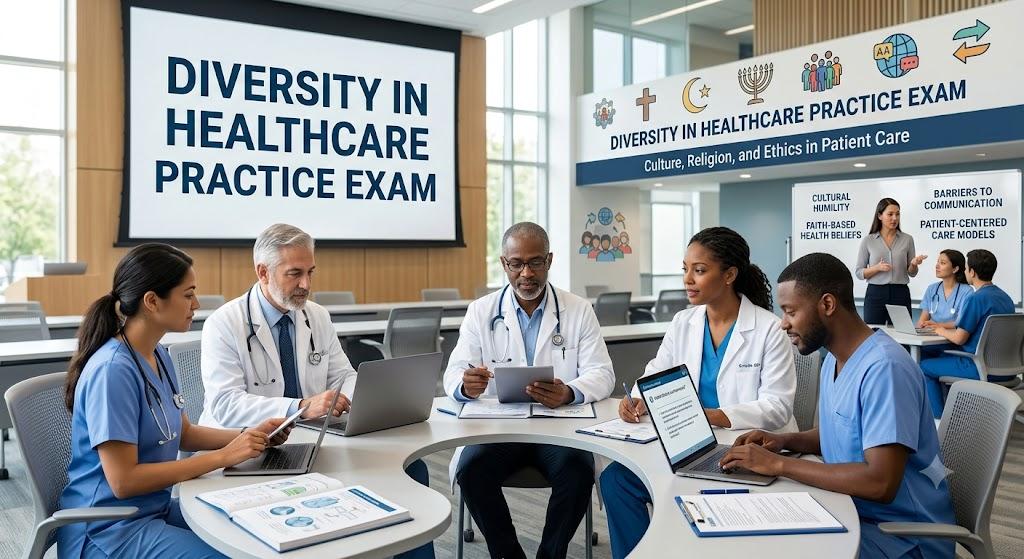
Additional Information
What the Course Entails and Exam Details
This test covers a wide range of topics crucial for competent practice in a multicultural environment. Candidates can expect to encounter content related to:
Models of Cultural Competence and Humility: Understanding the framework for continuous learning and self-reflection in healthcare interactions.
Health Disparities: Identifying factors that contribute to unequal health outcomes in various demographic groups.
Religious Beliefs and Practices: Knowledge of major world religions and how their specific tenets regarding diet, modesty, medical interventions, and end-of-life care affect patient treatment plans.
Communication Strategies: Techniques for effectively communicating with patients from diverse linguistic and cultural backgrounds, including the appropriate use of interpreters.
Ethical Considerations: Navigating ethical dilemmas that arise when patient beliefs conflict with standard medical practice.
The exam assesses both theoretical knowledge and the practical application of these concepts through scenario-based questions, ensuring that practitioners can implement their understanding in real-world clinical settings.
What to Expect in the Final Exam
The final practice test is designed to simulate the format and rigor of an actual certification exam. It typically consists of approximately 50 to 100 multiple-choice questions, which must be completed within a set time limit, often around 90 to 120 minutes. Candidates will need to demonstrate a comprehensive understanding of the material to achieve a passing score, which is generally set at 70% or higher, depending on the specific certifying body. The exam is typically computer-based and proctored to maintain standard testing conditions. Preparing for this exam requires not only memorization of facts but also the ability to analyze case studies and apply cultural sensitivity to reach appropriate conclusions.
How to Study and Exam Centers
Effective preparation is key to success on this examination. Actionable study strategies include:
Reviewing Core Materials: Utilize textbook resources, official study guides, and online modules focused on cultural competence in healthcare.
Taking Practice Exams: Familiarize yourself with the question format and identify knowledge gaps by using simulated tests.
Engaging in Case Study Analysis: Work through real-world scenarios to practice applying your knowledge to complex patient situations.
Utilizing Flashcards: Use digital or physical flashcards to memorize key terms, religious practices, and communication techniques.
The exam can typically be taken through several avenues. Candidates can register for the test on official online portals dedicated to healthcare certifications. Testing centers, such as Pearson VUE, provide standardized proctored environments globally. Additionally, many authorized physical testing centers at universities or within specific hospital systems also offer the exam for their staff and students.
Job Opportunities from the Course
A strong performance on this practice test and subsequent certification can significantly enhance career prospects within the healthcare industry. Demonstrating proficiency in understanding diversity is increasingly valued by employers. Specific job opportunities and career paths this achievement unlocks include:
Patient Advocate
Healthcare Diversity and Inclusion Officer
Medical Social Worker
Nurse Manager
Public Health Educator
Clinical Nurse Specialist
Hospital Administrator
Quality Improvement Coordinator
International Healthcare Coordinator
By mastering these concepts, professionals not only advance their careers but also contribute to a more equitable and compassionate healthcare system.
Frequently Asked Questions
Reviews
5.0
Based on 0 reviews
Leave a Review
No reviews yet. Be the first to review!