
Uniform Plumbing Code Practice Test
$69.00
- Buy to unlock unlimited access to all Quiz questions and Answers in this Quiz.
- After purchase you can print a PDF of the whole quiz at any point. The PDF will contain the questions and the correct answers.
About this Exam
The Uniform Plumbing Code (UPC) is a model code developed by the International Association of Plumbing and Mechanical Officials (IAPMO) to govern the installation and inspection of plumbing systems. Licensing exams based on the UPC are designed for individuals seeking to become Journeyman or Master Plumbers, ensuring they possess the necessary knowledge to protect public health and safety.
Whether you are a plumbing apprentice preparing for your first major license or an experienced professional moving to a jurisdiction that enforces the UPC, this exam validates your expertise. Certification demonstrates your command of essential codes and standards required for professional practice in numerous states and municipalities across the United States and other countries.
Ready to test your knowledge?
Buy Now to Access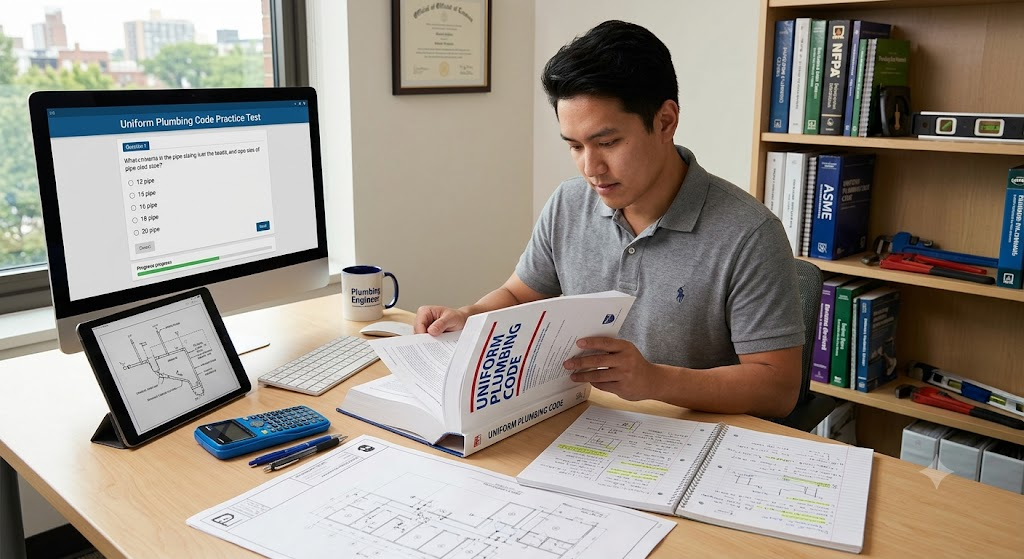
Additional Information
What the Course Entails and Exam Details
This examination covers the entire spectrum of plumbing systems regulated by the IAPMO Uniform Plumbing Code. The primary focus is on applying the code’s standards and formulas to real-world installation scenarios. Key topics you must master include:
General Regulations and Definitions: Understanding legal requirements, scope of the code, and specific terminology used throughout the document.
Plumbing Fixtures and Fixture Fittings: Installation standards, accessibility requirements, and material specifications for sinks, toilets, showers, and other fixtures.
Water Heaters: Code compliance for sizing, installation, venting, safety devices, and required clearances for various types of water heaters.
Water Supply and Distribution: Designing, sizing, and installing safe potable water systems, including materials, joint methods, backflow prevention, and pressure regulation.
Sanitary Drainage Systems: Regulations for gravity drainage, sizing drain and stack lines, proper venting, and wastewater disposal.
Vents and Venting: Comprehensive venting design and installation rules to ensure proper drainage flow and sewer gas removal.
Traps and Interceptors: Requirements for fixture traps, grease interceptors, and gray water systems.
Indirect and Special Wastes: Handling waste from sterilization equipment, commercial kitchens, and other special processes.
Fuel Gas Piping: Specific installation standards for natural gas and propane systems, including materials, testing, and appliance connections.
Referenced Standards and Appenices: How to correctly utilize the tables, charts, and supplemental information provided within the UPC.
What to Expect in the Final Exam
While the exact structure can vary by licensing jurisdiction, UPC exams share several common characteristics. You should prepare for the following:
Format: The exam is typically comprised of multiple-choice questions designed to test your ability to recall information, interpret the code book, and solve practical plumbing problems using mathematical formulas found in the text.
Time Limit: You will usually have between 3 to 4 hours to complete the examination, depending on whether it is a Journeyman or Master-level test. Effective time management is crucial.
Passing Score: Most jurisdictions require a minimum passing grade of 70% to 75%.
Open Book vs. Closed Book: UPC exams are frequently "open book," allowing you to use an approved, unmarked edition of the Uniform Plumbing Code during the test. Do not mistake "open book" for "easy"—the exam tests your efficiency and ability to apply, not just locate, specific code sections. Be sure to verify the rules and allowed materials for your specific testing center before the exam date.
How to Study and Exam Centers
Effective preparation requires more than just reading the code book once. Use these strategies to build your confidence and knowledge:
Study the Code Book Methodically: Don't try to memorize it. Focus on understanding how the code is organized, where to find information quickly, and how the various chapters reference each other. Tab and highlight key sections if allowed.
Utilize UPC Practice Tests: This is perhaps the single most effective study method. High-quality practice exams, like those modeled after real IAPMO assessments, help you become familiar with the phrasing of questions, identify your weak areas, and practice managing your time.
Enroll in Prep Courses: Many trade schools, plumbing unions, and private providers offer targeted code preparation courses, both in-person and online. These often provide valuable context, explanation of complex sections, and structured review.
Solve Problems, Don't Just Read: Practice using the sizing tables for water, drain, and gas piping. This practical application will make the information stick much better than rote reading.
Exam Centers: Plumbing licensing is typically managed at the state or municipal level, or through authorized testing agencies like IAPMO itself. You will need to apply through your local licensing board first. Once approved, you can schedule your exam at a designated testing center, which may include physical facilities run by Pearson VUE or other credentialing services, or online through secure proctoring portals. Always confirm the specific registration process for your jurisdiction.
Job Opportunities from the Course
Passing the UPC exam and obtaining your plumbing license opens the door to a secure and lucrative career. Licensed professionals are in high demand for numerous roles, including:
Journeyman Plumber
Master Plumber
Plumbing Contractor (Business Owner)
Residential Plumber
Commercial Plumber
Service and Repair Plumber
Plumbing Inspector (Governmental/Municipal)
Plan Reviewer
Maintenance Plumber (Facilities/Hospitals/Universities)
Project Manager (Plumbing/HVAC focus)
Cross-Connection Control Specialist
Medical Gas Systems Installer
I hope this helps you prepare effectively for your Uniform Plumbing Code Practice Exam. Here is a study image to keep you motivated. Good luck!
Frequently Asked Questions
Reviews
5.0
Based on 0 reviews
Leave a Review
No reviews yet. Be the first to review!