
United States Academic Pentathlon (USAP) Fine Arts Practice Test
$69.00
- Buy to unlock unlimited access to all Quiz questions and Answers in this Quiz.
- After purchase you can print a PDF of the whole quiz at any point. The PDF will contain the questions and the correct answers.
About this Exam
Welcome to your essential preparation resource for the United States Academic Pentathlon (USAP) Fine Arts curriculum! The USAP is a premier national academic competition designed specifically for middle school students in grades 6–8.
The Fine Arts component challenges students to demonstrate their knowledge of art history, music history, and fundamental artistic principles, all linked to a specific annual theme. This comprehensive study guide and practice test are designed to help student competitors build the confidence and content knowledge necessary to excel during the official competition and contribute to their team’s success.
Ready to test your knowledge?
Buy Now to Access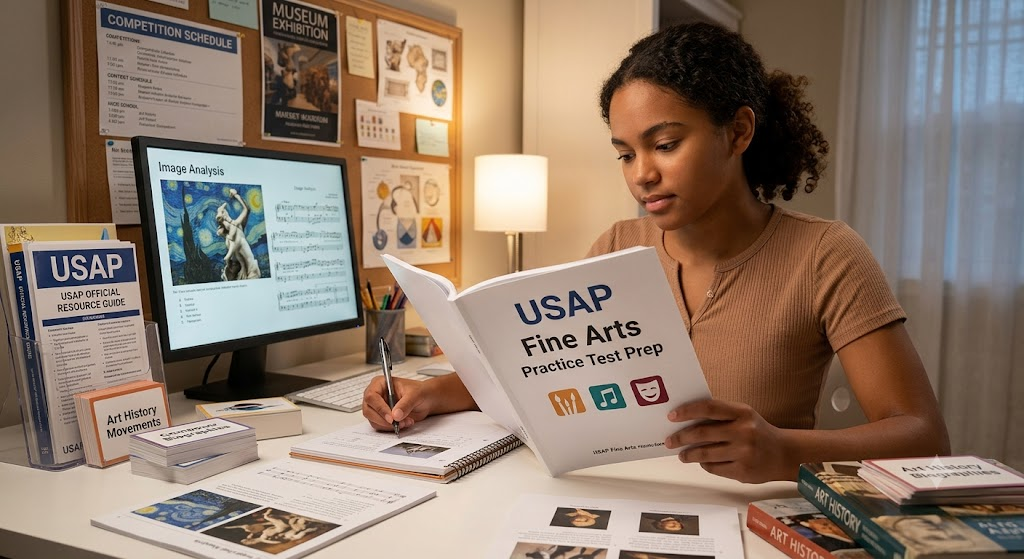
Additional Information
What the Course Entails and Exam Details
This preparation course focuses on the USAP official Fine Arts Resource Guide, which details specific art and music content tied to the current competition year’s theme. Your studies will cover two main pillars: Art History and Music History.
Core Fine Arts Topics:
Art History and Analysis: You must identify and analyze specific artworks, major art movements, and influential artists listed in the resource guide. This includes understanding artistic techniques, historical context, and the relationship between the art and the annual theme.
Music History and Appreciation: You must recognize and understand specific musical compositions, composers, and distinct musical periods (e.g., Baroque, Classical, Romantic) discussed in the guide. This includes foundational music theory terminology and analyzing how the music reflects the competition's core theme.
What to Expect in the Final Exam
The actual USAP Fine Arts test is typically administered in a multiple-choice format during regional, state, and national competition events.
Exam Format:
Number of Questions: Usually consists of 30 to 50 multiple-choice questions.
Content Split: The questions are evenly distributed between Art History/Analysis and Music History/Appreciation (e.g., approximately 50% for each section).
Time Limit: The test is strictly timed, typically allowing students 30 to 45 minutes to complete the section.
Scoring: Scores are calculated based on correct answers, contributing significantly to the individual pentathlete’s overall score and the team’s aggregate total. Correct identification of artists, composers, and specific works, alongside analytical interpretation based on the resource guide, is required.
How to Study and Exam Centers
Preparation is the key to success in the USAP Fine Arts competition.
How to Study Effectively:
Master the Resource Guide: This is your primary textbook. Read it thoroughly multiple times, taking detailed notes on dates, names, definitions, and thematic connections.
Use Visual and Auditory Aids: Create flashcards with images of the required artworks on one side and key details on the back. For the music section, create a playlist of the official listening selections and listen to them frequently while referencing your notes.
Focus on 'The Art of Analysis': Don't just memorize; understand why an artist used certain colors or how a composer structured a piece to convey a message.
Practice with Purpose: Use official practice tests or create your own quizzes using the guide. Set a timer when you take practice tests to simulate the official competition environment and improve your pacing.
Exam Centers:
You do not take the official USAP exam at a generalized testing facility like Pearson VUE. The Academic Pentathlon competition, including the Fine Arts test, is hosted directly by participating schools, districts, or designated regional and state coordinators. Your team coach or school administration will coordinate the location where you and your team will take the official test, which is often a large school gymnasium, cafeteria, or lecture hall during the specified competition date.
Academic Opportunities from the Course
Competing successfully in the United States Academic Pentathlon, and mastering the Fine Arts curriculum, unlocks significant academic and personal growth opportunities rather than direct job certifications. The skills you develop in critical thinking, research, historical analysis, and teamwork are invaluable for your academic future.
Paths this Knowledge Unlocks:
Competitive Edge in College Admissions: High achievement in rigorous academic competitions like USAP is highly regarded by university admissions officers.
Scholarship Opportunities: Top performers and national qualifiers often gain access to various scholarship funds at the regional or national level.
Building a Strong Academic Foundation: This curriculum provides an excellent head start for advanced high school AP courses in Art History and Music Theory.
Development of Essential Skills: Participants sharpen their research, analytical, writing, and test-taking abilities, which are critical for future success in higher education and subsequent careers in creative industries, history, or academia.
Frequently Asked Questions
Reviews
5.0
Based on 0 reviews
Leave a Review
No reviews yet. Be the first to review!