
University of Central Florida (UCF) ANT2511 The Human Species Final Practice Exam
$69.00
- Buy to unlock unlimited access to all Quiz questions and Answers in this Quiz.
- After purchase you can print a PDF of the whole quiz at any point. The PDF will contain the questions and the correct answers.
About this Exam
The UCF ANT2511: The Human Species final practice exam is a crucial stepping stone for students enrolled in this foundational biological anthropology course. This exam is designed to comprehensively assess your understanding of the origins, evolution, and contemporary variation of the human species. If you are a University of Central Florida (UCF) student fulfilling a General Education Program (GEP) science foundation requirement or pursuing a major in Anthropology, Forensic Science, or a related field, this course provides the essential biocultural perspective. It is tailored to equip you with the critical thinking skills needed to interpret the complex history and diversity of humankind. This practice guide is your blueprint for success, mirroring the structure and content you will encounter on test day.
Ready to test your knowledge?
Buy Now to Access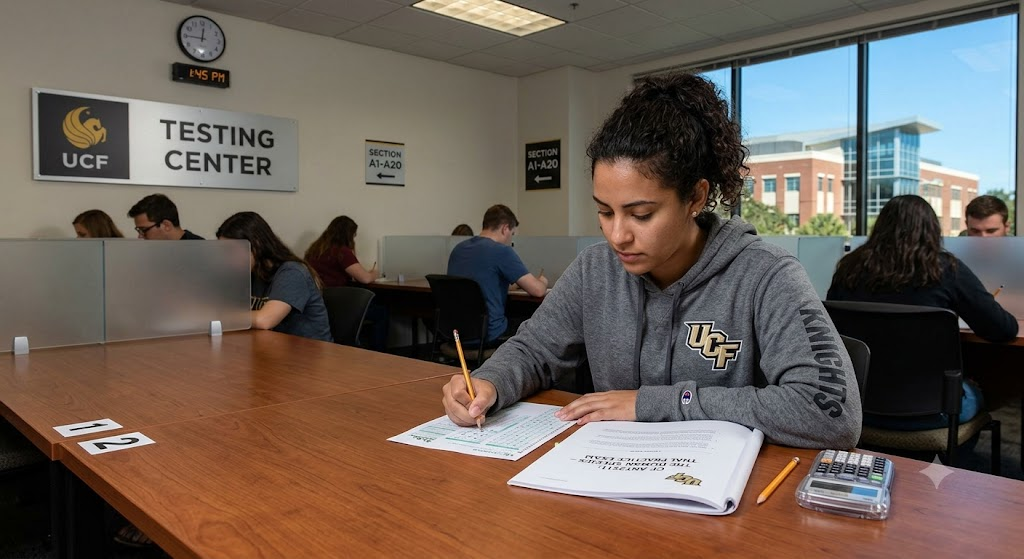
Additional Information
What the Course Entails and Exam Details
UCF ANT2511: The Human Species is a comprehensive introduction to the field of physical (biological) anthropology. The course is a fascinating journey through time and biology, covering several core competencies:
Concepts of Evolutionary Thought: Understanding the historical development and mechanisms of evolution.
Genetics vis-à-vis Evolution: Mastering Mendelian genetics, modern synthesis, population genetics, and human genetic variation.
Mammalian and Primate Osteology: Learning the human skeleton and how it compares to our closest living relatives.
What Makes a Hominin: Identifying the key traits, such as bipedalism, that define our lineage.
Primatology: Observing the behavior, social structures, and evolution of non-human primates.
The Progression of Hominin Evolution: A detailed exploration of the fossil record, from early pre-hominins to archaic Homo sapiens, Neanderthals, and modern humans.
The final exam is a cumulative assessment, integrating all these topics into a final evaluation. The evaluation methods throughout the semester often include multiple lower-stakes exams, but the final is designed as a master check on your overall knowledge.
What to Expect in the Final Exam
While the exact structure can vary by instructor, the final exam for UCF ANT2511 typically follows a standardized format designed for large lecture courses. You can expect a professional, proctored environment where you must demonstrate thorough recall and application of course materials. Key components to anticipate are:
Exam Format: The final exam almost exclusively consists of a comprehensive series of multiple-choice questions. It is a scan-tron or online-equivalent multiple-choice format designed to assess your breadth of knowledge across the entire syllabus.
Passing Score Requirements: Students are typically required to achieve a score of 60% (a 'D') to pass the course, though a 70% ('C') or higher is standard for good academic standing or major program progression.
Time Limits: For a semester-long, comprehensive final, you should expect a time limit of approximately 120 minutes (2 hours). The number of questions usually ranges from 75 to 100, requiring efficient time management.
Specific Rules: All University academic integrity rules apply. The exam is typically closed-book and closed-notes, requiring you to arrive prepared with your UCF ID.
How to Study and Exam Centers
Preparation is the cornerstone of success. Utilizing a dedicated final practice exam is one of the single most effective strategies. It helps you identify knowledge gaps and understand how questions will be framed. Combine it with these actionable study methods:
Practice Active Recall: Review your flashcards (digital or physical) and try to explain complex concepts, like natural selection vs. genetic drift, from memory.
Create a Cumulative Study Schedule: Do not cram. Break down the entire syllabus into manageable sections and review one main topic per day in the weeks leading up to the final.
Utilize UCF’s Student Academic Resource Center (SARC): Leverage group study sessions or peer tutoring to review challenging materials, particularly the progression of hominin fossils.
Regarding exam locations, the final for UCF ANT2511 is usually administered in the primary lecture hall where the class meets on the UCF Main Campus. If you are taking an online or mixed-mode version, it may be administered via a secure online proctoring service or at the main UCF Testing Center or an authorized testing site, such as a regional campus or through an approved partner testing school for distance learners. Always confirm the location with your instructor and on your official UCF exam schedule.
Job Opportunities from the Course
While ANT2511 is an introductory course, it provides the essential, specialized foundation for a wide array of career paths in biological anthropology and related disciplines. Completing this course, especially with high performance, is the first step toward a competitive edge in several fields. Students who excel can pursue advanced roles, including:
Forensic Technician
Archaeological Field Assistant
Museum Technician/Curatorial Assistant
Cultural Resource Management (CRM) Analyst
Research Assistant in Biological Anthropology
Primate Research Technician
Public Health Analyst with Biocultural Focus
Heritage Management Specialist
Excellence in this course also supports subsequent graduate studies required for research positions, such as becoming a specialized forensic anthropologist, a professor of anthropology, or a director of a research institution.
Frequently Asked Questions
Reviews
5.0
Based on 0 reviews
Leave a Review
No reviews yet. Be the first to review!