
University of Central Florida (UCF) BSC2010C Biology I Practice Exam 1
$69.00
- Buy to unlock unlimited access to all Quiz questions and Answers in this Quiz.
- After purchase you can print a PDF of the whole quiz at any point. The PDF will contain the questions and the correct answers.
About this Exam
University of Central Florida's (UCF) BSC2010C, commonly known as Biology I, is a fundamental course designed to provide a comprehensive introduction to the foundational principles of life. This core class serves as the first step for students in biological sciences, pre-professional health programs, and related fields. The Practice Exam 1 is a critical diagnostic tool, specifically created to help students assess their understanding of the first unit, typically covering topics from the initial few weeks, such as the chemical basis of life, cellular structure, and the nature of genetic information. This resource is designed to mirror the format of a typical lecture exam, offering invaluable insights into common question types and exam pressure.
Ready to test your knowledge?
Buy Now to Access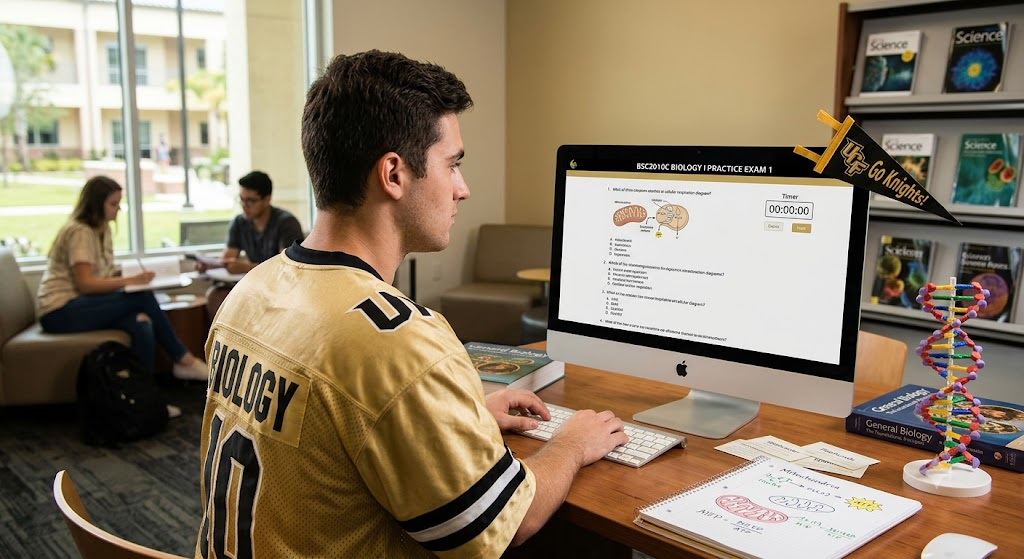
Additional Information
What the Course Entails and Exam Details
BSC2010C is a four-credit course at UCF, combining a large lecture component with mandatory laboratory sessions, indicated by the 'C.' The course introduces a vast array of topics, moving from a molecular to a systemic level. The core topics include, but are not limited to, the scientific method, the unique properties of water, the structure and function of biological macromolecules, cell structure, membrane transport, metabolism, cellular respiration, photosynthesis, cellular division, Mendelian genetics, and introductory evolutionary principles.
Practice Exam 1 focuses specifically on the first major content block. Students should prepare to be tested on concepts found within the first five chapters of the typical textbook. A key feature of the final graded assessments is their structure: they are often 45-minute, multiple-choice exams. These questions prioritize not only factual recall but also the application of critical thinking to biological scenarios. The lowest of the regular lecture exams is frequently dropped, making these early assessments crucial for setting a strong academic foundation in a rigorous, high-volume course.
What to Expect in the Final Exam
While a 'practice' exam is a study tool, it is designed to prepare you for the actual assessed examinations. The high-stakes final in BSC2010C is a cumulative assessment, covering all material from the entire semester and any remaining new topics. The final is a timed, multiple-choice exam. The time limit is typically equivalent to a regular lecture block or, for the cumulative final, a two-hour window during final exam week. All official exams are typically taken online through Webcourses@UCF, the university's learning management system, powered by Canvas. Proper internet connectivity and multi-factor authentication are required. Cheating, in any form, is strictly prohibited and governed by the UCF Golden Rule.
How to Study and Exam Centers
Effective preparation requires an active, multi-pronged strategy rather than passive reading. Do not just read your textbook or review slides; actively test yourself. Students should utilize a variety of techniques: form study groups to teach complex concepts to each other; use the 'Materia widgets' and practice quizzes found within Webcourses@UCF for immediate feedback; create physical or digital flashcards for vocabulary and key molecular processes; and draw diagrams of cellular structures and metabolical pathways to reinforce visual understanding. Regularly use practice problems, such as those provided in this guide, and simulate the exam environment with a timer.
Regarding test locations, although BSC2010C has physical lab components on the UCF campus, all official lecture exams (including the regular ones and the final) are delivered virtually via Webcourses@UCF (Canvas). You can take these exams from your personal computer with a reliable internet connection. There are no external testing centers like Pearson VUE or authorized schools; the exam is centralized within the UCF portal for enrolled students. Always verify current instructions for any specific proctoring requirements with your official course syllabus.
Job Opportunities from the Course
A strong performance in BSC2010C unlocks a pathway to numerous high-demand and fulfilling careers. It is the gatekeeper to advanced courses needed for specialization.
Successful completion of this foundational course is a prerequisite for entry into various professional fields and advanced academic paths, unlocking roles such as:
Biological Field Technician
Biotechnology Lab Technician
Research Assistant in Academic or Industrial Settings
Entry-level Environmental Scientist
K-12 Science Teacher (with certification)
Pre-professional preparation for Medicine, Dentistry, and Veterinary Science (e.g., Medical Assistant, Vet Tech)
Pharmaceutical Sales Representative
Naturalist or Park Ranger
Frequently Asked Questions
Reviews
5.0
Based on 0 reviews
Leave a Review
No reviews yet. Be the first to review!