
University of Central Florida (UCF) COM4120 Organizational Communication Practice Exam.
$69.00
- Buy to unlock unlimited access to all Quiz questions and Answers in this Quiz.
- After purchase you can print a PDF of the whole quiz at any point. The PDF will contain the questions and the correct answers.
About this Exam
The UCF COM4120 Organizational Communication Practice Exam is an essential preparatory tool designed for students at the University of Central Florida who are enrolled in or preparing for the final assessment in the COM4120 Organizational Communication course. This course and its corresponding exam are specifically tailored for students majoring in Human Communication, Advertising-Public Relations, or related disciplines within the Nicholson School of Communication and Media. The course itself dives deep into the intricate dynamics of how communication processes structure organizations, facilitate decision-making, manage conflict, and shape corporate culture. This practice exam is designed to gauge your readiness, pinpoint knowledge gaps, and familiarize you with the rigorous academic expectations of the final evaluation.
Ready to test your knowledge?
Buy Now to Access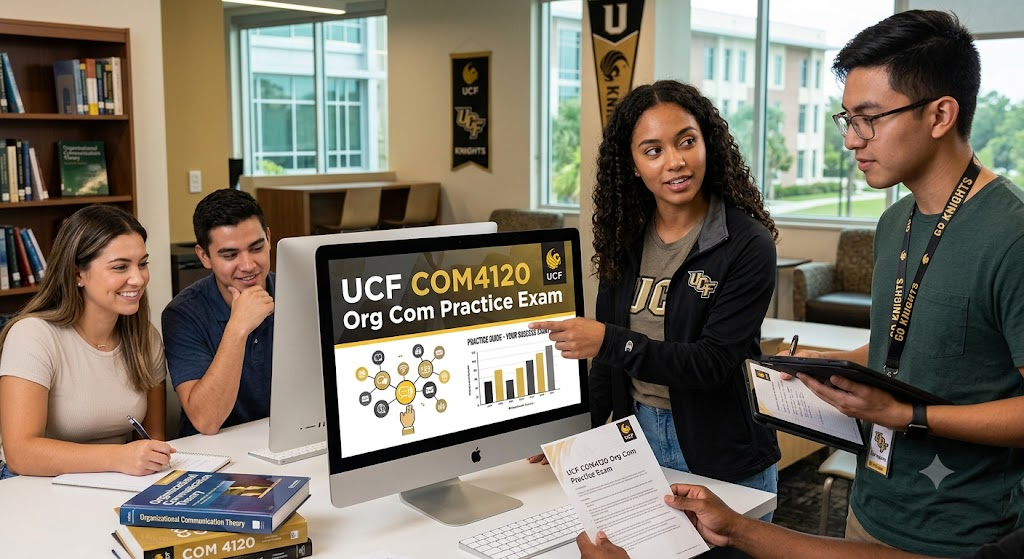
Additional Information
What the Course Entails and Exam Details
This comprehensive course examines the theory and practice of communication within complex organizations. Students will explore multiple theoretical frameworks—including classical, human relations, human resources, systems, and cultural approaches—to understand how communication functions. Key skills covered involve critical analysis of real-world organizational communication challenges, the ability to apply theoretical concepts to practical case studies, and understanding ethical communication practices in a corporate environment. The practice exam rigorously tests these domains through a mix of conceptual, application-based, and analytical questions, ensuring that you have not only memorized definitions but also mastered the ability to apply organizational communication principles effectively.
What to Expect in the Final Exam
While the exact structure may vary slightly by semester, the final exam for UCF COM4120 typically follows a standard academic assessment format. You can expect a significant portion of multiple-choice and true/false questions that test your foundational knowledge of theories, key researchers, and core vocabulary. To achieve the highest level of mastery, the exam also frequently includes short-answer or essay questions that require you to synthesize information, analyze complex scenarios, or propose solutions to organizational issues based on the course materials. The passing score required is standard for UCF academic courses, often requiring a ‘C’ (73-76%) or higher for major credit, but always confirm the specific syllabus requirements. The time limit is typically two hours, demanding efficient time management. The actual final exam is usually administered in person at the UCF campus, likely in the same classroom as your lectures, or occasionally via an authorized, proctored online system such as Webcourses@UCF (Canvas) with mandatory lockdown browser settings.
How to Study and Exam Centers
Effective study methods are crucial for success. We highly recommend using this practice exam as a benchmark tool multiple times throughout your review. Begin by taking the practice test to identify weak areas. Then, dedicate focused study time to your course textbook, "Organizational Communication: Approaches and Processes" (or the currently assigned text), and your detailed lecture notes, which often highlight the specific interpretations preferred by your instructor. Creating flashcards for key theories (like Maslow's Hierarchy or Weick's Theory of Organizing) and their practical implications is exceptionally effective. Practice applying these concepts to new, hypothetical business scenarios. Form study groups with classmates to discuss case studies. For the final, required exam, all testing logistical details—including confirmed dates, times, and specific classroom locations—will be officially posted by UCF. The physical exam centers are restricted to authorized classrooms on the UCF main campus in Orlando. Be sure to confirm whether you must bring a Scantron form, pencils, or a valid UCF ID card.
Job Opportunities from the Course
Mastering organizational communication opens doors to diverse and dynamic career paths across every industry sector. A strong foundation in this discipline is critical for roles focused on managing internal and external relationships, building corporate reputation, and optimizing employee engagement. Graduates often pursue careers such as:
Human Resources (HR) Specialist or Manager
Corporate Communications Manager
Public Relations (PR) Specialist
Internal Communications Coordinator
Training and Development Specialist
Organizational Development Consultant
Social Media Manager
Executive Coach
Change Management Consultant
Recruiter
This course equips you with the essential strategic communication skills that employers constantly seek in leadership and operational roles.
Frequently Asked Questions
Reviews
5.0
Based on 0 reviews
Leave a Review
No reviews yet. Be the first to review!