
USP 797 Sterile Compounding Practice Test
$69.00
- Buy to unlock unlimited access to all Quiz questions and Answers in this Quiz.
- After purchase you can print a PDF of the whole quiz at any point. The PDF will contain the questions and the correct answers.
About this Exam
The USP 797 Sterile Compounding Practice Test is designed to evaluate essential knowledge and practical skills related to the preparation of sterile medications. These crucial standards, established by the United States Pharmacopeia (USP), ensure that patients receive safe and uncontaminated therapies. This exam is essential for pharmacy technicians, pharmacists, and other healthcare professionals working in compounding environments, certifying their commitment to the highest safety and quality standards. Mastering these procedures is vital for preventing life-threatening infections and ensuring product integrity.
Ready to test your knowledge?
Buy Now to Access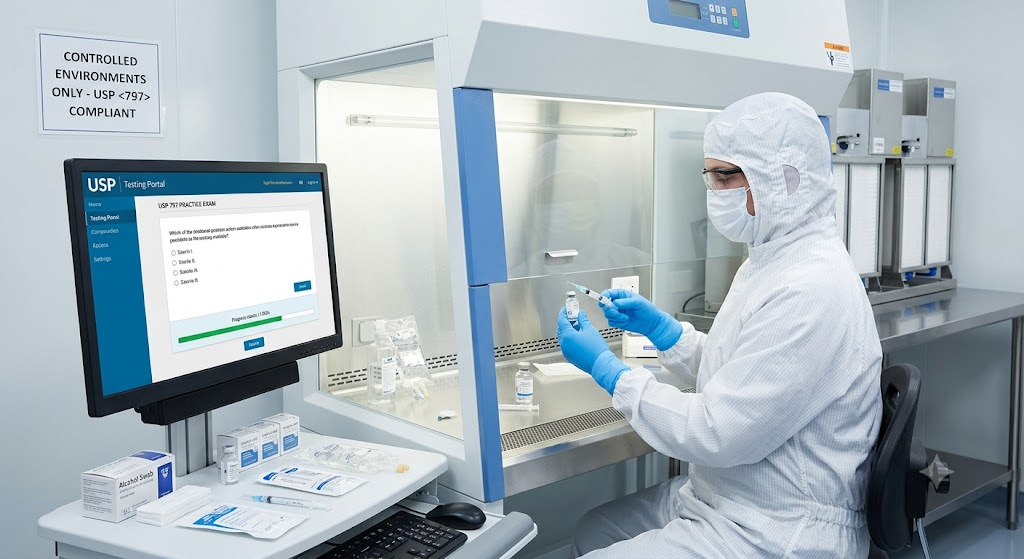
Additional Information
What the Course Entails and Exam Details
This examination assesses a candidate's mastery of the comprehensive regulations and technical skills outlined in USP Chapter <797>. The core topics covered in preparation for the test typically include:
Aseptic Processing: The fundamental techniques and controls required to maintain the sterility of the compounding environment and the resulting preparations.
Garbing and Hand Hygiene: Precise protocols for proper handwashing, sanitization, and the wearing of personnel protective equipment (PPE) like gowns, gloves, masks, and hoods.
Environmental Monitoring: Procedures for sampling and testing the air, surfaces, and personnel within the cleanroom to ensure low levels of contamination.
Primary Engineering Controls (PECs): A deep understanding of laminar airflow workbenches (LAFWs), biological safety cabinets (BSCs), and other specialized environments.
Secondary Engineering Controls (SECs): Knowledge of cleanrooms, anterooms, and the air filtration systems (HEPA) that support PECs.
Risk Level Classification: Understanding the different levels of microbial contamination risk associated with various types of compounding activities.
Product Preparation and Sterilization: Specific instructions for sterile filtration, heat sterilization, or other methods for achieving the required sterility.
Storage and Handling: Protocols for storing sterile preparations, maintaining the cold chain, and managing medications with beyond-use dates.
Cleaning and Disinfection: Specific materials, methods, and schedules for keeping cleanroom surfaces and equipment free of contaminants.
Documentation and Quality Assurance: Comprehensive record-keeping for every stage of the compounding process, including training and proficiency testing.
What to Expect in the Final Exam
The USP 797 Sterile Compounding Practice Test is often delivered in a computer-based format. Candidates can typically anticipate a comprehensive set of multiple-choice questions designed to test both theoretical understanding and scenario-based application of the USP <797> standards. While specific numbers vary by platform, a common structure might involve 75 to 100 questions. The total duration of the exam is typically set around 90 to 120 minutes, allowing for sufficient time to read and process complex questions.
A passing score is typically set to reflect a high level of proficiency, often around 75% to 80% or higher. It is essential to check the specific requirements of the testing body or program administering the exam. Candidates will need to demonstrate strong problem-solving skills and the ability to apply sterile compounding principles to real-world pharmaceutical scenarios. No outside reference materials are usually permitted during the exam.
How to Study and Exam Centers
Effective preparation is key to success on the USP 797 Sterile Compounding Practice Test. Begin by thoroughly studying the official USP General Chapter <797> text itself, paying close attention to every detail and definition. Supplement your learning with reputable professional resources, such as guidelines from the American Society of Health-System Pharmacists (ASHP) and recognized compounding organizations. Utilize practice question banks and simulated exams to identify knowledge gaps and improve your test-taking speed.
Forming study groups can provide valuable opportunities to discuss complex topics and share insights. Hands-on practice in a real or simulated cleanroom environment is indispensable, as it reinforces the physical skills required for aseptic technique. Numerous accredited colleges, specialized pharmacy training schools, and professional organizations offer comprehensive courses and workshops on sterile compounding that align with the USP <797> standards.
As a Practice Test, this examination is typically accessed through specialized online portals provided by the training organization or professional body you are enrolled with. These can be completed on a computer with a stable internet connection. If the Practice Test is integrated into a larger certification or state licensure program, you may take the actual final certification exam at a physical testing center, such as those administered by Pearson VUE, which have locations nationwide. However, the Practice Test component itself is most commonly a flexible, online resource to prepare you for this step.
Job Opportunities from the Course
A strong understanding of USP 797 and passing the corresponding exam opens doors to numerous career opportunities within specialized pharmacy environments. Professionals with this validated knowledge are in high demand to ensure patient safety. Potential job titles include:
Sterile Compounding Technician: Responsible for the day-to-day preparation of sterile intravenous (IV) mixtures, epidurals, and other sterile products.
Lead Sterile Compounding Technician: Provides leadership, training, and oversight for other compounding staff, ensuring compliance with all USP 797 regulations.
IV Room Technician: Specializes in preparing large-volume and small-volume parenterals in hospital settings.
Pharmacy Specialist - Sterile Products: A more advanced role focusing on quality control, process improvement, and complex sterile compounding procedures.
Infusion Center Pharmacist: Manages the preparation and administration of complex infused medications in outpatient settings.
Hospital Pharmacist (Specializing in Sterile Compounding): Directs and supervises all sterile compounding operations within a hospital pharmacy.
Cleanroom Manager/Coordinator: Oversees the entire cleanroom environment, including environmental monitoring, maintenance, and staff compliance with aseptic protocols.
Compounding Quality Assurance (QA) Specialist: Evaluates compounding procedures, performs audits, and ensures strict adherence to established standards and regulations.
Sterile Products Educator: Develops and delivers training programs to other healthcare professionals on sterile compounding techniques and USP 797 compliance.
Healthcare Consultant (Sterile Compounding): Advises organizations on establishing and maintaining compliant sterile compounding practices and facilities.
Frequently Asked Questions
Reviews
5.0
Based on 0 reviews
Leave a Review
No reviews yet. Be the first to review!