
Utah Esthetics Instructor Practice Exam
$69.00
- Buy to unlock unlimited access to all Quiz questions and Answers in this Quiz.
- After purchase you can print a PDF of the whole quiz at any point. The PDF will contain the questions and the correct answers.
About this Exam
Are you a licensed esthetician ready to share your passion and shape the future of the beauty industry in Utah? The Utah Esthetics Instructor certification is the key qualification required to teach esthetics in state-approved beauty schools and programs. This licensure signifies that you possess not only master-level practical skills but also the pedagogical knowledge necessary to educate the next generation of skincare professionals effectively. Our comprehensive guide is designed specifically for experienced practitioners aiming to pass the Utah Esthetics Instructor Exam, ensuring you are prepared to transition from the treatment room to the classroom. It focuses on validating your expertise in teaching methodologies, curriculum planning, and state-specific safety regulations.
Ready to test your knowledge?
Buy Now to Access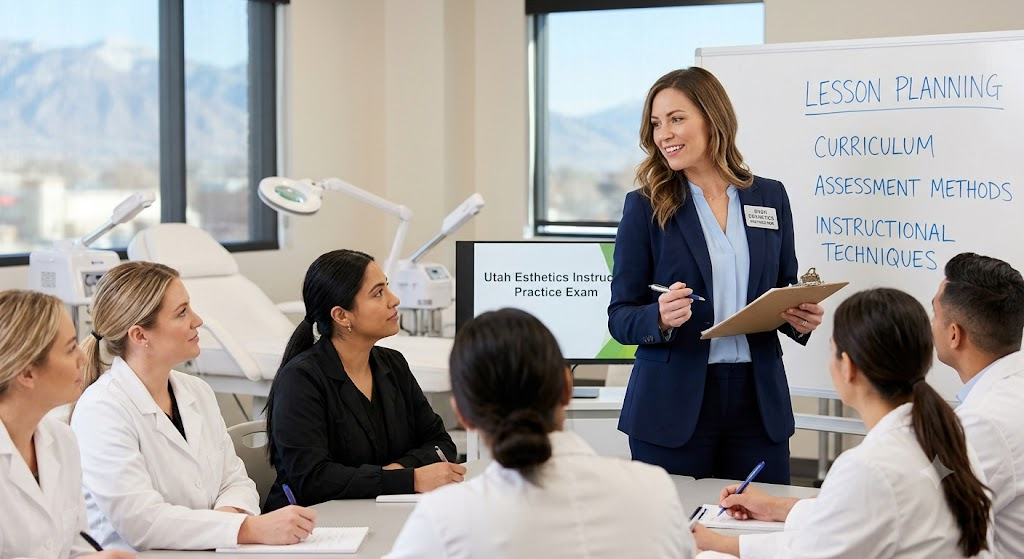
Additional Information
What the Course Entails and Exam Details
Preparing for the Esthetics Instructor exam goes far beyond reviewing basic skincare techniques. The core curriculum focus for instructors-in-training is on education science applied to the esthetics field. Candidates will study advanced educational psychology, learning theories, and diverse teaching styles to accommodate different student needs. A significant portion of the material covers effective classroom management, including student motivation, conflict resolution, and maintaining an organized learning environment. You must master lesson planning, curriculum development, and creating structured courses of study that align with Utah state standards. Additionally, the course covers proper methods of student assessment and evaluation, teaching both theory and practical (hands-on) application, and extensive knowledge of Utah Division of Professional Licensing (DOPL) laws and safety regulations.
What to Expect in the Final Exam
The licensing process in Utah typically involves a two-part examination administered in coordination with a state-approved testing vendor (often NIC – National Interstate Council of State Boards of Cosmetology). The first component is the Theory Examination. This is a computer-based, multiple-choice exam that focuses on educational methodologies rather than basic esthetic knowledge. Expect questions covering teaching methods, testing and evaluation, and classroom management. The second component is the Practical Examination. During the practical, you will not be performing services on a model, but rather demonstrating your ability to teach. You may be required to present a mini-lesson on a specific topic, demonstrating your communication skills, organizational ability, and use of visual aids. You will also likely be evaluated on your ability to supervise and correct students performing practical services in a simulated clinical setting. Candidates must achieve a passing score, usually 75% or higher on both sections, to receive their licensure.
How to Study and Exam Centers
Effective preparation for the Utah Esthetics Instructor Exam requires focusing on how to teach, not just what to teach. Start by thoroughly reviewing the textbook recommended for instructor training, such as the Milady Professional Educator guides. Create comprehensive lesson plans for various esthetic topics to practice the required structuring and presentation skills. Form a study group with other aspiring instructors to practice teaching mini-lessons and providing constructive feedback to each other. Utilize practice exams specifically designed for the Instructor level to familiarize yourself with the phrasing of the theory questions. The actual examination is typically administered by a third-party testing agency authorized by the Utah DOPL, such as Prov or PSI. Upon completing your instructor training hours, your school will help you register for the exam, and you will choose a physical testing center located in major cities like Salt Lake City or Provo.
Job Opportunities from the Course
Earning your Utah Esthetics Instructor licensure opens doors to diverse and rewarding career paths within the beauty education sector. This certification validates your status as an expert educator, allowing you to move beyond the service counter and influence the standards of the entire industry. Here are specific job opportunities unlocked by this license:
Esthetics Instructor at an accredited Beauty School
Cosmetology Program Director
State Board Examiner
Corporate Trainer for Skincare Brands
Continuing Education Provider
Educational Consultant for Spas and Salons
Beauty Education Content Creator or Author
Admissions Representative for Beauty Schools
Frequently Asked Questions
Reviews
5.0
Based on 0 reviews
Leave a Review
No reviews yet. Be the first to review!