
Utah Falconry License Practice Exam
$69.00
- Buy to unlock unlimited access to all Quiz questions and Answers in this Quiz.
- After purchase you can print a PDF of the whole quiz at any point. The PDF will contain the questions and the correct answers.
About this Exam
The ancient art of falconry, the hunting of wild quarry with a trained raptor, is a highly regulated and demanding discipline in the United States. To become a falconer in Utah, an aspiring apprentice must first demonstrate a deep commitment to raptor husbandry, biology, and ethical practice by passing a rigorous state examination. The Utah Falconry License Practice Exam is designed to prepare prospective apprentices for this initial, mandatory milestone. Passing the official exam is the first required step toward obtaining a Utah Falconry Certificate of Registration (COR), allowing you to begin your journey under the guidance of a licensed sponsor. This study guide is essential for any Utah resident serious about mastering the foundational knowledge required to legally and successfully manage a bird of prey.
Ready to test your knowledge?
Buy Now to Access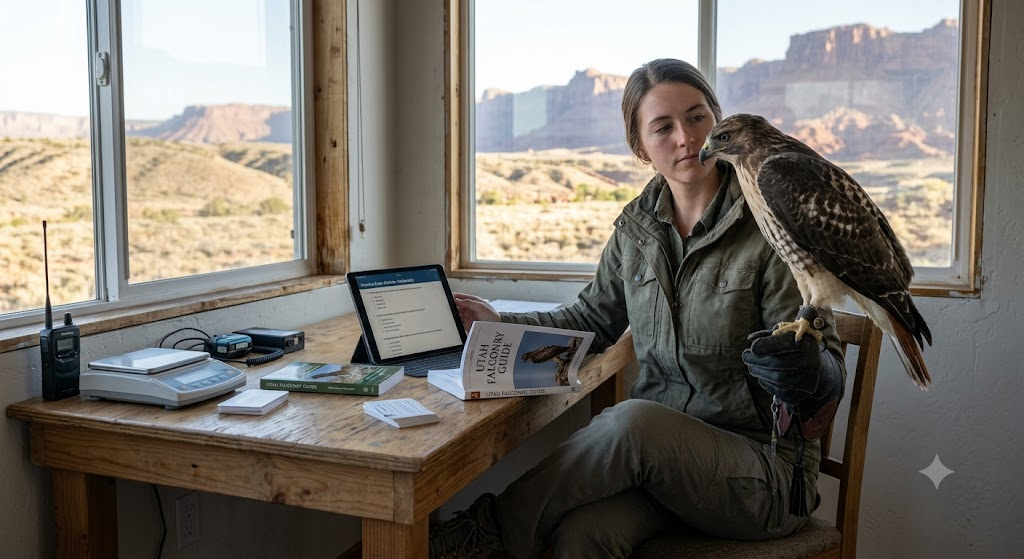
Additional Information
What the Course Entails and Exam Details
This examination is not derived from a single class, but rather represents a comprehensive assessment of self-studied knowledge across several technical domains. Aspiring falconers must master the material provided in the Utah Division of Wildlife Resources (DWR) Falconry Guide and supplemental resources.
The exam content is partitioned into four primary areas of competence:
Raptor Natural History and Biology: This section covers the basic anatomy and physiology of common falconry raptors (such as the Red-tailed Hawk and American Kestrel), molt patterns, classification of different groups (Accipiters, Buteos, Falcons), and the ecological role of predators in the wild.
Husbandry, Health, and Disease: A critical domain detailing how to keep a captive raptor healthy. Topics include identifying, treating, and preventing diseases (like Frounce or Aspergillosis), managing body weight, proper diet, sanitation, and recognizing symptoms of distress or injury.
Equipment and Facilities (Mews): This practical section assesses knowledge of the required infrastructure and tools. You must know the legal specifications for indoor facilities (mews) and outdoor weathering areas, as well as the names, functions, and proper maintenance of jesses, leashes, swivels, perches, hoods, scales, and telemetry.
Laws, Regulations, and Ethics: A significant portion of the exam is dedicated to understanding both Utah state code and federal regulations. This includes knowing which species may be legally taken, trapping seasons, possession limits, marking requirements, ethical trapping methods, and the strict rules governing the apprentice class license.
What to Expect in the Final Exam
The official Utah Falconry Examination is a comprehensive, written test consisting of multiple-choice and true/false questions designed to thoroughly test your comprehension of the material.
Key details regarding the official final exam structure are:
Total Question Count: The exam typically consists of 100 questions.
Question Format: The format is strictly closed-book, multiple-choice and true/false questions.
Passing Score Requirement: You must achieve a minimum score of 80% to pass. This high threshold reflects the serious nature of the responsibility assumed when taking wildlife into captivity.
Time Limit: You will typically be given between 1.5 to 2 hours to complete the exam.
Retake Policy: If you fail to achieve an 80% score, you must wait at least 14 days before you are eligible to attempt the examination again.
Completion Timeframe: Once you have passed the examination, the completion letter is generally valid for one year. You must complete the subsequent steps—such as securing a sponsor and passing a facility inspection—within that timeframe to obtain your apprentice COR.
How to Study and Exam Centers
Preparation for this exam requires disciplined self-study rather than traditional classroom attendance. Here are the most effective strategies to prepare for the test:
Master the Official Manual: Your primary and most important resource is the current Utah Falconry Guide, published as a PDF by the Utah Division of Wildlife Resources. You must read this document thoroughly, multiple times.
Use Recommended Texts: Supplemental reading is highly recommended to deepen your understanding of practical techniques. Common core texts include North American Falconry and Hunting Hawks (Beebe and Webster), Understanding the Bird of Prey (Fox), and The Falconer's Apprentice (Kimsey and Hodge).
Utilize Practice Exams: Take advantage of practice exams available through clubs like the Utah Falconers Association or online preparation portals. These simulate the test-taking experience, helping you identify knowledge gaps and get accustomed to the style of regulatory questions.
Find a Mentor Early: Although you don't officially have a "sponsor" until after you pass the exam, making contact with experienced General or Master falconers early in your study process is invaluable. They can clarify complex topics and provide practical context.
Official Testing Centers and Scheduling
The Utah Falconry Examination is not taken online or through commercial testing providers like Pearson VUE. It must be administered in person by authorized Utah DWR personnel. To take the exam, you must contact one of the regional DWR offices throughout Utah to schedule an appointment. You cannot show up without an appointment. Offices are located in Ogden, Salt Lake City, Provo, Cedar City, Price, and Vernal. When you schedule, confirm the specific requirements (e.g., bring valid photo ID) and ensure you have read the most current proclamation.
Job Opportunities from the Course
A falconry license itself is fundamentally a recreational license and is not a professional certificate for employment. In fact, standard falconry permits expressly forbid "commercial use" of your birds (like paid demonstrations or hunting for hire). However, the foundational knowledge and extensive experience required to move up the falconry ranks from Apprentice to General to Master class are highly valued and are necessary for several related career paths.
These related fields include:
Wildlife Educator / Presenter: Requires experience and higher-class permits for captive raptors used in non-profit education or commercial exhibits (where specifically permitted).
Raptor Rehabilitation Specialist: Working with injured or orphaned birds of prey often requires the same husbandry knowledge and handling skills as falconry.
Professional Bird Abatement Specialist: Using trained falcons or hawks to ethically and naturally remove nuisance birds from airports, agricultural lands, or industrial facilities. This specific field requires a specialized commercial abatement permit from the U.S. Fish and Wildlife Service, but extensive falconry experience is the essential prerequisite to acquiring that professional status.
Frequently Asked Questions
Reviews
5.0
Based on 0 reviews
Leave a Review
No reviews yet. Be the first to review!