
Utah Foods 1 State Practice Exam
$69.00
- Buy to unlock unlimited access to all Quiz questions and Answers in this Quiz.
- After purchase you can print a PDF of the whole quiz at any point. The PDF will contain the questions and the correct answers.
About this Exam
The Utah Foods 1 State Skill Certification exam is a foundational milestone for students beginning their journey in culinary arts and food science. This examination validates essential knowledge and practical skills acquired in the introductory Foods 1 course, which is part of Utah’s Career and Technical Education (CTE) pathway. The exam is designed primarily for high school students who wish to demonstrate proficiency in kitchen safety, sanitation, fundamental cooking techniques, and basic nutrition. Earning this certificate proves your commitment to professional standards and readiness for advanced culinary coursework or entry-level employment.
Ready to test your knowledge?
Buy Now to Access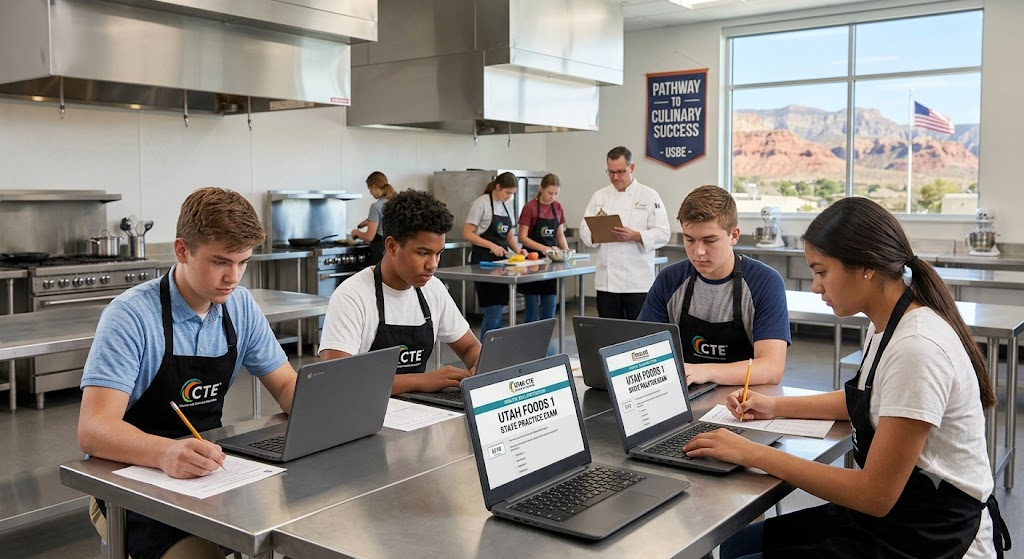
Additional Information
What the Course Entails and Exam Details
The Utah Foods 1 curriculum is designed to build a solid foundation of culinary competence. The associated exam is rigorous, covering several "Strands" of standards mandated by the Utah State Board of Education (USBE). Students must master a wide array of topics. The core syllabus includes critical skills in food safety and sanitation, such as preventing foodborne illness, proper handwashing, and the safe handling of time/temperature control for safety (TCS) foods. Beyond safety, you must know the proper identification, use, and care of kitchen equipment and measuring tools. The exam also details essential cooking methods, including dry heat, moist heat, and combination techniques. Furthermore, you will be expected to understand recipe reading, ingredient conversions, basic nutrition principles, and proper meal management practices. The exam details are structured to test both recall of definitions and the application of these concepts to real-world kitchen scenarios.
What to Expect in the Final Exam
You can expect the Utah Foods 1 Final State Exam to be a comprehensive assessment administered digitally within your school. The format primarily consists of multiple-choice questions that require you to synthesize and apply your knowledge. The exact passing score is determined by USBE and is typically aligned with industry readiness standards; students generally need a score of 80% or higher to receive the official skill certificate. The time limit for the exam is defined by your testing window but is typically designed to allow sufficient time for careful consideration of all items. Proctors will enforce strict testing rules, which usually mean no notes, no textbooks, and no external assistance during the session.
How to Study and Exam Centers
Effective study strategies are crucial for success on this state exam. Begin your preparation by obtaining and reviewing the official USBE Strands and Standards document for Foods 1 from your instructor. Utilize class notes, textbooks, and any practice worksheets you completed during the semester. We highly recommend taking any official Utah Foods 1 State Practice Exams provided by your teacher or available through your district's testing portal, as these offer the most accurate simulation of the real test format. Create flashcards for critical terminology, conversion charts, and safety rules, such as the Temperature Danger Zone (41°F - 135°F) and minimum internal temperatures for cooking various proteins. Group study sessions can be helpful for teaching concepts to others, which reinforces your own understanding. As for exam centers, these skill certificate exams are unique because they are not taken at public hubs like Pearson VUE. Instead, they are administered directly by authorized CTE instructors within your own high school’s computer labs or designated testing environments. Ensure you know your specific test date and time as scheduled by your school.
Job Opportunities from the Course
Successfully earning your Utah Foods 1 State Skill Certificate is an impressive addition to your early resume. It signals to employers that you possess verified foundational knowledge that requires less introductory training on site. This certification unlocks several entry-level job opportunities across the diverse hospitality and food service industry. You will be qualified for various candidate pools, such as: Entry-level Prep Cook, Kitchen Assistant, Institutional Food Service Worker (e.g., in schools or care facilities), Dietary Aide, Food Service Counter Attendant, and Line Cook in casual dining establishments. Additionally, this certification is often a vital prerequisite for advanced training programs, such as ProStart or Foods 2, leading directly to higher-paying supervisory and management career paths.
Frequently Asked Questions
Reviews
5.0
Based on 0 reviews
Leave a Review
No reviews yet. Be the first to review!