
Utility Services Specialist Practice Exam
$69.00
- Buy to unlock unlimited access to all Quiz questions and Answers in this Quiz.
- After purchase you can print a PDF of the whole quiz at any point. The PDF will contain the questions and the correct answers.
About this Exam
The Utility Services Specialist certification is designed for professionals working within the essential utility sectors, including water, wastewater, gas, electricity, and telecommunications. This designation validates a candidate's fundamental knowledge of utility infrastructure, regulatory compliance, safety protocols, and effective customer service practices. It is ideal for entry-level to mid-level personnel, such as utility technicians, service coordinators, customer service representatives, and individuals seeking to transition into the public or private utility industries. This certification demonstrates your commitment to the industry and confirms your ability to support the safe, reliable, and efficient delivery of critical services to the public.
Ready to test your knowledge?
Buy Now to Access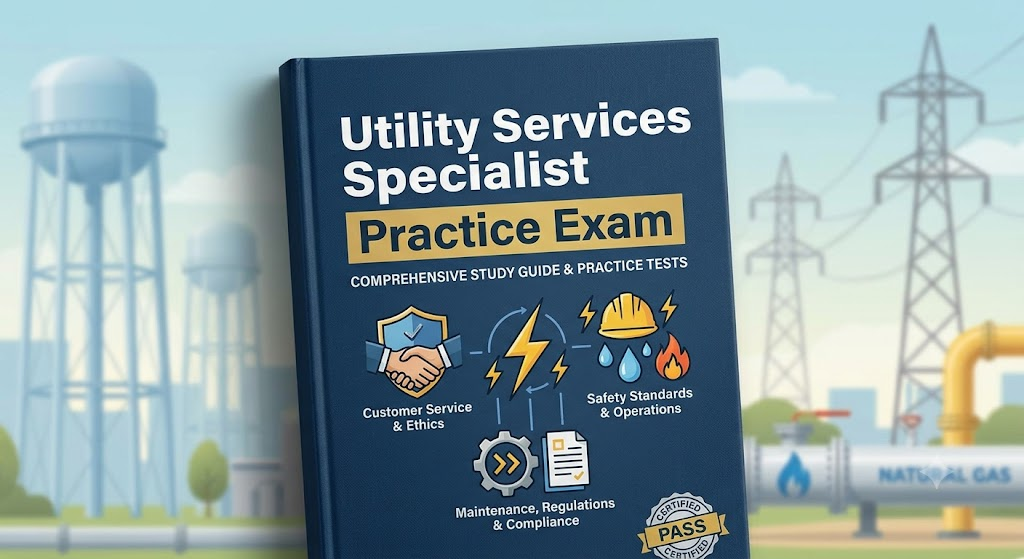
Additional Information
What the Course Entails and Exam Details
This examination is a comprehensive assessment that draws from multiple domains within the utility sector. The course of study and the exam itself will cover the following key areas:
Introduction to Utility Systems: A broad overview of the fundamental principles and infrastructure behind major utility services, including water supply and treatment, natural gas distribution, electrical power transmission and distribution, and telecommunications networks.
Regulatory Compliance: Understanding the local, state, and federal regulations that govern utility operations, such as environmental protection acts, public utility commission rules, and relevant legislation.
Safety and Standards: A deep dive into essential safety protocols, including OSHA standards, personal protective equipment (PPE), hazardous material handling, and emergency response procedures specific to utility work environments.
Customer Relations and Service: Best practices for communicating with and providing service to utility customers, including complaint resolution, billing inquiries, service connection procedures, and promoting energy/water conservation.
Operational Maintenance and Troubleshooting: A basic understanding of routine maintenance tasks, fault-finding techniques, and troubleshooting common issues in various utility systems.
What to Expect in the Final Exam
The Utility Services Specialist final exam is a standard assessment designed to test your proficiency and practical understanding of the core concepts. Candidates should be prepared for the following exam format and rules:
Format: The examination is typically administered in a multiple-choice format, although some variations may include true/false or scenario-based questions to evaluate practical decision-making. The exam is often computer-based and proctored.
Number of Questions: The exam usually consists of 75 to 100 questions.
Time Limit: Candidates are generally given between 90 minutes and two hours to complete the entire exam.
Passing Score: The passing score requirement is typically a minimum of 70%.
Specific Rules: The exam is closed-book, meaning no textbooks, notes, or external resources are allowed. Candidates may require official government-issued identification to enter the testing environment.
How to Study and Exam Centers
Effective preparation is key to success on the Utility Services Specialist exam. Here are actionable study strategies and information on how to register and take the test:
How to Study
Comprehensive Syllabus Review: Begin by obtaining the official exam blueprint or syllabus. Use this as your primary checklist to ensure you have covered every required topic in your studies.
Practice Exams and Sample Questions: Utilize all available Utility Services Specialist Practice Exam resources. Taking practice tests helps you familiarize yourself with the question style and time constraints, while sample questions clarify which areas require more focus.
Utilize Official Resources: Focus your studies on official training materials, textbooks, and online courses provided by the authorized certification body or their partners.
Form Study Groups: Collaborating with peers can provide different perspectives on challenging topics and offer encouragement throughout the preparation process.
Visual Study Aids: Create flowcharts for processes like the water treatment cycle, diagrams of electrical distribution, and flashcards for key regulatory bodies and acronyms.
Exam Centers and How to Take the Exam
This exam is administered through several channels, providing flexibility for candidates:
Online Proctored Exams: Many authorized providers offer the option to take the exam remotely via a secure online proctoring portal. This allows you to take the test from your home or office, provided you meet the technological and environmental requirements.
Physical Testing Centers: Candidates can register to take the exam at specific, recognized testing centers, such as those operated by large standard vendors like Pearson VUE, PSI, or other authorized assessment services. These locations provide a controlled, proctored environment.
Authorized Training Schools and Institutions: In many cases, candidates who complete their preparatory course through an authorized technical school, community college, or industry-specific training provider can take the final certification exam at that facility.
Job Opportunities from the Course
Earning the Utility Services Specialist certification validates your competence and opens doors to a variety of meaningful and stable career paths within the vital utility sector. This certification can significantly enhance your resume for job titles such as:
Utility Specialist
Utility Technician
Regulatory Compliance Inspector
Customer Service Coordinator
Public Works Specialist
Water/Gas/Electric Service Representative
Meter Reader/Technician
Utility Service Dispatcher
Field Service Technician
Professionals with this certification find rewarding careers with municipal water districts, public and private power companies, natural gas suppliers, telecommunications firms, and regulatory agencies, enjoying opportunities for stable, long-term employment and advancement.
Frequently Asked Questions
Reviews
5.0
Based on 0 reviews
Leave a Review
No reviews yet. Be the first to review!