
VATI Pediatrics Practice Exam
$69.00
- Buy to unlock unlimited access to all Quiz questions and Answers in this Quiz.
- After purchase you can print a PDF of the whole quiz at any point. The PDF will contain the questions and the correct answers.
About this Exam
The VATI Pediatrics Practice Exam is a crucial component of the Virtual-ATI comprehensive NCLEX review program. It is designed for nursing students who are near the completion of their pre-licensure programs. This practice assessment provides a targeted evaluation of your knowledge in pediatric nursing concepts. By simulating the rigors of the final licensure exam, it helps identify strengths and weaknesses. The primary goal is to ensure you possess the critical thinking and clinical judgment skills necessary to provide safe and effective care to the pediatric population before earning your "Green Light" to sit for the NCLEX.
Ready to test your knowledge?
Buy Now to Access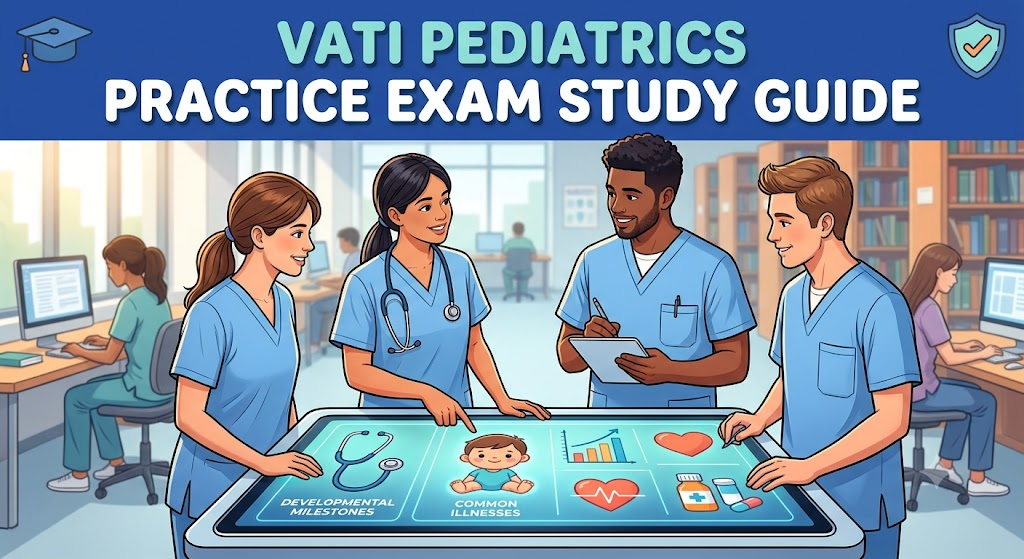
Additional Information
What the Course Entails and Exam Details
The Virtual-ATI course structure includes dedicated time to review foundational pediatric concepts. When preparing for this practice exam, you will delve into a comprehensive syllabus. It covers the distinct stages of human growth and development from infancy through adolescence. Key core topics include age-appropriate physical assessment techniques and vital sign abnormalities. You must understand common pediatric health alterations across all body systems. Examples include respiratory disorders like asthma and RSV, and gastrointestinal conditions such as gastroenteritis.
Additionally, the exam entails mastery of pediatric-specific pharmacology. This includes safe medication administration, dosage calculations based on weight, and understanding the physiological differences in how children process drugs. Family-centered care principles are fundamental, emphasizing the role of the family unit in a child's healthcare. You will also review relevant ethical, legal, and safety issues inherent in pediatric nursing practice. This course content aims to sharpen your ability to prioritize care using the nursing process within a pediatric context.
What to Expect in the Final Exam
While the VATI Pediatrics Practice Exam is a preparation tool, you should approach it with the same seriousness as a final proctored test. The assessment typically features NCLEX-style questions. These include traditional multiple-choice questions. You will also encounter alternate format questions, such as Select All That Apply (SATA). The exam is proctored, which means it will be taken in a monitored environment, often using secure, remote proctoring technology.
The test is timed, demanding efficient time management to answer all questions. Your Virtual-ATI Coach will establish passing score requirements as part of your personalized study plan. Achieving a competitive score is a strong indicator of readiness. The primary rule during the exam is to uphold academic integrity, as it is a diagnostic tool meant to reflect your actual knowledge. Detailed rationales are provided for correct and incorrect answers after completion, forming the basis for your remediation and focused review.
How to Study and Exam Centers
Effective study for the VATI Pediatrics Practice Exam requires an active learning approach. Do not rely solely on passive reading. Start by utilizing the comprehensive rationales provided in your previous ATI practice assessments. This highlights the logic behind each correct answer. Develop highly visual focused review materials, such as concept maps or detailed drug cards, for the pediatric disorders and medications you find most challenging.
Practice prioritization. When answering questions, always consider which patient is most unstable or which intervention is the highest priority based on age-specific needs. Use adaptive quizzing tools, like BoardVitals, if available, to create custom quizzes focusing solely on the pediatric client. Lastly, maintain regular communication with your assigned Virtual-ATI Coach. They provide invaluable feedback on your progress and guide you through targeted remediation activities.
The VATI Pediatrics Practice Exam is taken online through the secure ATI portal. You do not need to visit a physical Pearson VUE center for this practice assessment. You can take it from any quiet, private location with a stable internet connection. Ensure your computer meets all technological requirements for proctoring before beginning the exam session.
Job Opportunities from the Course
Successfully preparing for and passing your nursing licensure exam unlocks diverse and rewarding career paths. Earning your RN or PN license, with a strong foundation demonstrated in pediatrics, allows you to specialize.
You can pursue job titles such as:
Pediatric Nurse
Pediatric Oncology Nurse
NICU Nurse (Neonatal Intensive Care Unit)
PICU Nurse (Pediatric Intensive Care Unit)
School Nurse
Community Health Nurse specializing in child welfare
Travel Pediatric Nurse
Pediatric Clinic or Primary Care Nurse
Each of these roles offers the opportunity to make a profound difference in the lives of children and their families.
Frequently Asked Questions
Reviews
5.0
Based on 0 reviews
Leave a Review
No reviews yet. Be the first to review!