
VCU Dental Radiation Safety Certification Practice Test.
$69.00
- Buy to unlock unlimited access to all Quiz questions and Answers in this Quiz.
- After purchase you can print a PDF of the whole quiz at any point. The PDF will contain the questions and the correct answers.
About this Exam
The VCU Dental Radiation Safety Certification is a vital credential for dental healthcare professionals in Virginia, particularly dental assistants. It signifies that an individual possesses the requisite knowledge and safety skills to legally operate dental X-ray equipment and perform radiographic procedures under the direction of a licensed dentist. This course and subsequent exam are designed to meet the rigorous safety standards set by the Virginia Board of Dentistry, ensuring patient, operator, and co-worker safety is always prioritized. It is designed for both new individuals entering the field and current dental assistants seeking to fulfill state requirements or enhance their professional qualifications.
Ready to test your knowledge?
Buy Now to Access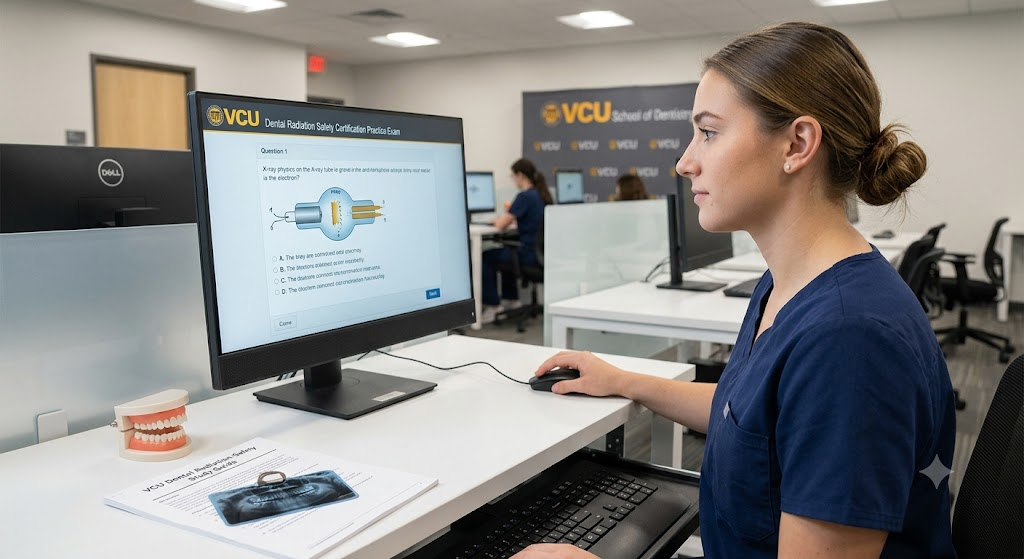
Additional Information
What the Course Entails and Exam Details
This comprehensive course, often delivered through the VCU School of Dentistry or authorized partners, bridges theoretical knowledge with clinical application. Students can expect to delve into the following core topics:
Fundamentals of Radiation Physics: Understanding the production, properties, and characteristics of X-radiation.
Biological Effects of Radiation: Detailed study of ionizing radiation’s impact on living tissues, mechanisms of damage, and the difference between somatic and genetic effects.
Radiation Safety and Protection: Implementing standard safety protocols for the patient (ALARA principle), the operator, and the public.
Dental X-ray Equipment: Operation, components, and maintenance of various radiographic units.
Radiographic Techniques: Mastering intraoral (periapical, bitewing, occlusal) and panoramic techniques, including patient positioning and angulation.
Film/Sensor Processing and Quality Assurance: Correct handling, processing, and troubleshooting for both traditional film and digital radiography.
Infection Control in Dental Radiography: Essential protocols to prevent cross-contamination during imaging procedures.
Virginia State Laws and Regulations: Comprehensive review of the specific legal requirements and ethical responsibilities.
The final examination validates proficiency in all these areas, confirming your readiness to practice safely.
What to Expect in the Final Exam
The final exam is a comprehensive assessment that often consists of both a written/didactic component and, in some formats, a practical demonstration of skills.
Exam Format: The written portion is typically a multiple-choice exam, featuring 75 to 100 questions. These cover all course content, from the physics of X-rays to specific state regulations.
Passing Score Requirements: Candidates must typically achieve a score of 75% or higher to be considered proficient and receive their certification. It is crucial to verify the exact passing score with VCU or the specific program offering the exam, as requirements can adjust.
Time Limits: The written exam is timed, generally allowing students 90 to 120 minutes for completion. Time management is a key factor.
Specific Rules: Expect a standardized testing environment. This often means no external study aids (books, phones, smartwatches) are allowed. Integrity and adherence to testing protocols are mandatory.
How to Study and Exam Centers
Preparation is the cornerstone of success. Use these actionable strategies to master the material:
Active Studying:
Use Practice Tests Regularly: Engage with VCU Dental Radiation Safety Certification practice tests. Analyze every mistake to understand the underlying concept.
Flashcards for Key Terms: Create flashcards for radiation biology terms (e.g., latent period, dose-response curve), units of measurement (e.g., Gray, Sievert), and safety principles.
Mnemonic Devices: Use acronyms or rhymes to memorize lists of sensitive tissues or the steps of infection control.
Practical Practice:
Manikin Training: If available, dedicate time to practicing positioning and angulation on x-ray manikins before touching a real patient. Focus on correcting common errors.
Identify Normal Anatomy: Study oral radiographic anatomy until you can confidently differentiate normal structures from pathological ones.
Where to Take the Exam: The VCU Dental Radiation Safety Certification exam is primarily proctored through the VCU School of Dentistry itself, often as the final step of their course. It may also be offered at other authorized Virginia community colleges or physical testing centers in partnership with VCU. Some programs may facilitate online testing options using specific secure browser portals; always confirm the current, verified exam locations directly through VCU’s official Continuing Education or Dental Assisting program pages.
Job Opportunities from the Course
Earning this certification unlocks numerous career paths within the expanding dental field. Key job titles include:
Certified Dental Assistant (CDA)
Dental Assistant II (DAII) with Radiology expanded functions
Orthodontic Assistant
Dental X-ray Technician (in specialized clinics)
Dental Radiology Safety Officer (in larger practices)
Dental Sales Representative (with safety expertise)
Dental Practice Manager (where safety knowledge enhances operations)
By successfully completing this certification, you prove your commitment to the highest standards of safety and professional practice, making you a highly valued asset to any dental team.
Frequently Asked Questions
Reviews
5.0
Based on 0 reviews
Leave a Review
No reviews yet. Be the first to review!