
Vehicle Rescue Technician (VRT) Practice Exam
$69.00
- Buy to unlock unlimited access to all Quiz questions and Answers in this Quiz.
- After purchase you can print a PDF of the whole quiz at any point. The PDF will contain the questions and the correct answers.
About this Exam
The Vehicle Rescue Technician (VRT) certification is a crucial credential for first responders, designed for those specialized in safe and efficient patient extrication from vehicle accidents. This certification is primarily intended for firefighters, EMS personnel, and members of specialized rescue teams. The course validates the knowledge and advanced hands-on skills required to operate successfully at complex vehicle accident scenes. Earning this certification demonstrates your ability to manage scene hazards, stabilize damaged vehicles, and utilize extrication tools. It is an essential step for those committed to advancing their careers in technical rescue operations.
Ready to test your knowledge?
Buy Now to Access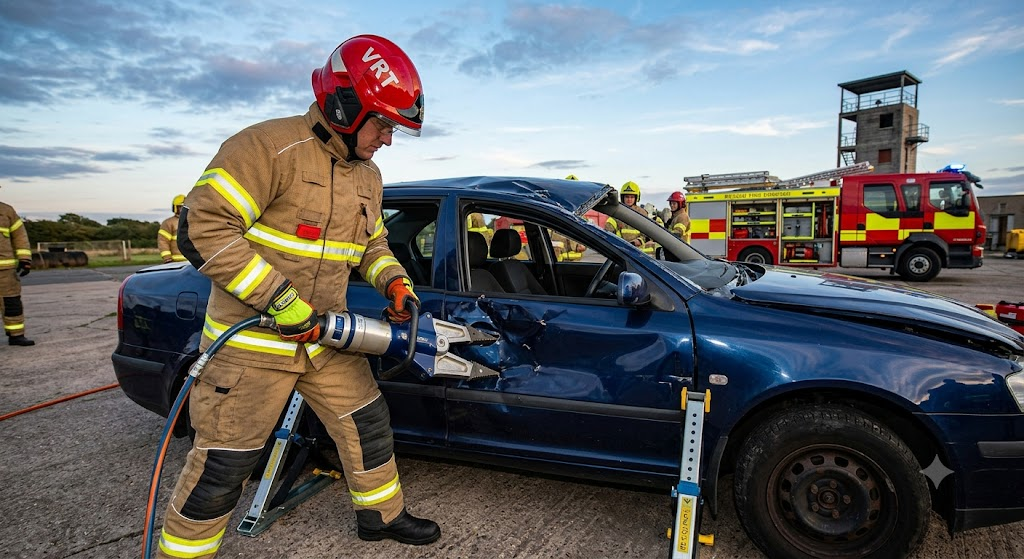
Additional Information
What the Course Entails and Exam Details
A comprehensive VRT training program combines intensive classroom learning with extensive hands-on scenario-based practice. The curriculum is typically structured around the National Fire Protection Association (NFPA) 1006 standard for Technical Rescuer Professional Qualifications. Core topics covered in the course include incident command, advanced stabilization techniques, and scene safety. Students will also focus heavily on the mechanics of extrication, learning to operate heavy hydraulic tools, commonly known as the "Jaws of Life," including spreaders, cutters, and rams. Furthermore, you will study patient management during extrication, hybrid and electric vehicle hazards, and strategies for heavy vehicle rescue.
What to Expect in the Final Exam
The final VRT examination is designed as a dual component test to ensure proficiency in both theory and practical application. The first part is usually a written exam consisting of multiple-choice questions that test your knowledge of rescue safety, tool mechanics, and stabilization physics. Candidates generally have a set time limit, such as 60 to 90 minutes, to complete this portion, with a passing score typically set at 70% to 80%. The second part is a comprehensive practical skills evaluation, which is often considered the most critical component. During the practical, proctors assess your hands-on ability to perform specific rescue tasks, such as vehicle stabilization, door removal, and dashboard displacement, in simulated accident scenarios. Evaluators will use skill sheets to score you on safety, tool proficiency, and procedural accuracy.
How to Study and Exam Centers
Effective preparation for the VRT exam requires a blend of mental study and physical practice. To master the written portion, carefully review your course textbook and class notes, focusing heavily on NFPA 1006 standards. Utilizing online VRT practice exams, such as this one, will help you become familiar with the questioning style and identify any areas of weakness. For the practical exam, nothing beats hands-on repetition. Work with your department's rescue tools under the guidance of experienced instructors. Mentally rehearse the steps for each extrication technique to build muscle memory. The exam itself is typically not taken at standard online portals like Pearson VUE. Instead, physical evaluations and written tests are usually conducted at authorized regional training centers, fire academies, or your local fire department if they are a certified testing site.
Job Opportunities from the Course
Earning your Vehicle Rescue Technician certification opens doors to specialized roles and advances your career in emergency services. Having this advanced training makes you a valuable asset to any rescue organization. Specific job titles and career paths this certification unlocks include:
Firefighter / Rescue Specialist
Heavy Rescue Squad Member
Special Operations Medic
Rescue Instructor
Industrial Rescue Team Member
Technical Rescue Coordinator
Frequently Asked Questions
Reviews
5.0
Based on 0 reviews
Leave a Review
No reviews yet. Be the first to review!