
Vessel Inspection and Certification Practice Test
$69.00
- Buy to unlock unlimited access to all Quiz questions and Answers in this Quiz.
- After purchase you can print a PDF of the whole quiz at any point. The PDF will contain the questions and the correct answers.
About this Exam
The Vessel Inspection and Certification (VIC) exam is a cornerstone qualification for professionals dedicated to maritime safety and regulatory compliance. This comprehensive certification is designed for marine surveyors, coast guard personnel, shipbuilding engineers, and vessel operators who require formal validation of their expertise in ship assessment. This exam assesses a candidate's ability to ensure that vessels are seaworthy, structurally sound, and compliant with critical national and international safety regulations, such as SOLAS and MARPOL.
Achieving certification demonstrates your proficiency in identifying structural deficiencies, verifying safety equipment, and assessing dynamic systems on board a wide variety of commercial and private vessels. For professionals looking to advance their careers into regulatory enforcement or senior surveying roles, mastery of this practice test is an essential stepping stone.
Ready to test your knowledge?
Buy Now to Access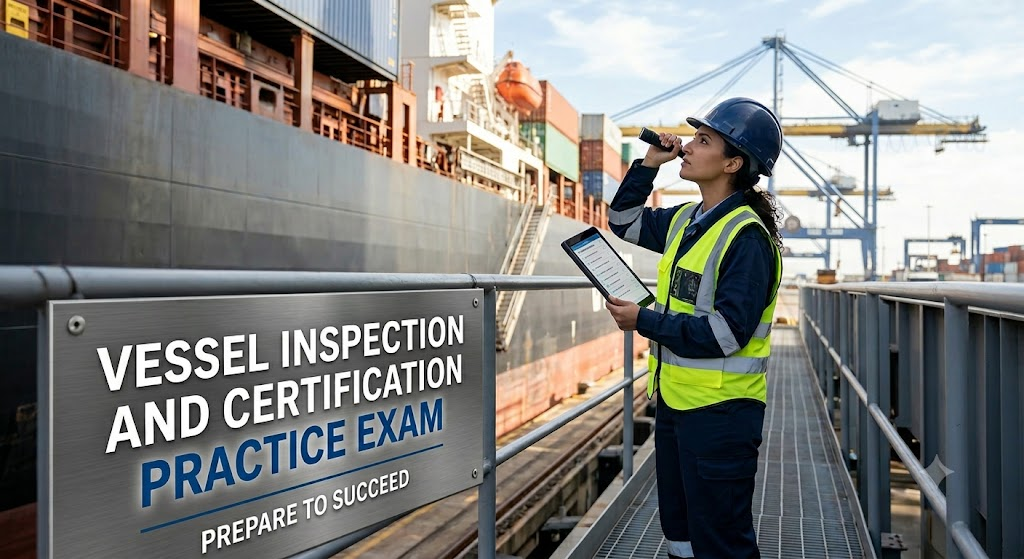
Additional Information
What the Course Entails and Exam Details
This practice test is structured to mirror the comprehensive syllabus required of modern marine inspectors. Candidates must demonstrate deep knowledge across several core maritime domains to pass. The primary areas covered include:
Structural Integrity: Assessing hulls, bulkheads, decks, and superstructures for corrosion, damage, and fatigue.
Mechanical Systems: Inspecting propulsion machinery, steering gear, electrical systems, and auxiliary equipment.
Safety and Lifesaving Equipment: Verifying compliance for fire detection/suppression systems, lifeboats, life rafts, and emergency protocols.
Pollution Prevention (MARPOL): Ensuring the vessel meets international standards for oil, sewage, and air pollution prevention.
Regulatory Frameworks: Practical application of USCG (United States Coast Guard) regulations, IMO (International Maritime Organization) codes, and Classification Society rules (such as ABS or DNV).
What to Expect in the Final Exam
While actual state or international exams may vary, the standard professional certification exam is a rigorous, proctored event. The standardized format typically includes a timed multiple-choice exam, though some certifications also include a practical or scenario-based component.
Format: The exam usually consists of 100 to 150 multiple-choice questions designed to test both theoretical knowledge and practical application.
Time Limit: Candidates generally have between 3 to 4 hours to complete the multiple-choice section, demanding efficient time management.
Passing Score: A strong understanding of the material is required, typically necessitating a score of 70% to 80% to achieve certification, depending on the specific regulatory body issuing the credential.
Scenarios: The examination focuses heavily on case-study scenarios, asking candidates to interpret specific vessel situations or deficiency reports against regulatory standards.
How to Study and Exam Centers
Preparation for the Vessel Inspection and Certification exam requires a mix of formal study and practical review. Candidates are encouraged to create a dedicated study plan focusing on the regulatory codes they will be tested on.
Actionable Study Strategies:
Master the Codes: Create detailed study guides for SOLAS, MARPOL, and applicable local (e.g., CFR 46) regulations, focusing on recent amendments.
Use Practical Experience: Bridge your field experience with theoretical knowledge; when reviewing a concept, relate it to a vessel you have previously inspected.
Timed Practice Tests: The most effective study tool is taking timed practice exams, like this one, to improve your speed and identify weak knowledge areas.
Exam Centers:
Official certification exams are usually administered in specialized settings. Depending on the issuing authority, you may take your exam at authorized professional testing centers, such as Pearson VUE, or directly through government maritime agencies (e.g., Coast Guard Regional Examination Centers). Some Classification Societies also host examinations at their training academies. It is vital to register in advance with your specific licensing body to confirm dates and locations.
Job Opportunities from the Course
A certification in vessel inspection is a powerful credential that unlocks numerous high-responsibility career paths in the maritime industry. The specialized knowledge validated by this exam is sought after by regulatory bodies, commercial shipping companies, and insurance firms.
Key career opportunities unlocked by this certification include:
Marine Surveyor: Conducting independent assessments of vessels for condition, valuation, damage, or safety.
Coast Guard / Port State Control Officer: Working for government agencies to enforce safety and pollution regulations on domestic and foreign flagged vessels.
Classification Society Surveyor: Verifying that ships are built and maintained according to the rules of organizations like the American Bureau of Shipping (ABS) or Lloyd’s Register.
Flag State Inspector: Auditing vessels on behalf of the flag country to ensure compliance with international conventions.
Marine Safety Manager: Developing and overseeing safety protocols for shipping companies or fleet operators.
P&I Club Correspondent/Surveyor: Working for Protection and Indemnity (insurance) insurance providers to assess risk and investigate claims.
Frequently Asked Questions
Reviews
5.0
Based on 0 reviews
Leave a Review
No reviews yet. Be the first to review!