
Virginia Emergency Vehicle Operator Course (EVOC) Practice Exam
$69.00
- Buy to unlock unlimited access to all Quiz questions and Answers in this Quiz.
- After purchase you can print a PDF of the whole quiz at any point. The PDF will contain the questions and the correct answers.
About this Exam
The Virginia Emergency Vehicle Operator Course (EVOC) is a comprehensive certification program designed to equip first responders with the essential knowledge and skills needed to operate emergency vehicles safely and effectively. This course is patterned after the State Office of Transportation Safety EVOC guide and emphasizes safe, defensive driving techniques under both emergency and non-emergency conditions.
It is specifically tailored for personnel affiliated with emergency services organizations in the Commonwealth of Virginia, including firefighters, Emergency Medical Technicians (EMTs), paramedics, law enforcement officers, and volunteer rescue squad members. By standardizing training, EVOC aims to reduce crashes involving emergency vehicles, protecting both the operators and the public.
Ready to test your knowledge?
Buy Now to Access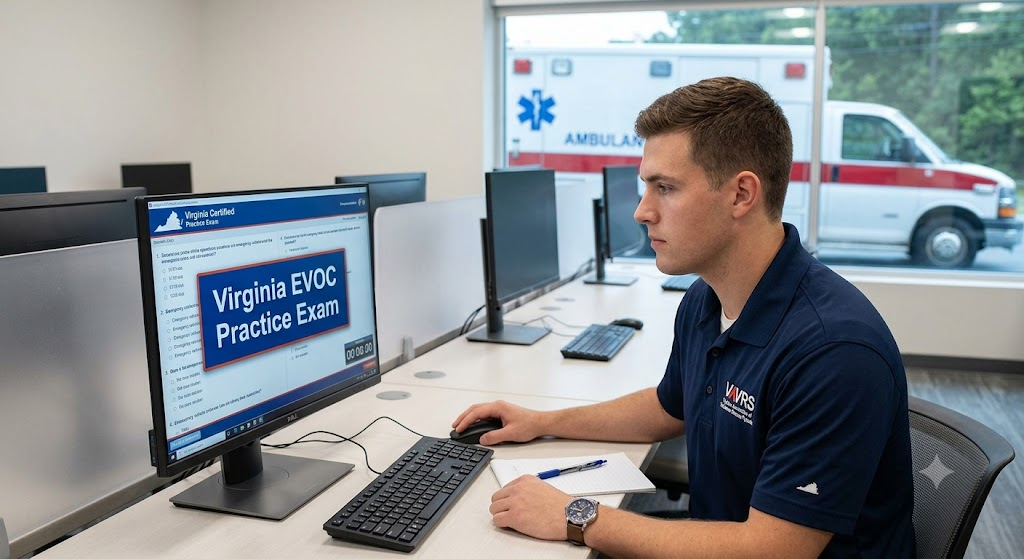
Additional Information
What the Course Entails and Exam Details
This rigorous course blends classroom theory with practical, hands-on driving instruction to ensure a well-rounded learning experience. The dynamic curriculum typically covers several critical domains of knowledge and skill.
Participants must demonstrate proficiency in understanding the state's traffic regulations, specifically those governing the operation of emergency vehicles. The course dives deep into defensive driving, risk management, and the crucial distinction between non-emergency and emergency response driving protocols. You will learn about vehicle dynamics, comprehensive pre-trip vehicle inspections, proper braking techniques, and the development of proper driver attitudes necessary for high-stress environments.
Furthermore, EVOC includes a mandatory driving range component where students practice handling vehicles of various classifications—ranging from cars and small brush trucks to large fire apparatus—through specialized cone courses that simulate real-world maneuvers. Successfully completing the course often provides additional benefits, such as five safe driving points added to the driver’s Virginia record.
What to Expect in the Final Exam
The final assessment is the culmination of your EVOC training and consists of two separate, demanding parts. To receive your certification, you must achieve a passing score on both portions, usually requiring a minimum of 70 percent on the written exam.
1. The Written Examination: This component tests your theoretical knowledge through a series of multiple-choice questions. It comprehensively covers topic areas including Virginia motor vehicle laws, vehicle dynamics, defensive driving strategies, safety procedures, and risk assessment models. While specific time limits are determined by the local training academy, preparation is vital for success within the allotted window.
2. The Practical Skills Test: Often considered the more intimidating phase, this test requires you to demonstrate mastery of the practical skills learned on the driving range. Instructors will evaluate your performance on multiple maneuvers, which may include serpentine driving, alley docking, straight-line driving through narrowed lanes, backing, and emergency braking exercises. A strict adherence to safety protocols is mandatory throughout the practical evaluation.
How to Study and Exam Centers
Preparation is the absolute key to confidently conquering the EVOC exams, and students must employ a mix of theoretical study and practical familiarity.
First and foremost, thoroughly review the current edition of the EVOC textbook, which is required by all students and often downloadable from official VAVRS websites. Actively participate in all 16 hours of classroom instruction to ask clarifying questions and clarify complex concepts. Create study guides and flashcards focusing on specific Virginia vehicle codes and defensive driving terms. Visualization is also powerful: mental walkthroughs of the driving range courses can help cement correct steering and braking inputs. For the final push, practice with online EVOC practice exams to become accustomed to the phrasing and types of questions you will encounter.
Virginia EVOC training is delivered through a robust network of authorized providers across the Commonwealth. These include authorized emergency services organizations (fire departments, rescue squads, and EMS agencies), Virginia Department of Fire Programs (VDFP) academies, specific authorized schools, and a variety of community colleges throughout Virginia, such as Rappahannock Community College and Southside Virginia Community College.
Job Opportunities from the Course
A Virginia EVOC certification is often a non-negotiable prerequisite or a highly competitive advantage for individuals seeking careers in public safety and emergency transport within the state. Successfully mastering this course is your gateway to a rewarding and impactful career.
Securing your EVOC certification unlocks several distinct career paths and job titles, including:
Firefighter
Emergency Medical Technician (EMT)
Paramedic
Ambulance Driver or Operator
Police Officer
Sheriff's Deputy
Flight Medic (often requires ground EVOC first)
Critical Care Transport Specialist
Volunteer Rescue Squad Operator
Private Ambulance Transport Specialist
Security Officer (specialized roles utilizing vehicles)
Frequently Asked Questions
Reviews
5.0
Based on 0 reviews
Leave a Review
No reviews yet. Be the first to review!