
Virginia Motorcycle Knowledge Practice Exam
$69.00
- Buy to unlock unlimited access to all Quiz questions and Answers in this Quiz.
- After purchase you can print a PDF of the whole quiz at any point. The PDF will contain the questions and the correct answers.
About this Exam
Welcome to your comprehensive guide for the Virginia Motorcycle Knowledge Practice Exam. This assessment is the crucial first step for any Virginia resident aspiring to obtain their Class M, M2, or M3 motorcycle license or endorsement. The knowledge exam is designed to ensure that every potential rider has a fundamental understanding of the rules of the road, unique motorcycle handling techniques, and essential safety practices required within the Commonwealth. Whether you are a total beginner or an experienced rider moving to Virginia, passing this written test at a DMV service center is mandatory before you can begin the practical skills evaluation. Our practice resources are structured to build your confidence and ensure you possess the critical knowledge needed to ride safely and legally.
Ready to test your knowledge?
Buy Now to Access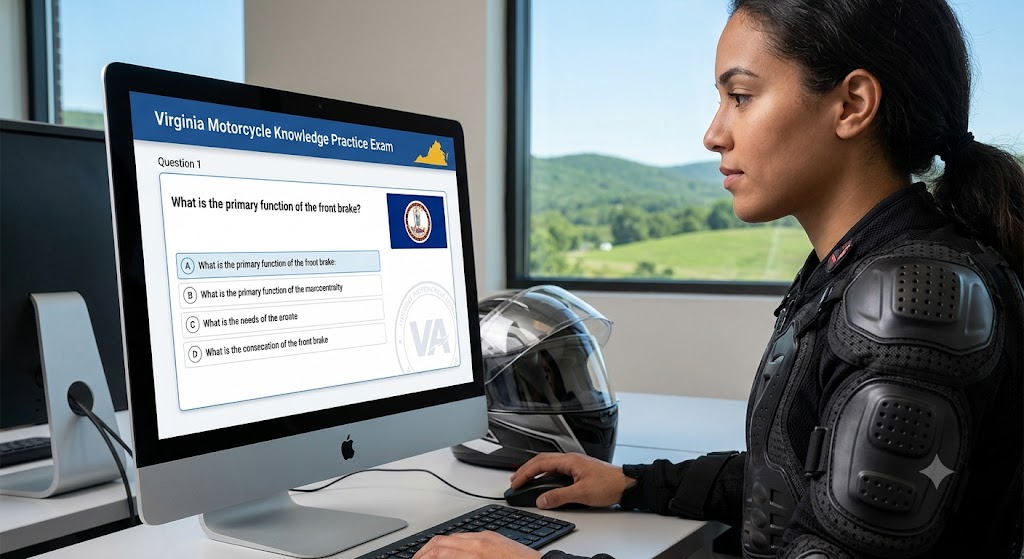
Additional Information
What the Course Entails and Exam Details
To master this exam, you must familiarize yourself with two official sources of information provided by the Virginia Department of Motor Vehicles (DMV). Your primary study material is the Virginia Motorcycle Operator Manual. This comprehensive guide details the technical and practical aspects of motorcycling. Furthermore, the exam also includes questions derived from the standard Virginia Driver's Manual, specifically focusing on road signs, traffic signals, and general pavement markings. Our study structure covers these core domains:
Vehicle Control Systems: Understanding the primary controls—throttle, clutch, front and rear brakes, and gearshift—and their proper operation.
Safe Riding Practices: Mastering advanced concepts such as lane positioning for maximum visibility, maintaining a safe following distance, and effectively communicating intentions to other drivers.
Advanced Maneuvering: Knowledge required for critical situations, including aggressive braking, swerving to avoid obstacles, and safe cornering techniques.
Hazard Management: Learning to identify and navigate common road hazards like railroad tracks, slippery surfaces, and unexpected traffic scenarios.
State Laws and Regulations: Crucial Virginia-specific rules, including helmet requirements, carrying passengers, and the legal consequences of operating a vehicle under the influence of alcohol or drugs.
Road Sign Recognition: Identifying regulatory, warning, and informational signs common to Virginia highways.
What to Expect in the Final Exam
Knowing what to expect on test day can significantly reduce anxiety and improve performance. The official Virginia Motorcycle Knowledge Exam is administered as a two-part, computer-based assessment. You must pass both parts to receive your permit or endorsement.
Part One: Road Signs: This section consists of multiple-choice questions focusing exclusively on identifying traffic signs and pavement markings from the Virginia Driver's Manual. It is crucial to note that you must answer 100% of these questions correctly to proceed to the next part.
Part Two: Motorcycle Knowledge: If you successfully complete Part One, you will advance to Part Two, which contains 25 specialized multiple-choice questions focusing specifically on information from the Virginia Motorcycle Operator Manual.
Passing Score: To pass this specialized motorcycle section, you must correctly answer at least 80% of the questions (20 out of 25).
Format: The test is taken on a secure touch-screen computer terminal. There is generally no strict time limit for the entire session, but individual questions should be completed within a reasonable timeframe.
Rules: You are not allowed to use any study materials, cell phones, or receive assistance from other people during the test. Failure to comply can result in an automatic failure.
How to Study and Exam Centers
Preparation is the cornerstone of success. We recommend starting with the official manuals before solidifying your understanding through targeted practice.
Actionable Study Strategies:
Review the Manuals Thoroughly: Read the Virginia Motorcycle Operator Manual and the road signs section of the Driver's Manual several times. Pay close attention to definitions and specific state laws.
Take Practice Exams Regularly: The [Virginia Motorcycle Knowledge Practice Exam] is your most valuable diagnostic tool. Take simulations multiple times to identify your weak points and familiarize yourself with the question phrasing and potential "trick" answers.
Focus on Your Weaknesses: Review the questions you get wrong on practice tests and return to the manual to study those specific sections.
Use Flashcards: Create flashcards for road signs and critical safe-riding concepts (like the "three-second rule").
Practical Context: While waiting to take the test, when you are a passenger in a car, practice identifying hazards and potential escape routes from a rider's perspective.
Exam Centers and Where to Take the Exam:
Virginia DMV Customer Service Centers: Most riders will take their knowledge exam at a physical Virginia DMV location. You generally do not need an appointment for the knowledge test, but checking the specific DMV center's hours and waiting times online before you go is highly recommended.
Mobile DMV Units (DMV Connect): In some rural or underserved areas, the knowledge exam may be offered via mobile DMV Connect services during scheduled visits.
Rider Training Programs: If you take a licensed Virginia Rider Training Program basic course, the classroom portion often includes a knowledge test. Successfully passing the knowledge and skills tests within these courses sometimes allows you to waive the knowledge exam portion at the DMV when you apply for your endorsement.
Job Opportunities from the Course
Earning your motorcycle endorsement unlocks several unique and potentially lucrative career paths that specifically require the ability to operate a motorcycle legally and safely.
Motorcycle Safety Instructor
Police Motorcycle Officer (Motor Officer)
Motorcycle Courier or Delivery Driver
Motorcycle Dealership Salesperson
Motorcycle Mechanic or Technician (Required for test rides)
Motorcycle Tour Guide
Powersports Vehicle Transporter
Frequently Asked Questions
Reviews
5.0
Based on 0 reviews
Leave a Review
No reviews yet. Be the first to review!