
Virginia Tattoo Practice Test
$69.00
- Buy to unlock unlimited access to all Quiz questions and Answers in this Quiz.
- After purchase you can print a PDF of the whole quiz at any point. The PDF will contain the questions and the correct answers.
About this Exam
The Virginia Tattooer License is the mandatory credential required by the Virginia Department of Professional and Occupational Regulation (DPOR) Board for Barbers and Cosmetology for any individual who wishes to practice tattooing legally within the Commonwealth. This examination process ensures that all practitioners possess a standardized, thorough knowledge of crucial safety, health, and regulatory practices before they begin marking clients. The exam is specifically designed for aspiring tattoo artists who have either completed an approved Virginia school program or a formal, state-recognized apprenticeship. It is the final milestone standing between months of dedicated training and a professional career in body art.
Ready to test your knowledge?
Buy Now to Access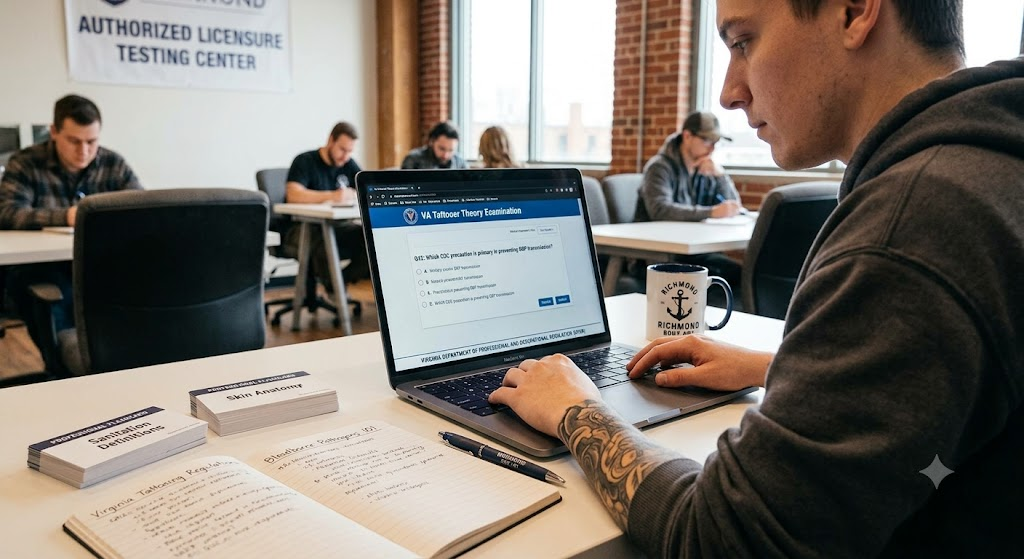
Additional Information
What the Course Entails and Exam Details
This examination does not test your artistic ability; that is refined during your 1,500-hour apprenticeship or school training. Instead, the final licensing exam focuses almost exclusively on public safety and regulatory compliance. The core curriculum you are tested on represents the theoretical foundation required to operate within a hygienic and legal tattoo parlor environement. To become licensed, you must have first mastered topics including:
Virginia Tattooing Laws and Regulations: Complete familiarity with the specific definitions, licensing requirements, sanitation standards, and enforcement protocols set by the Board for Barbers and Cosmetology.
Bloodborne Pathogen Standards: Understanding and applying the Center for Disease Control’s (CDC) Universal Precautions to prevent the transmission of infectious diseases such as HIV, Hepatitis B, and Hepatitis C in a clinical body art setting.
Sterilization and Disinfection Procedures: Master of the entire autoclave sterilization cycle, chemical disinfection methods for surfaces, and proper handling of single-use tools.
Skin Anatomy and Microbiology: Detailed knowledge of skin layers, basic microbiology, common skin diseases, and disorders that affects tattooing eligibility or healing.
Client Consultation and First Aid: Essential skills in recognizing potential complications, identifying allergic reactions, handling emergencies, and providing comprehensive aftercare instructions.
What to Expect in the Final Exam
The final licensing test is known as the VA Tattooer Theory Examination. This is a computer-based, multiple-choice test that assesses your cognitive understanding of the material outlined in the candidate information bulletin. Unlike some trades, there is currently no hands-on "practical" examination required at the testing center for the standard Virginia Tattooer license; your practical skills are validated by your apprenticeship sponsor or school.
You can expect to encounter between 50 to 100 questions, and the time limit is generally within the 90-minute to two-hour range. A passing score of around 70% to 75% is typically required to qualify for licensure.
During the exam, you will need to demonstrate definitive knowledge through scenario-based questions that test how you would handle real-world parlor situations. Specific rules regarding the exam are strict: you must provide a valid government-issued photo ID and you are generally prohibited from bringing any personal items, reference materials, or electronic devices into the testing room.
How to Study and Exam Centers
Preparation is paramount for the Virginia Tattooer Theory Exam because failing can significantly delay your career launch and incur retesting fees. The single most important resource you can use to prepare is the official Candidate Information Bulletin (CIB) provided by the state’s current testing vendor (such as Prov or PSI). This document includes the definitive exam content outline, sample questions, and a breakdown of the percentage of questions allocated to each topic.
Your primary study strategies should include:
Mastering the Regulations: Do not skim the Virginia Tattooing Regulations. This legal text contains precise language on every mandatory parlor practice. Memorize definitions and key timeframes (e.g., how long to keep client records).
Flashcards for Vocabulary: Create digital or physical flashcards for complex terms in anatomy, dermatology, microbiology, and sterilization processes.
Practice Exams: Utilize the sample questions in the CIB and any approved preparatory tests provided by your school. This helps you get used to the wording style and logical structure of multiple-choice questions.
The examination is administered year-round by an authorized external testing vendor. You cannot walk in to take the exam; you must apply for licensure through DPOR first, and upon approval, you will receive eligibility notification that allows you to schedule your test. The exams are taken at authorized physical testing centers located throughout the Commonwealth, often including sites in or near major regions like Richmond, Hampton Roads, Northern Virginia, and Roanoke.
Job Opportunities from the Course
Passing the Virginia Tattooer License Exam and obtaining your license unlocks a creative and versatile career path in the body art industry. This vital certification is your legal permit to work as:
Licensed Tattoo Artist
Professional Body Piercer (with additional training/licensing)
Tattoo Shop/Parlor Manager or Owner
Permanent Cosmetic Tattooer (specializing in permanent makeup)
Master Permanent Cosmetic Tattooer (advanced medical or corrective tattooing)
Tattooing Instructor (requiring additional years of experience and certification)
Medical Tattoo Specialist (working alongside dermatologists or plastic surgeons)
Frequently Asked Questions
Reviews
5.0
Based on 0 reviews
Leave a Review
No reviews yet. Be the first to review!