
Visual Problems Practice Test
$69.00
- Buy to unlock unlimited access to all Quiz questions and Answers in this Quiz.
- After purchase you can print a PDF of the whole quiz at any point. The PDF will contain the questions and the correct answers.
About this Exam
The Visual Problems Practice Test serves as a vital assessment tool for aspiring allied health professionals seeking specializing in eye care and vision science. This exam is designed primarily for individuals aiming to become certified optometric technicians, ophthalmic assistants, or vision screeners. It validates a candidate’s fundamental understanding of ocular anatomy, common visual impairments, and preliminary diagnostic procedures. By successfully navigating this practice exam, students demonstrate the prerequisite knowledge required to assist optometrists and ophthalmologists in busy clinical settings, ultimately ensuring high-quality patient care and accurate visual assessments.
Ready to test your knowledge?
Buy Now to Access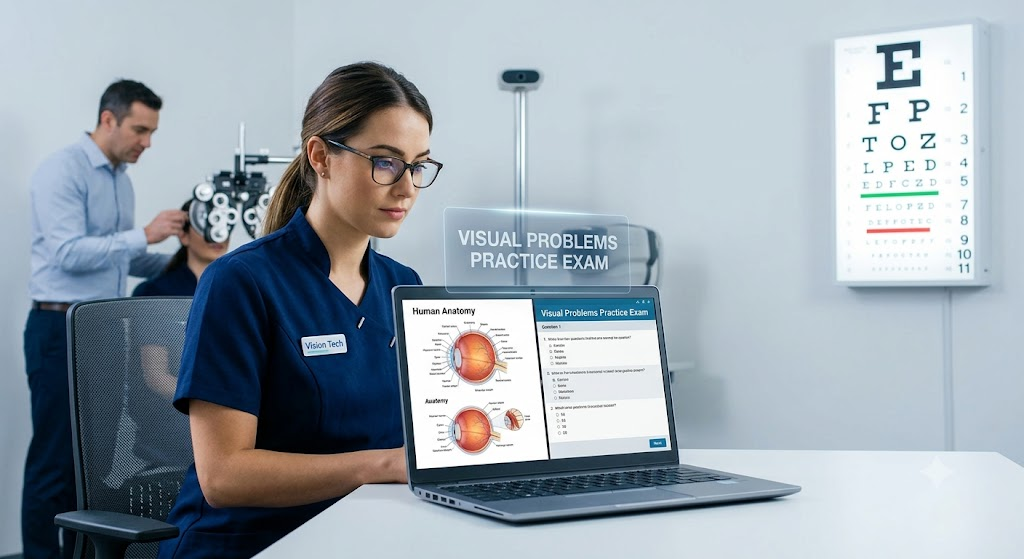
Additional Information
What the Course Entails and Exam Details
The preparatory coursework for this exam focuses on building a robust foundation in optical principles and clinical skills. Students will deeply explore ocular anatomy and physiology, learning to identify crucial structures of the eye and their respective functions. The curriculum heavily emphasizes refractive errors—such as myopia, hyperopia, and astigmatism—and the basic principles of corrective lenses. Furthermore, candidates are trained in pathology, recognizing the signs of common visual problems like cataracts, glaucoma, and macular degeneration. The exam ensures proficiency in preliminary testing methods, including visual acuity measurement (using Snellen charts), intraocular pressure testing (tonometry), and visual field screening.
What to Expect in the Final Exam
The comprehensive final examination is typically administered in a digital environment, though paper-based options may exist in specific academic settings. The format is predominantly multiple-choice, designed to test both factual recall and the application of clinical knowledge to hypothetical patient scenarios. Candidates should expect between 100 and 150 questions to be completed within a strict time limit, often ranging from two to three hours. While individual testing standards may vary slightly by institution, a standardized passing score of 70% or higher is generally required to demonstrate competence in visual problem assessment.
How to Study and Exam Centers
Effective preparation requires a blend of theoretical study and practical application. Candidates should diligently review established optometric technician textbooks, utilizing active recall methods and high-quality flashcards for complex medical terminology and anatomical structures. Regularly taking timed versions of the Visual Problems Practice Test is crucial for building stamina and identifying knowledge gaps. Understanding the "why" behind visual assessment procedures is key to success.
Regarding testing locations, candidates often have multiple options. Many organizations utilize secure online proctoring portals, allowing students to take the exam from a quiet, dedicated space at home. Alternatively, the exam may be administered at specific accredited eye care schools, community colleges, or professional Pearson VUE testing centers, which provide a standardized, distraction-free environment for the examination.
Job Opportunities from the Course
Mastering the content validated by this exam opens the door to a variety of fulfilling roles within the expanding field of vision care. The specific career paths available upon certification include:
Certified Optometric Technician
Ophthalmic Assistant
Vision Screener (Schools and Community Health)
Optical Lab Technician
Ophthalmic Photographer
Vision Rehabilitation Assistant
Frequently Asked Questions
Reviews
5.0
Based on 0 reviews
Leave a Review
No reviews yet. Be the first to review!