
Washington State Aquatic Pest Control Practice Exam
$69.00
- Buy to unlock unlimited access to all Quiz questions and Answers in this Quiz.
- After purchase you can print a PDF of the whole quiz at any point. The PDF will contain the questions and the correct answers.
About this Exam
The Washington State Aquatic Pest Control certification is essential for professionals working in and around water bodies. This exam ensures individuals possess the knowledge and skills to manage aquatic pests safely and effectively in Washington State. It is designed for aquatic applicators, natural resource managers, and anyone involved in controlling invasive plants and animals in diverse aquatic environments. Earning this certification demonstrates expertise and commitment to environmental stewardship.
Ready to test your knowledge?
Buy Now to Access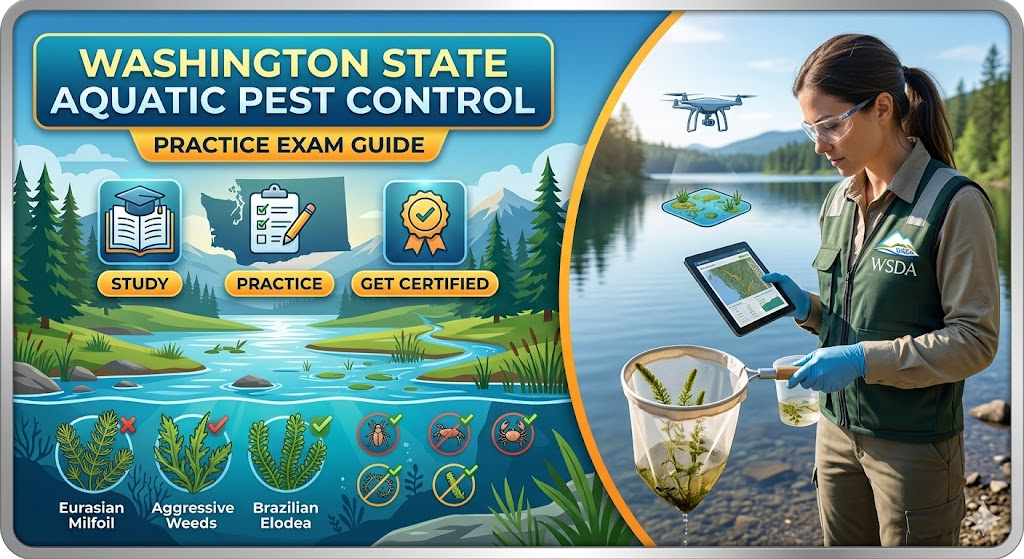
Additional Information
What the Course Entails and Exam Details
A typical preparation course covers a wide range of critical topics for effective aquatic pest management. These subjects often include identification and management strategies for common aquatic weeds and invasive species native to Washington. There is a strong focus on understanding relevant environmental regulations and safety protocols, including applicator responsibilities. Participants will learn about integrated pest management (IPM) principles applied specifically to aquatic ecosystems. Additionally, proper equipment use, calibration techniques, and reading pesticide labels are key components.
What to Expect in the Final Exam
The final exam generally consists of multiple-choice questions designed to assess comprehensive understanding. Candidates should expect questions covering regulations, safety, biology, ecology, and control methods for aquatic pests. There might also be questions related to specific types of aquatic environments in Washington. A passing score is typically required, often around 70% or higher, though this can vary slightly depending on the specific testing authority. There is usually a set time limit for completing the exam, so candidates must manage their time effectively. Some versions may include scenario-based questions requiring the application of knowledge to practical situations.
How to Study and Exam Centers
Effective preparation involves thorough study of official study materials provided by the Washington State Department of Agriculture (WSDA) or authorized training providers. Reviewing the exam syllabus and dedicating sufficient time to each topic is crucial for success. Utilize practice tests and review quizzes to identify knowledge gaps and reinforce key concepts.
Consider forming study groups with fellow candidates to discuss topics and share resources. Pay close attention to understanding the details of state and federal regulations concerning aquatic pesticide application.
For the exam itself, candidates typically need to schedule an appointment with an official testing center. This often involves locating a Pearson VUE testing center in Washington State that administers WSDA exams. Some specific training schools or organizations might also be authorized to host the exam, so check the official WSDA website for the most current information. Remember to bring valid identification and allow sufficient travel time to the test center.
Job Opportunities from the Course
Earning this certification opens up a variety of rewarding career opportunities in aquatic resource management and environmental protection. Professionals with this certification play a vital role in maintaining the health and ecological integrity of Washington's waterways.
Common job titles include:
Aquatic Pest Control Applicator (or Technician/Operator): Working directly on water bodies to apply treatments for invasive weeds and algae.
Invasive Species Manager: Overseeing programs to detect, control, and eradicate harmful non-native species in aquatic habitats.
Lake Management Specialist: Consulting with communities and agencies to improve and maintain lake health, which often involves pest control.
Wetland Management Specialist: Managing complex wetland ecosystems, including the control of invasive species like phragmites or purple loosestrife.
Natural Resource Scientist: Conducting research and fieldwork on aquatic ecosystems, where understanding pest impacts and control methods is critical.
Restoration Coordinator (with focus on invasive control): Leading projects to restore native aquatic habitats, which frequently requires the initial removal of invasive pests.
These roles exist within government agencies (federal, state, local), non-profit environmental organizations, private consulting firms, and commercial pest control companies specializing in water management.
Frequently Asked Questions
Reviews
5.0
Based on 0 reviews
Leave a Review
No reviews yet. Be the first to review!