
Washington State Certified Peer Counselor Practice Exam
$69.00
- Buy to unlock unlimited access to all Quiz questions and Answers in this Quiz.
- After purchase you can print a PDF of the whole quiz at any point. The PDF will contain the questions and the correct answers.
About this Exam
The Washington State Certified Peer Counselor (CPC) certification is a unique and vital credential for individuals with personal "lived experience" in recovery from mental health challenges, substance use disorders, or as a parent or legal guardian of a child who has received these services. This program is specifically designed to leverage that personal journey, transforming personal history into a tool for supporting others currently navigating similar paths. A Certified Peer Counselor provides non-clinical, strength-based support, helping individuals identify goals, navigate systems, and maintain hope in their own recovery. The final examination is the definitive step in validating that a candidate possesses the ethical understanding, communication skills, and knowledge necessary to practice safely and effectively in Washington State.
Ready to test your knowledge?
Buy Now to Access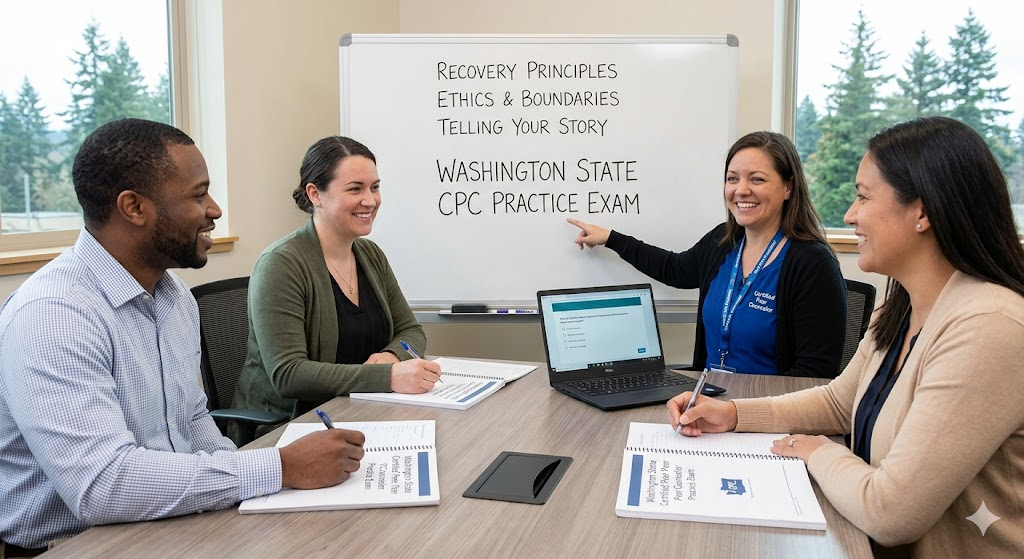
Additional Information
What the Course Entails and Exam Details
Preparing for the final exam requires a thorough understanding of the core training curricula approved by the Washington State Health Care Authority (HCA). Candidates typically complete the standardized 40-hour peer counselor training. The topics covered, which will form the basis of the exam questions, include the fundamental principles of peer support. You must understand the difference between a peer support relationship and traditional clinical relationships. The curricula extensively cover the substance and application of the Washington State Peer Counselor Code of Ethics, which is critical for passing. Other key areas include the stages of change model, motivational interviewing techniques, trauma-informed care principles, and standard cultural humility practices. Candidates must also demonstrate knowledge of mandatory reporting laws in Washington, confidentiality regulations (like HIPAA and 42 CFR Part 2), and basic documentation procedures required in healthcare settings.
What to Expect in the Final Exam
The Washington State Certified Peer Counselor Exam is primarily designed to assess knowledge, ethical reasoning, and the practical application of peer support skills through situational scenarios. It is not an oral exam; it is a written test. The format predominantly consists of multiple-choice questions. These questions will present you with real-world scenarios you might encounter as a CPC, requiring you to select the most ethically and professionally appropriate response based on your training. There is a specific time limit for the exam, which will be clearly communicated by the HCA or the training entity administering it. While passing scores can vary slightly depending on the specific testing cycle, you generally must achieve a high percentage to pass, as this confirms your readiness to practice ethically. Be prepared for questions that test your understanding of boundaries and the strict limitations of the peer role.
How to Study and Exam Centers
Effective preparation is essential. The most important resource is the training manual you received during your HCA-approved 40-hour course. Review it thoroughly. We recommend forming study groups with fellow trainees to practice situational scenarios and discuss the application of the Code of Ethics. Utilize available practice exams or sample questions from the Washington State HCA website, as these will give you a feel for the phrasing of the scenario-based questions. Pay special attention to "grey areas" in ethical dilemmas. The final exam itself is administered by the Washington State Health Care Authority or organizations specifically contracted by them. Testing is typically scheduled at the conclusion of an approved 40-hour training cohort, often at physical locations provided by community behavioral health agencies or dedicated training centers. Always check the current, official HCA guidance for specific testing dates and updated center locations.
Job Opportunities from the Course
Becoming a Certified Peer Counselor in Washington opens a wide range of rewarding career paths within the behavioral health workforce. This certification is highly valued by employers who recognize the unique efficacy of peer support. Potential job titles and settings include:
Certified Peer Counselor (CPC) in Community Behavioral Health Agencies
Recovery Coach in Substance Use Disorder Treatment Centers
Peer Support Specialist in Crisis Stabilization Units
Hospital Emergency Department Peer Navigator
Peer Specialist in Supportive Housing Programs
Forensic Peer Counselor (working within the legal or correctional system)
Youth Peer Support Specialist or Family Peer Liaison
These roles exist across the state, in both urban and rural communities, providing a stable and fulfilling career helping others achieve wellness.
Frequently Asked Questions
Reviews
5.0
Based on 0 reviews
Leave a Review
No reviews yet. Be the first to review!