
Washington State Hunters Ed Practice Exam
$69.00
- Buy to unlock unlimited access to all Quiz questions and Answers in this Quiz.
- After purchase you can print a PDF of the whole quiz at any point. The PDF will contain the questions and the correct answers.
About this Exam
The Washington State Hunters Ed Certification is a critical step for anyone looking to hunt safely and legally within the state. This comprehensive program, often mandatory for specific age groups and new hunters, is designed to instill foundational knowledge in firearm safety, wildlife management, and outdoor responsibility. Successfully completing the course and the final assessments is not just about meeting a regulatory requirement; it's about joining a community committed to conservation, ethical hunting practices, and personal well-being in the great outdoors. This study guide and the associated practice exams are your key tools to thoroughly prepare for and confidently navigate this essential certification process.
Ready to test your knowledge?
Buy Now to Access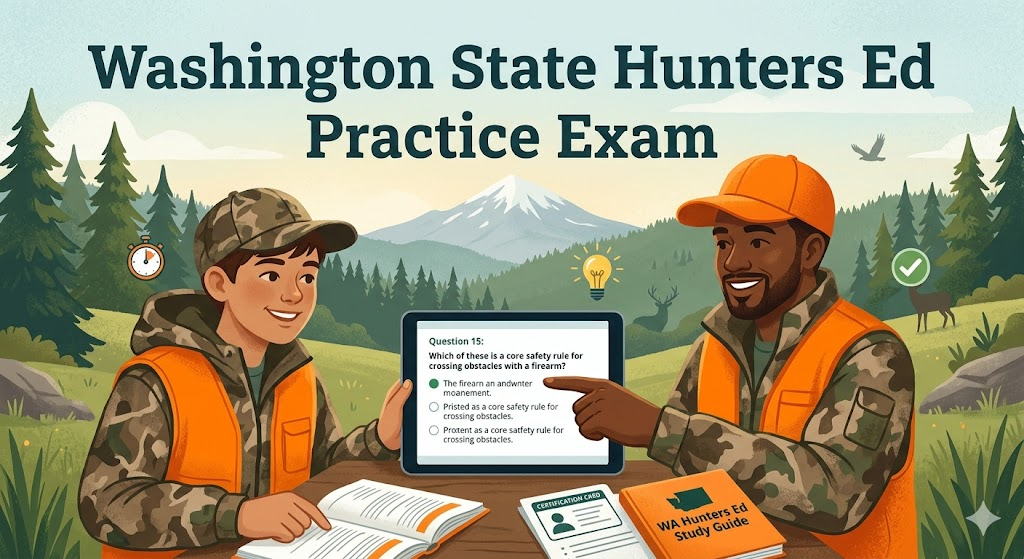
Additional Information
What the Course Entails and Exam Details
The Washington State Hunters Ed course provides a well-rounded curriculum that covers a wide spectrum of topics relevant to modern hunting. The course structure is designed to be accessible, often offering both online and in-person components to suit different learning preferences. The core subjects you can expect to master include:
Firearm Safety: Comprehensive training on the four primary rules of firearm safety, including safe handling, carrying positions, crossing obstacles, and understanding a safe zone of fire. You'll also learn about the functions and features of different firearm types and ammunition.
Hunting Laws and Regulations: Crucial details specific to Washington, including licensing, tagging requirements, bag limits, seasons, and reporting violations. This section ensures you understand your legal and ethical responsibilities.
Wildlife Management & Conservation: Principles of maintaining healthy animal populations and their habitats. You'll learn the importance of conservation efforts and the role hunters play.
Outdoor Survival and Basic First Aid: Practical skills for staying safe and responding to emergencies in remote areas. This includes basics of preparation, key survival techniques, and fundamental first aid knowledge.
Ethical Hunting & Sportsmanship: Best practices for respectful and fair chase, ensuring proper conduct in the field and towards landowners and fellow outdoors people.
Game Identification: Learning to distinguish between various animal species to ensure legal and targeted hunting.
The exam process involves both written and practical assessments. The complete certification typically culminates in a Field Day, which itself is a vital part of the examination. Preparation is key, and using resources like a Washington State Hunters Ed Practice Exam will help you solidify this knowledge before facing the final tests.
What to Expect in the Final Exam
The final assessment for your Washington State Hunters Ed Certification is not just a single paper test; it’s a comprehensive evaluation designed to measure both your theoretical knowledge and your practical application of safety skills. You should be prepared for the following components on your certification Field Day:
Written Quiz/Exam: This typically consists of a set of multiple-choice questions (often around 20-25). It covers all aspects of the curriculum you studied. Questions will test your understanding of specific Washington laws, firearm types and mechanics, safety protocols, and wildlife knowledge. A passing score is mandatory for certification. While the exact passing score can vary, you should generally aim for at least 80% to be confident. The questions are designed to be practical, but thorough review of the materials is essential to succeed.
Field Skills Evaluation: This is the practical side of the assessment. Expect to be guided through a series of scenarios designed to test your real-world application of the course material. Instructors (certified by the Washington Department of Fish and Wildlife) will evaluate your actions and judgment in areas such as:
Muzzle Control: Consistently pointing your firearm in a safe direction.
Safely Crossing Obstacles: Demonstrating proper technique when navigating fences, streams, or rough terrain while carrying a firearm.
Firearm Handling Skills: Showcasing your ability to safely load, unload, and check the action of various firearm types (typically using inert firearms).
Zone of Fire Check: Demonstrating awareness of your shooting area and understanding what is beyond your target.
General Field Practices: Applying safety rules and ethical considerations in simulated hunting situations.
Attitude and Attitude Assessment: Your overall demeanor, respect for instructions, and serious commitment to safety are also observed and can factor into your successful completion of the course and certification.
There are usually no specific time limits for individual quiz questions, but the overall Field Day itself generally spans 4 to 6 hours. Be well-rested, attentive, and ready to demonstrate a positive, safety-first attitude.
How to Study and Exam Centers
Preparation is paramount for a safety-focused certification. Here are actionable strategies and information on where you can take your Washington State Hunters Ed course and exam:
How to Study Effectively
Review Official Course Materials: Whether you take an online course or an in-person class, meticulously go through all the provided manuals, online modules, and videos. Re-read sections that you find challenging and take all associated unit quizzes.
Utilize Practice Exams: Regularly taking a Washington State Hunters Ed Practice Exam is one of the best ways to prepare. This helps you familiarize yourself with typical question formats, identify areas where you need more study, and manage your time and anxiety for the actual assessment. Aim to take multiple different practice quizzes.
Focus on Core Areas: Pay extra attention to firearm safety rules, specific Washington hunting regulations (obtain and study the current state pamphlet), and key game identification characteristics. These are foundational elements and heavily tested.
Study in a Group or with a Mentor: Reviewing material with other students or asking an experienced hunter for clarification can offer different perspectives and help solidify your knowledge. Teaching a concept to someone else is a powerful learning tool.
Handle Practice Firearms (Inert/Training Aids): If available, safely practice handling inert or training firearms to build confidence and muscle memory for the practical skills portion. Focus purely on muzzle control and action manipulation.
Exam Centers and Certification Methods
The Washington State Department of Fish and Wildlife (WDFW) typically offers two main pathways to complete your Hunter Education:
In-Person Instructor-Led Classes: These free courses are taught by certified volunteer instructors. You'll complete both the classroom learning and the field skills evaluation, including the final assessments, over a series of scheduled sessions (often several evenings or a weekend). Check the WDFW website for a schedule of upcoming classes and registration details. Parents/guardians may need to accompany students under 12.
Hybrid Course (Online + Field Skills Evaluation): This is a popular option. You complete the core coursework through an approved online portal (like Hunter-ed.com). Upon passing the online component, you'll receive a Field Day Qualifier Exam certificate (which is valid for a defined period, e.g., 180 days). You must then register for and attend an in-person Field Day to complete the final field skills evaluation and take the final written quiz to receive your official Hunter Education Card. Official online course sites and a calendar for authorized Field Days are accessible via the WDFW website.
Whether you choose a purely in-person class or the hybrid online method, the final Field Day is the crucial step for certification. Registration for all in-person components, including Field Days and full courses, is handled through the official Washington Department of Fish and Wildlife website. Be sure to check the specific requirements and available dates well in advance of your desired hunting season.
Job Opportunities from the Course
While the primary goal of the Washington State Hunters Ed certification is safety and legal hunting, the knowledge and awareness you gain are highly relevant to numerous outdoor and conservation-related careers. The principles of wildlife management, habitat conservation, outdoor ethics, and responsible firearm handling are fundamental to many roles in the public and private sectors.
While this certification alone is not a direct qualification for most professions, it is a significant asset and often a mandatory foundational requirement for several career paths, particularly when combined with further education and experience. Some specific job titles and career paths where this knowledge is valuable include:
Wildlife Technician: A key role assisting biologists in collecting field data, managing wildlife populations, and maintaining habitats. The foundational knowledge of species identification and conservation principles is essential.
Game Warden / Fish and Wildlife Officer: This is a law enforcement path that requires specialized training and potentially a degree, but a deep understanding of hunting regulations, ethics, and firearm safety, as reinforced by Hunters Ed, is a necessary first step.
Park Ranger: While duties vary greatly, many rangers operate in areas with managed hunting programs or wildlife, and a strong awareness of hunter safety and regulations is highly beneficial.
Hunting Guide / Outdoor Guide: The knowledge of safety protocols, first aid, survival, and responsible field behavior is crucial for guiding clients effectively and safely in hunting and diverse outdoor environments.
Outdoor Educator / Safety Instructor: Many educational organizations and youth programs seek instructors capable of teaching wilderness skills and firearm safety, and this certification showcases your foundation in these areas.
Roles within Natural Resource Agencies (e.g., WDFW, USFWS): Diverse positions from administrative to field roles often require a solid comprehension of hunting's role in wildlife management and the importance of conservation efforts and safe practices.
Specialized Security or Guide Roles in Remote Areas: Certain positions, such as those within the military, large conservation organizations, or remote industrial operations, can benefit from personnel certified in outdoor safety and firearm knowledge.
This course is a powerful tool to not only begin your hunting journey responsibly but also to open doors to a rewarding future working in or around nature, conservation, and the great outdoors. Prepare diligently, utilize all your resources, and good luck!
Frequently Asked Questions
Reviews
5.0
Based on 0 reviews
Leave a Review
No reviews yet. Be the first to review!