
WasteWater Operator Certification - Grade 1 Practice Test
$69.00
- Buy to unlock unlimited access to all Quiz questions and Answers in this Quiz.
- After purchase you can print a PDF of the whole quiz at any point. The PDF will contain the questions and the correct answers.
About this Exam
Embark on a rewarding and vital career path by achieving your Wastewater Operator Certification - Grade 1. This foundational certification is meticulously designed for individuals eager to enter the field of wastewater treatment or those with limited experience looking to validate their knowledge. These dedicated professionals play a crucial role in safeguarding public health and protecting our environment by ensuring wastewater is treated effectively before being returned to the water cycle. By preparing for and taking the Grade 1 Practice Test, you are taking a proactive step towards mastering the essential concepts and confirming your readiness for the actual certification exam, paving the way for a successful career as a certified operator.
Ready to test your knowledge?
Buy Now to Access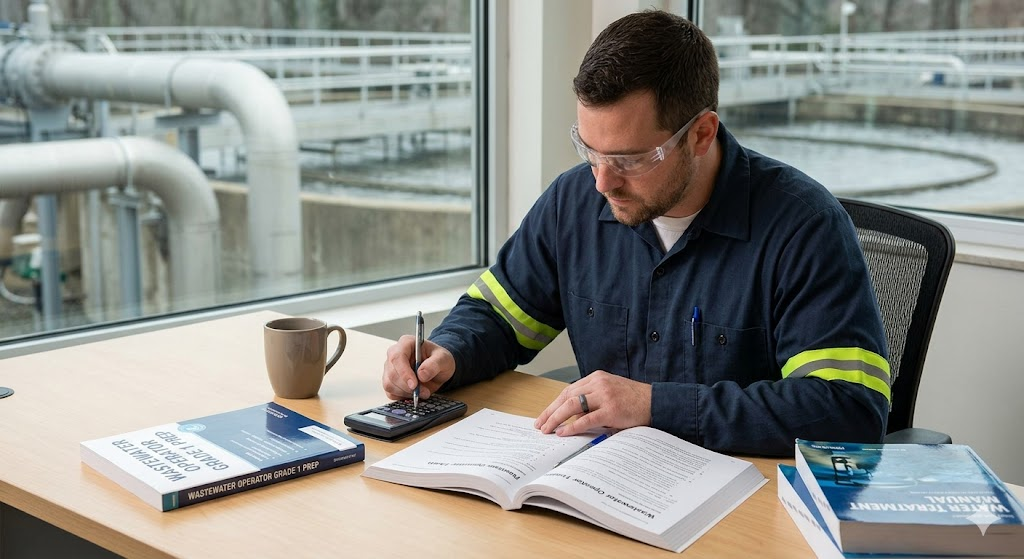
Additional Information
What the Course Entails and Exam Details
The comprehensive syllabus and the actual Grade 1 exam encompass a diverse range of critical topics to ensure operators possess a well-rounded understanding. Expect to encounter significant questions relating to:
Wastewater Sources and Characteristics: Understand different types of wastewater, their typical composition, and key parameters such as Biochemical Oxygen Demand (BOD), Total Suspended Solids (TSS), and nutrients.
Safety Practices and Hazards: Master essential safety protocols, identify common hazards encountered in wastewater treatment plants, and learn proper emergency response procedures to protect yourself and your colleagues.
Sampling and Analysis: Gain knowledge about various sampling techniques, equipment operation, and simple laboratory analyses used to monitor wastewater constituents and treatment process efficiency.
Wastewater Treatment Processes: Understand the principles and operations of preliminary treatment (screening, grit removal), primary treatment (sedimentation), and secondary treatment (biological processes like activated sludge, trickling filters, and stabilization ponds).
Disinfection: Learn about different disinfection methods, equipment, and regulations to ensure the elimination of harmful pathogens.
Wastewater Mathematics: Develop and practice necessary mathematical skills for performing crucial calculations related to flow rates, volumes, detention times, overflow rates, removal efficiencies, and chemical dosing requirements.
State Regulations and Documentation: Become familiar with relevant state or local regulations governing wastewater treatment, operator certification requirements, and the importance of accurate record-keeping and reporting.
A comprehensive Grade 1 Practice Test will mirror these core content areas, providing you with invaluable experience in answering questions designed to evaluate your mastery of these subjects.
What to Expect in the Final Exam
While a Grade 1 Practice Test is a simulating tool, understanding the structure of the actual certification exam is paramount for optimal preparation. The final examination for Grade 1 certification typically features:
Format: The exam predominantly consists of multiple-choice and true/false questions meticulously crafted by industry experts to test both your fundamental knowledge and your ability to apply relevant concepts.
Duration: You will usually be given a specific time limit, commonly around 2 to 3 hours, to carefully complete the entire exam. Proper time management during the practice test will help you build stamina and pace yourself effectively.
Passing Score: Achieving a certified status requires you to meet or exceed a defined passing score, often around 70% overall, sometimes with minimum scores required for specific key sections like mathematics.
Materials Allowed: Be aware that standard actual exams may strictly prohibit bringing personal materials (like notes or cell phones) and may only allow approved items, such as non-programmable calculators, if permitted. Always verify specific rules for your testing location.
Practicing with Grade 1 Practice Tests that replicate this structure will enhance your comfort level, build your confidence, and identify areas needing further study before you face the actual certification challenge.
How to Study and Exam Centers
Preparation is the absolute key to success on both the practice and actual Grade 1 exams. Utilize these effective strategies:
Review Official Study Materials: Obtain and thoroughly review official study guides, textbooks, and any relevant training materials recommended by the certifying authority or recognized industry organizations (like WPI/ABC or regional water environmental associations).
Utilize Practice Tests Multiple Times: Don't just take one practice test; take several! This exposes you to various question styles, reinforces knowledge, improves your speed, and highlights persistent weak areas. Analyze your incorrect answers carefully to understand the reasoning behind the correct response.
Focus on Mathematical Skills: Devote dedicated time to practicing wastewater mathematics. Ensure you can confidently perform all calculations required by reviewing formulas and solving numerous example problems. Lack of mathematical proficiency is a common hurdle for many applicants.
Join Study Groups: Engage with fellow students or colleagues also preparing for the exam. Explaining concepts to others and discussing challenging topics can significantly deepen your understanding.
Hands-on Experience: If possible, gain practical experience working or interning at a wastewater treatment facility. Real-world application reinforces theoretical knowledge and can make abstract concepts much more tangible.
Maintain a positive attitude and manage stress: Get adequate rest before both practice and actual exams, arrive early for testing, and maintain a calm and focused demeanor.
Wastewater Operator Certification Exams are typically administered by state or regional environmental agencies or through authorized testing organizations and portals. Common methods for taking the exam include:
Online Testing Portals: Many certifications now offer convenient online testing options through secure proctored platforms or specific approved websites.
Authorized Testing Centers: Physical testing locations, such as Pearson VUE centers, community colleges, or dedicated vocational schools, may be utilized for in-person exam administration.
State-Specific Exam Sessions: Certain jurisdictions may hold scheduled exam sessions at regional offices or specific testing facilities.
You can typically access numerous Grade 1 Practice Tests online from reputable providers of study materials, training courses, and operator resources, allowing you to prepare thoroughly from the comfort of your own home or office. Be sure to check the official certifying authority’s website for your specific location to understand the exact procedures and accepted testing methods and locations.
Job Opportunities from the Course
Successfully achieving your Grade 1 Wastewater Operator Certification opens doors to foundational career opportunities in public and private wastewater treatment. Common job titles and career paths this certification can unlock include:
Wastewater Treatment Plant Operator I (Entry-Level)
Treatment Plant Operations Technician
Utilities Maintenance Worker
Wastewater Collection System Operator (potentially, as skills often overlap or provide a base for collection certs)
Environmental Field Technician (with some variation)
Water & Wastewater Quality Analyst/Lab Assistant (depending on role focus and additional training)
Earning your Grade 1 certification is a tremendous accomplishment that signifies your dedication and competence in this essential environmental field. With this valuable qualification and continuous experience, you will have the foundation to advance into leadership roles with further certification grades (Grade 2, 3, etc.), specialized positions, and increased responsibilities, all while contributing positively to public health and ecological sustainability.
Frequently Asked Questions
Reviews
5.0
Based on 0 reviews
Leave a Review
No reviews yet. Be the first to review!