
WasteWater Operator Class C Practice Exam
$69.00
- Buy to unlock unlimited access to all Quiz questions and Answers in this Quiz.
- After purchase you can print a PDF of the whole quiz at any point. The PDF will contain the questions and the correct answers.
About this Exam
The WasteWater Operator Class C Certification and its associated exam represent a significant milestone for professionals in the crucial field of wastewater treatment. Designed for individuals who often have prior experience and are stepping into more responsible roles, this certification validates the fundamental knowledge and skills required to safely and effectively operate, maintain, and troubleshoot smaller to medium-sized or less complex wastewater treatment facilities. This exam is the key to unlocking broader opportunities, showcasing expertise that is essential for protecting public health and the environment by ensuring that wastewater is properly processed before its return to our waterways. Whether you are an experienced operator aiming for advancement or seeking entry into a more supervisory capacity in smaller plants, the Class C designation is a widely recognized mark of competency.
Ready to test your knowledge?
Buy Now to Access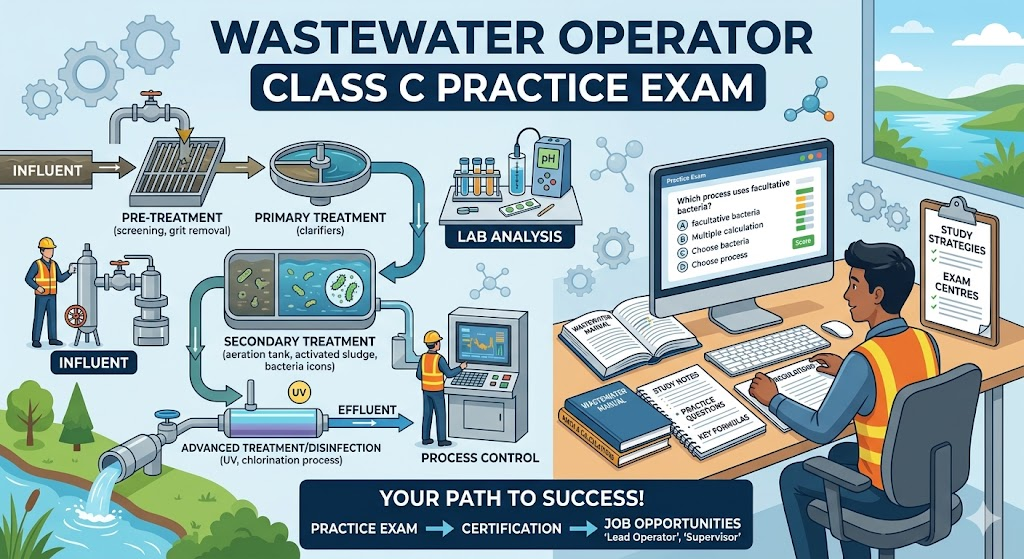
Additional Information
What the Course Entails and Exam Details
Preparing for the WasteWater Operator Class C Practice Exam involves a comprehensive understanding of diverse operational concepts and practical applications. The core topics generally include, but are not limited to, different types of wastewater treatment processes (such as activated sludge, stabilization ponds, and trickling filters), pre-treatment methods, solids disposal and handling, chlorination and alternative disinfection techniques, essential laboratory procedures and chemistry, facility maintenance, and strict safety protocols. Crucially, a significant portion of the material focuses on the complex math calculations necessary for process control, chemical dosing, and regulatory reporting. Students must also be well-versed in local, state, and federal wastewater regulations that govern facility operations. Mastery of these subjects demonstrates that an operator is capable of making critical decisions to keep a treatment plant running optimally and compliantly.
What to Expect in the Final Exam
The actual Class C Wastewater Operator exam is typically administered as a multiple-choice assessment. While specific state boards might have minor variations, candidates should generally expect a test consisting of 50 to 100 questions that evaluate understanding across all the key topic areas. These exams usually have set time limits, often ranging from two to four hours, demanding both speed and precision. A passing score, commonly around 70%, is required to demonstrate sufficient competency. Be prepared for a challenging, closed-book exam where your reliance on your own memory and problem-solving abilities is critical. Formula sheets for relevant math and conversions are often provided by the examining body to aid in calculation-heavy sections, but you must still understand which formulas to apply and how to execute the math correctly. Ensure you are familiar with any specific requirements, such as bringing a non-programmable calculator or identification, as detailed by your local regulatory agency.
How to Study and Exam Centers
Effective study requires a structured approach. Actively engage with suggested training manuals, attend workshops or online courses specifically designed for Class C certification, and, most importantly, make extensive use of practice exams and questions. These practice materials are invaluable for familiarizing yourself with the type of multiple-choice questions you will encounter, building your confidence and test-taking speed, and, crucially, identifying specific areas where you need further review. Form study groups, work through complex wastewater math scenarios repeatedly, and understand the real-world implications of each process and regulation. When you are ready to take the test, the exam is typically proctored through authorized physical testing centers, which may include state environmental agencies, specific community colleges or vocational schools, or third-party testing services. In some regions, authorized online portals may be an option, but this varies significantly by jurisdiction, so always confirm the exact procedures, locations, and scheduling with your state's certification board. Be sure to submit your application well in advance of desired test dates.
Job Opportunities from the Course
Earning your WasteWater Operator Class C certification significantly broadens your career horizons. This recognized qualification unlocks various specialized and leadership roles within the water quality sector. Potential job paths and titles include:
Lead Wastewater Operator
Treatment Plant Senior Operator
Industrial Pretreatment Technician
Wastewater Facility Supervisor
Water Quality Compliance Officer
Treatment Systems Troubleshooter
Operations and Maintenance Technician
Public Works Superintendent (in smaller municipalities)
Environmental Health and Safety Specialist in a wastewater context
Investing in this certification is not just about passing an exam; it's a strategic move to secure more responsible, better-paying positions and to make a meaningful impact in a essential industry. Good luck in your preparation and your rewarding career ahead!
Frequently Asked Questions
Reviews
5.0
Based on 0 reviews
Leave a Review
No reviews yet. Be the first to review!