
Water and Fuel Systems Maintenance (WFSM) Set A Volume 2 Practice Test
$69.00
- Buy to unlock unlimited access to all Quiz questions and Answers in this Quiz.
- After purchase you can print a PDF of the whole quiz at any point. The PDF will contain the questions and the correct answers.
About this Exam
Welcome to your essential resource for preparing for the Water and Fuel Systems Maintenance (WFSM) certification! This highly relevant certification validates a professional’s critical knowledge in maintaining and repairing intricate systems involving water distribution, purification, and fuel storage and dispensing. It is primarily designed for maintenance technicians, facility managers, and specialized individuals in industrial, governmental, and military settings, ensuring they are equipped to handle these essential and potentially high-stakes systems with competence and safety. This article is your guide, specifically tailored to help you excel using resources like the WFSM Set A Volume 2 Practice Test, building your confidence and ensuring you are ready for the actual examination challenges.
Ready to test your knowledge?
Buy Now to Access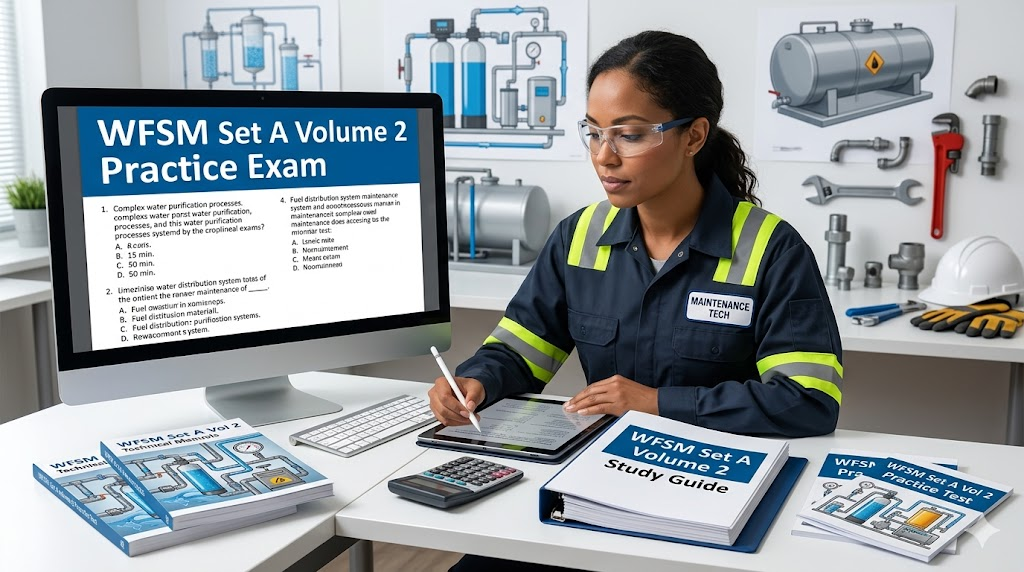
Additional Information
What the Course Entails and Exam Details
A comprehensive WFSM course, often divided into multiple volumes, covers a broad spectrum of technical skills and safety procedures. While exact content varies by program and organization, preparing with Set A Volume 2 generally indicates a focus on more advanced or intermediate concepts within the broader curriculum. You might expect in-depth exploration of topics such as:
Complex Potable Water Systems: Going beyond basics to cover sophisticated distribution methods, intricate purification technologies, and advanced maintenance protocols for drinking water.
Wastewater Treatment Systems: Detailed knowledge on various wastewater collection, processing, and disposal systems and their associated maintenance requirements.
Fuel Storage and Dispensing: Understanding the technical specific details, safety standards, and maintenance requirements for diverse fuel systems, including specialized tanks, pumps, and sophisticated monitoring equipment.
Advanced Backflow Prevention: Mastering the techniques and devices used to prevent contamination in water systems, including testing and maintenance of complex assemblies.
System Diagnostics and Troubleshooting: Honing your analytical skills to quickly identify, isolate, and repair issues across intricate water and fuel networks.
Compliance and Safety: Deep understanding of relevant regulations (local, federal, military/agency specific) and rigorous safety protocols crucial for working with potentially hazardous fluids and within technical environments.
Key Exam Details to Keep in Mind:
Focus: This practice test specifically targets the content of Volume 2, Set A, meaning it will deep dive into the areas outlined above and others specific to that curriculum section.
Actual Exam: The full certification exam typically covers multiple volumes (often Vol 1, 2, 3 etc.), and this practice test is a powerful tool to focus and master this critical segment.
What to Expect in the Final Exam
When you sit for the actual WFSM final examination, be prepared for a rigorous assessment of your knowledge.
Format: The exam predominantly features multiple-choice questions, carefully designed to test your comprehension of intricate technical principles, regulatory standards, troubleshooting scenarios, and safety practices. You may encounter detailed technical drawings, schematics, or scenario-based questions requiring practical calculation and judgment.
Passing Score: Organizations typically set a challenging passing score, often requiring you to achieve 70% to 80% or higher across all sections combined or for individual topic areas.
Time Limits: You will likely be under a specific time constraint, so efficient time management is essential. The full exam duration often reflects the depth of the material, ranging from 2 to 3 hours or more, with defined times per section sometimes allocated.
Rules: Standard examination rules apply – including strict policies on prohibited items (certain calculators, notes, etc.) and verification of identity. Directly consult the issuing body (e.g., specific agency training portal, professional association) for precise, up-to-date information on passing requirements, format variations, and exact test duration, as these will vary.
How to Study and Exam Centers
Preparation is paramount, and leveraging resources effectively is key to your success.
Leverage Official Materials: Make the official study guides, technical manuals, and curriculum documents (often provided in digital or physical formats, and sometimes referenced as "technical orders" in certain organizations) your primary focus. The specific knowledge required, referenced facts, and diagram examples often stem directly from these.
Embrace Practice Tests: The WFSM Set A Volume 2 Practice Test is an invaluable tool! Work through it repeatedly, not just to find the correct answer, but to understand why it is correct and why other options are incorrect. Identify your weak areas and revisit official study materials for reinforced learning in those specifics.
Use Flashcards and Summaries: Create digital or physical flashcards for complex terms, important regulatory codes, specific technical values (pressures, temperatures, flow rates, etc.), and step-by-step procedures. Condense larger topics into concise summaries for quick review.
Form or Join Study Groups: Collaborate with peers! Explaining concepts to others reinforces your understanding, and hearing different perspectives can clarify complex ideas.
Practice Active Learning: Don’t just read – quiz yourself, draw out schematics, simulate troubleshooting steps, and mentally apply the knowledge to real-world scenarios.
Where and How to Take the Exam:
Online Portals: Many certifications offer online examinations through secure proctoring systems, accessible via specific training portals or authorized testing websites, often requiring a modern personal computer.
Authorized Testing Centers: Physical locations such as Pearson VUE test centers or specific military/agency-authorized training schools (if applicable in your context, especially common for generalized technical certifications) provide secure, professional environments for taking the exam.
Registration Process: You will generally need to register through the official certification website, agency portal, or testing network, providing necessary documentation and sometimes scheduling specific date/time slots, particularly for in-person exams.
Direct Verification is Crucial: Always verify the exact study strategies and, most importantly, the specific exam format, passing requirements, and actual physical and digital test center locations/options with the specific organization or agency issuing the certification. What applies for one variant might not for another, and procedures do change.
Job Opportunities from the Course
A WFSM certification opens doors to diverse and vital roles across numerous sectors. Here are some of the potential job opportunities and career paths:
Water and Fuel Systems Maintenance Specialist: Particularly prominent in governmental or military contexts, directly applying your knowledge within official facility systems.
Maintenance Technician (Facility/Industrial/Commercial): General facility maintenance roles with specialized expertise in crucial water, fuel, and associated plumbing systems in broad commercial and industrial settings.
Plumbing Technician: Focused on potable water and wastewater plumbing, often utilizing key aspects of water system maintenance knowledge.
Fuel Distribution Technician: Specialized roles in maintaining and operating fuel handling equipment and distribution networks in various industrial sectors and transportation.
Industrial Plant Mechanic/Operator: General industrial mechanical and operational roles, often incorporating maintenance of relevant fuel and water systems integral to plant operations.
Facility Manager: Leverage your deep system understanding to effectively oversee diverse facility maintenance operations, ensuring efficient and safe function.
Water Quality Technician: While less directly focused on mechanical maintenance, this role involves monitoring and optimizing complex water treatment processes, leveraging detailed purification systems knowledge.
Technical Instructor: Once experienced, you can transition into training new technicians, passing on your vital expertise.
By utilizing this comprehensive study guide and the powerful resources like the WFSM Set A Volume 2 Practice Test, you are well-positioned to master the critical Volume 2 content, pass the certification exam, and build a rewarding career in maintaining essential water and fuel infrastructure. Good luck with your studies, and stay focused – your future in this dynamic field starts here!
Frequently Asked Questions
Reviews
5.0
Based on 0 reviews
Leave a Review
No reviews yet. Be the first to review!