
We the People Grade 8 Constitution Practice Test
$69.00
- Buy to unlock unlimited access to all Quiz questions and Answers in this Quiz.
- After purchase you can print a PDF of the whole quiz at any point. The PDF will contain the questions and the correct answers.
About this Exam
The We the People Grade 8 Constitution program is a premier civic education initiative designed to cultivate informed and engaged citizens.
Developed by the Center for Civic Education, this program guides middle school students through the history, principles, and modern relevance of the United States Constitution.
This specific practice test is tailored for students competing in or preparing for the culminating activities of the We the People curriculum.
It is designed for 8th-grade students who want to assess their knowledge, build confidence, and ensure they are ready for the rigorous assessment associated with this highly respected civic education course.
Ready to test your knowledge?
Buy Now to Access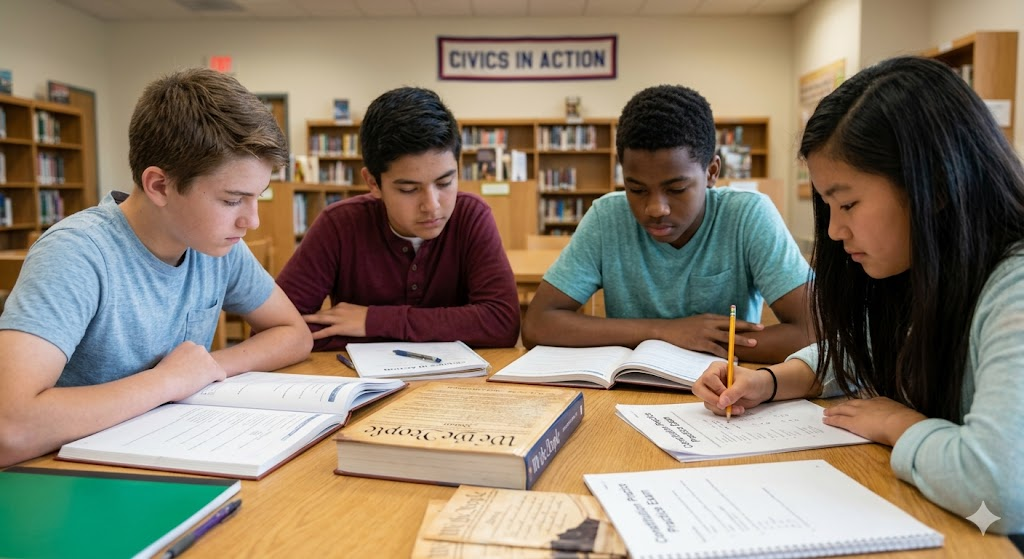
Additional Information
What the Course Entails and Exam Details
The underlying We the People curriculum for Grade 8 is typically structured into several critical thematic units that students must master.
This extensive coursework covers the philosophical foundations of American government, the drafting and ratification of the Constitution, and the development of the Bill of Rights.
Students explore the principles of classical republicanism and natural rights philosophy, tracing how these foundational ideas shaped the structure of the American Republic.
Furthermore, the course emphasizes understanding landmark Supreme Court cases and the historical evolution of constitutional rights.
Mastery in this course requires not just factual recall, but strong analytical skills and the ability to articulate complex legal and historical arguments in a clear and compelling manner.
What to Expect in the Final Exam
While individual schools or regions may use written assessments as precursors, the standard culmination of the We the People experience is the Simulated Congressional Hearing.
During this unique event, students act as expert witnesses, testifying in small groups before a panel of judges—usually community members, lawyers, or educators.
The basic hearing format involves a timed presentation (usually around four minutes) where students deliver a prepared response to specific constitutional questions.
Following the prepared presentation, students must answer impromptu, follow-up questions from the judges, testing their adaptability and depth of knowledge.
If your school uses a written practice test to prepare for this, you should expect a format similar to other standardized tests, likely involving complex multiple-choice questions or short essays focusing on constitutional principles, rather than just simple definitions.
How to Study and Exam Centers
Preparing for the We the People activities requires a shift from simple memorization to a focus on critical analysis and articulate argumentation.
To prepare effectively, you should thoroughly review the We the People textbook and actively participate in all class discussions regarding historical and contemporary constitutional issues.
For the hearing portion, students should practice mock testimony, focusing on speaking clearly, making eye contact, and supporting all arguments with specific evidence from the Constitution, supporting documents, or historical events.
Regarding the practice test itself and the eventual final exam, these are rarely administered at independent commercial testing centers like Pearson VUE.
Instead, these events are typically managed through participating middle schools or local school districts, which function as the primary exam centers.
The culminating Simulated Congressional Hearings are often hosted at local universities, county courthouses, or other regional civic centers, providing an authentic and respectful environment for the students’ testimony.
Job Opportunities from the Course
While the We the People Grade 8 Constitution Practice Test does not grant a professional certification that directly unlocks immediate employment, completing this rigorous program is an invaluable milestone.
It demonstrates a level of commitment to civic duty and advanced critical thinking that is highly regarded by competitive high schools and, eventually, university admissions officers.
Success in this program builds the precise skill set—analysis, presentation, and argumentative writing—essential for numerous professional career paths later in life.
Some of the future careers this civic foundation helps unlock include:
Attorney and Legal Counsel
Political Campaign Manager
Public Policy Analyst
Diplomat or Foreign Service Officer
Legislative Assistant
Political Scientist
Constitutional Law Professor
Civic Education Coordinator or Advocate
Community Organizer
News Anchor or Political Correspondent
Government Agency Administrator (at local, state, or federal levels)
Political Columnist or Investigative Journalist
Frequently Asked Questions
Reviews
5.0
Based on 0 reviews
Leave a Review
No reviews yet. Be the first to review!