
WebXam Culinary Fundamentals Practice Test
$69.00
- Buy to unlock unlimited access to all Quiz questions and Answers in this Quiz.
- After purchase you can print a PDF of the whole quiz at any point. The PDF will contain the questions and the correct answers.
About this Exam
The WebXam Culinary Fundamentals exam is an important step for individuals looking to launch a rewarding career in the vibrant culinary arts industry. Designed specifically for high school and career-technical education (CTE) students across the state of Ohio, this certification validates core, entry-level skills required in professional kitchens and hospitality environments.
This certification serves as an indicator to potential employers that you possess the practical, technical knowledge necessary to be an effective, safe, and productive member of a professional culinary team. Whether your goal is to become a chef, restaurant manager, caterer, or other industry professional, achieving your WebXam Culinary Fundamentals certification sets a strong foundation for your journey
Ready to test your knowledge?
Buy Now to Access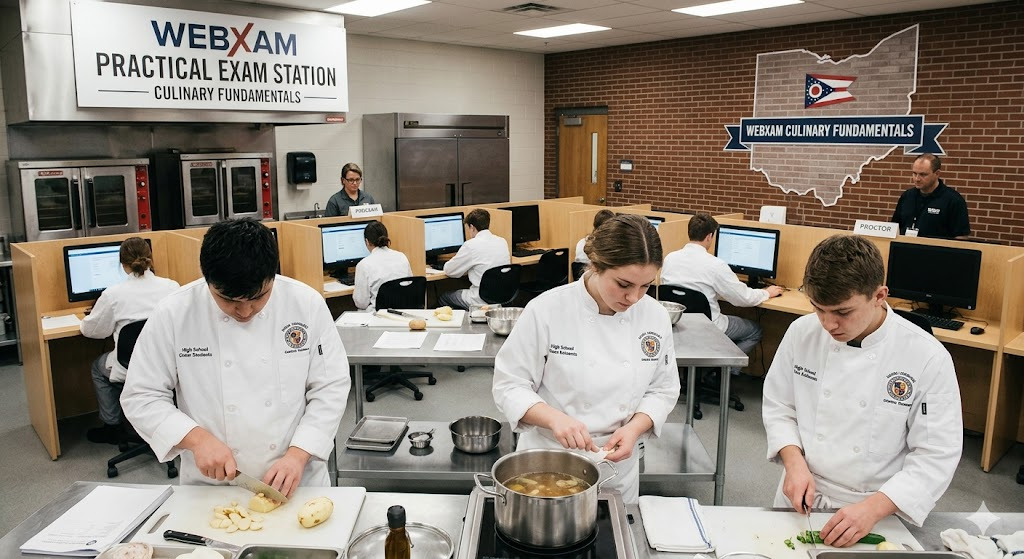
Additional Information
What the Course Entails and Exam Details
The WebXam Culinary Fundamentals exam covers a comprehensive set of concepts that are fundamental to any commercial food operation. Students preparing for this test will have studied key areas of the culinary arts, focusing on the standard operating procedures and best practices necessary to maintain safety, quality, and efficiency in the kitchen. The following core topics form the syllabus:
Kitchen Safety and Sanitation: Understanding and applying procedures for maintaining a safe and sanitary environment, crucial for preventing accidents and foodborne illnesses.
Food Safety and HACCP: In-depth knowledge of correct food handling, temperature controls, risk management (Hazard Analysis Critical Control Point), and preventing cross-contamination.
Tools, Equipment, and Technology: Identification, proper use, cleaning, and maintenance of standardized commercial kitchen tools, appliances, and equipment.
Knife Skills: Mastery of proper knife handling, selection, sharpening, and performing standard culinary cuts (e.g., dice, julienne, mince).
Standardized Recipes and Measurement: Interpreting standardized recipes, using measurement systems, converting recipe yields, and understanding costing basics.
Cooking Methods and Principles: Comprehensive knowledge of fundamental dry-heat cooking methods (e.g., roasting, grilling) and moist-heat cooking methods (e.g., braising, steaming).
Menu Planning and Presentation: An understanding of basic menu structures, dietary considerations, plate composition, and principles of effective food plating and garnishing.
Careers and Professionalism: Exploration of the diverse opportunities within the culinary field and understanding expectations for workplace readiness and professional conduct.
What to Expect in the Final Exam
The WebXam Culinary Fundamentals final exam is structured to test the application of your knowledge within a realistic culinary context. This is often a two-part assessment, though specific formats can vary slightly by program and institution.
Written Examination (Multiple Choice): You can expect a written component that assesses your theoretical knowledge of all the core topics listed above. This typically consists of a series of multiple-choice questions designed to test your understanding of safety protocols, equipment usage, cooking principles, and other key concepts. This section will have a specified time limit and requires a passing score as defined by the WebXam guidelines.
Practical Skills Assessment: This critical portion of the exam allows you to demonstrate your hands-on mastery of essential culinary tasks in a proctored environment. You may be asked to perform specific cuts using a chef's knife, correctly utilize a piece of equipment, prepare a specific element of a standardized recipe, and showcase proper sanitation practices. Performance is typically scored against a standard rubric.
To pass, students must achieve a passing score on both the written and practical components (when applicable). Your instructor or testing administrator will provide the specific details regarding time limits, passing requirements, and equipment needed for your exam.
How to Study and Exam Centers
Effectively preparing for the WebXam Culinary Fundamentals exam involves a combination of reinforcing theoretical concepts and refining practical kitchen skills. Here are actionable strategies:
Utilize Official Study Resources: Obtain study guides, practice tests, and curriculum resources provided by WebXam and your CTE program. These materials are directly aligned with the exam's content.
Practice Practice Practice: The key to success in the practical assessment is repetition. Focus on perfecting your knife skills, repeating basic recipes, and simulating common kitchen tasks in a controlled setting.
Review Key Terminology: Create flashcards for critical safety terms (HACCP), cooking techniques, and kitchen tools. Being able to quickly and accurately identify these elements is essential for both the written and practical tests.
Simulate the Exam Environment: Ask an instructor or peer to proctor a practice practical exam for you, providing a timed scenario for cuts and basic preparations. For the written part, practice with timed quizzes.
Form Study Groups: Working with other students can provide diverse perspectives, help with practicing practical skills, and allow you to drill each other on conceptual knowledge.
Review Lab Performance: Pay close attention to feedback received during your practical labs throughout your course. Use this information to improve your technique and precision.
The WebXam Culinary Fundamentals exam is typically administered directly through your career-technical education (CTE) program, high school, or a state-authorized testing center in Ohio. Your culinary arts instructor is your primary resource for understanding when and where the exam will take place. Information regarding test dates, logistics, and specific testing locations (such as on-site in your school’s commercial kitchen or a designated computer lab) will be provided directly by your educational institution.
Job Opportunities from the Course
Achieving your WebXam Culinary Fundamentals certification unlocks diverse entry-level opportunities across the vast landscape of the culinary and hospitality industry. Here are specific career paths that this certification can help you pursue:
Prep Cook: Gain experience in professional kitchens by preparing and portioning ingredients, supporting line cooks.
Line Cook: Progress to preparing and cooking food items to order during meal service, managing a specific station.
Dietary Aide: Prepare meals in healthcare facilities, adhering to dietary requirements and safety standards.
Catering Assistant: Work in dynamic environments preparing, setting up, and serving food for private events.
Baker/Pastry Assistant: Master basic baking techniques, preparing breads, desserts, and pastries in a bakery setting.
Food Service Worker: Start your career in a variety of fast-casual and full-service dining establishments.
Hospitality Associate: Leverage your knowledge of food service and customer interaction in hotels and resorts.
By earning this certification, you demonstrate a foundational level of culinary skill and a commitment to professional excellence, positioning yourself for successful growth and advancement within the industry.
I hope this comprehensive study guide article provides you with a strong and valuable resource for your SEO strategy and for effectively informing prospective students about the WebXam Culinary Fundamentals Practice Test!
Frequently Asked Questions
Reviews
5.0
Based on 0 reviews
Leave a Review
No reviews yet. Be the first to review!