
Welding and Cutting Certificate of Fitness Practice Test
$69.00
- Buy to unlock unlimited access to all Quiz questions and Answers in this Quiz.
- After purchase you can print a PDF of the whole quiz at any point. The PDF will contain the questions and the correct answers.
About this Exam
This certification is a vital safety credential designed for individuals who perform hot work activities in dynamic industrial or construction environments. It acts as official verification that an operator has a thorough understanding of essential fire prevention techniques, safe handling of hazardous materials, and legal regulations surrounding the use of torches and welding equipment. The certification is specifically required for torch operators, welders, cutters, supervisors, and any personnel designated to supervise "hot work" zones where sparks, heat, or slag are generated. For professionals looking to advance their careers and ensure the safety of their work environment, this certificate is an indispensable qualification.
Ready to test your knowledge?
Buy Now to Access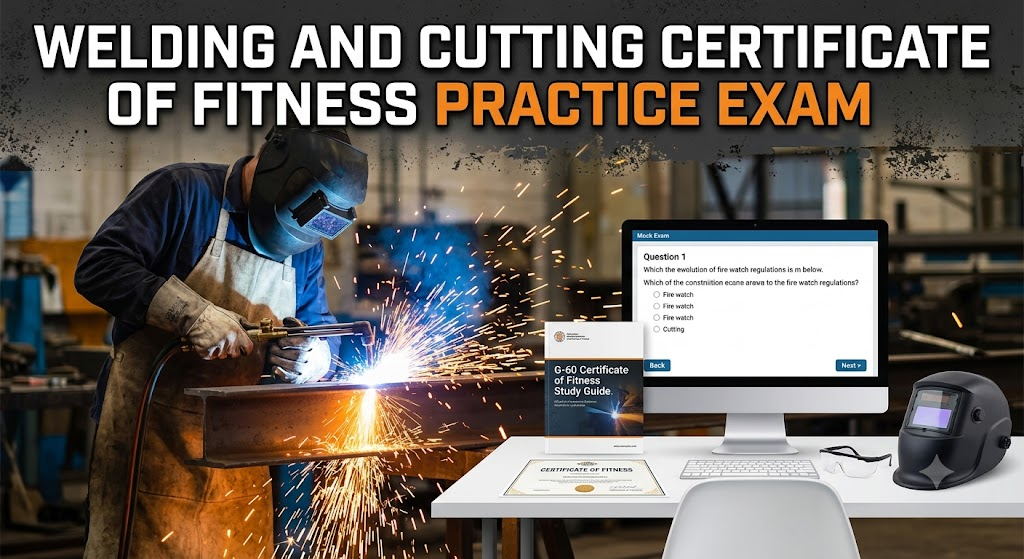
Additional Information
What the Course Entails and Exam Details
The course material focuses exclusively on safety regulations and fire prevention strategies associated with welding, cutting, and similar activities. It does not provide basic training in how to weld; rather, it provides the essential knowledge to perform these tasks safely. Core topics include the official fire guard protocols required during hot work, the proper methods for the safe storage and handling of compressed gas cylinders (including flammable and oxidizing gases), and detailed procedures for obtaining necessary site permits. Candidates are educated on fire safety zones, appropriate fire extinguishing equipment, and proper response mechanisms in case of accidental fires or equipment malfunctions.
What to Expect in the Final Exam
The final certification exam typically follows a multiple-choice format administered on a computer. It is designed to evaluate a candidate’s theoretical knowledge of safety standards, operational safety procedures, and local regulations. While specific pass marks may vary slightly by jurisdiction, candidates generally must achieve a score of at least 70% to pass. The test is often timed, frequently providing up to two hours to complete all questions, which challenges your familiarity with the material. Furthermore, this is usually a closed-book examination, which underscores the importance of rigorous study and deep understanding of the study guide beforehand.
How to Study and Exam Centers
Effective studying requires active engagement with the official study material, which is usually a comprehensive guide provided by the fire department or certifying body. It is essential to memorize key distances (like the 35-foot fire watch rule), specific gas quantities requiring permits, and fire guard responsibilities. Taking our high-quality practice test is crucial to familiarize yourself with the question style and to build confidence in navigating timed assessments. The exam is typically administered at designated physical testing centers, such as fire department headquarters or authorized testing sites like Pearson VUE. Candidates should check their local jurisdiction's website for specific scheduling details or potential online registration portals.
Job Opportunities from the Course
Earning a Certificate of Fitness unlocks numerous specialized career paths within the construction, manufacturing, and maintenance industries, where safety compliance is of utmost importance.
Professional Torch Operator
Certified Welder (Structural, specialized pipework, etc.)
Fabrication Mechanic and Fitter
Industrial Maintenance Technician
Sheet Metal Worker
Construction Hot Work Supervisor
Designated Fire Watch Guard Coordinator
Safety Compliance Inspector for Hot Work
Frequently Asked Questions
Reviews
5.0
Based on 0 reviews
Leave a Review
No reviews yet. Be the first to review!