
Welding Theory Practice Test
$69.00
- Buy to unlock unlimited access to all Quiz questions and Answers in this Quiz.
- After purchase you can print a PDF of the whole quiz at any point. The PDF will contain the questions and the correct answers.
About this Exam
The Welding Theory Practice Test is an essential preparatory tool designed for aspiring welders, current students, and professionals seeking certification renewal. This comprehensive practice exam focuses specifically on the theoretical aspects of welding technology, engineering principles, and industry-standard safety practices. It is tailored for individuals looking to validate their knowledge base before taking high-stakes qualification exams, such as those administered by the American Welding Society (AWS) or other accredited technical bodies. This assessment serves as a critical diagnostic to determine readiness for a career in the skilled trades.
Ready to test your knowledge?
Buy Now to Access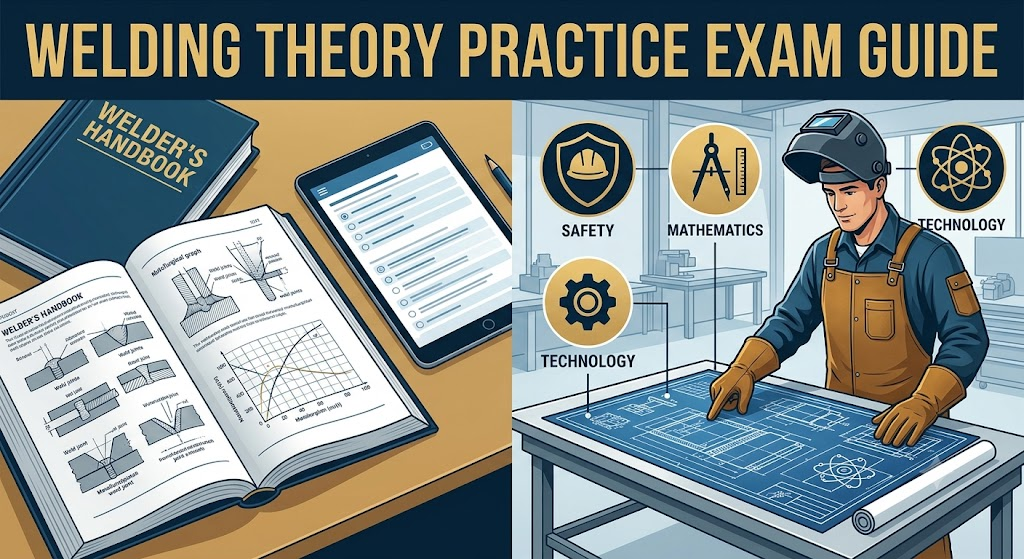
Additional Information
What the Course Entails and Exam Details
This preparation guide and practice test cover the depth and breadth of standard welding curricula found in technical colleges and trade schools. It does not teach hands-on manipulation but tests the vital knowledge required to weld safely and effectively. The core syllabus encompasses several key domains. Participants must demonstrate proficiency in understanding welding processes (including SMAW, GMAW, GTAW, and FCAW), technical drawing interpretation (interpreting blueprint symbols and schematics), and metallurgy (the behavior of different metals and alloys under heat). Furthermore, the coursework heavily emphasizes safety regulations, equipment setup, and non-destructive testing methods to ensure structural integrity and code compliance.
What to Expect in the Final Exam
While actual qualification exams vary slightly by jurisdiction and certifying body, the final theoretical exam generally follows a consistent, standardized format. Candidates should expect a computer-based, multiple-choice format containing approximately 60 to 100 questions. The allotted time limit typically ranges from one to two hours, requiring efficient time management. A passing score is usually set between 70% and 80%, depending on the specific certification tier (e.g., Certified Welder vs. Welding Inspector). The exam environments are strictly proctored, and typically, references or open textbooks are prohibited during the session to test immediate recall and comprehension of fundamental principles.
How to Study and Exam Centers
Effective preparation requires a combination of rote memorization and practical application. Candidates are strongly encouraged to utilize the AWS Welding Handbook, review safety standards (like ANSI Z49.1), and analyze weld joint geometry diagrams constantly. Utilizing digital practice tests repeatedly is a highly effective strategy to simulate the timed exam environment and identify specific knowledge gaps. Regarding testing locations, while preliminary practice tests are often taken online through educational portals, official proctored examinations must be completed at authorized locations. These include accredited test facilities (ATFs), community college testing centers, Pearson VUE locations, or specialized vocational schools authorized by the relevant welding code body.
Job Opportunities from the Course
Mastering welding theory and subsequently achieving certification unlocks a wide array of career paths in heavy industry, construction, and manufacturing. The industry is currently facing a shortage of skilled labor, making these skills highly valuable.
Potential job titles and career paths available after successful completion include:
Certified Structural Welder
Pipefitter/Welder
Maintenance and Repair Welder
Robotic Welding Operator
Aerospace Welder
Manufacturing Fabrication Technician
Certified Welding Inspector (CWI) (after gaining field experience)
Welding Instructor or Trainer
Underwater Welder (requires specialized commercial diving training)
Frequently Asked Questions
Reviews
5.0
Based on 0 reviews
Leave a Review
No reviews yet. Be the first to review!