
West Virginia CPLTA Practice Exam
$69.00
- Buy to unlock unlimited access to all Quiz questions and Answers in this Quiz.
- After purchase you can print a PDF of the whole quiz at any point. The PDF will contain the questions and the correct answers.
About this Exam
The West Virginia CPLTA (Certified Professional Lease and Title Analyst) certification and exam are designed for professionals aiming to demonstrate and enhance their expertise in analyzing complex lease agreements and property titles, particularly within the state of West Virginia.
A successful candidate for this certification is typically an individual already working, or aspiring to work, as a lease analyst, title analyst, real estate title examiner, paralegal specializing in property law, or a professional within the energy sector (oil and gas, mineral rights) within West Virginia. The CPLTA program establishes a benchmark of professional knowledge, verifying the ability to accurately interpret legal descriptions, identify potential issues in chain of titles, and navigate the intricacies of leasehold interests and associated regulations within the specific context of West Virginia and federal property law. Obtaining this certification not only confirms competency but also enhances credibility and career opportunities in a demanding field.
Ready to test your knowledge?
Buy Now to Access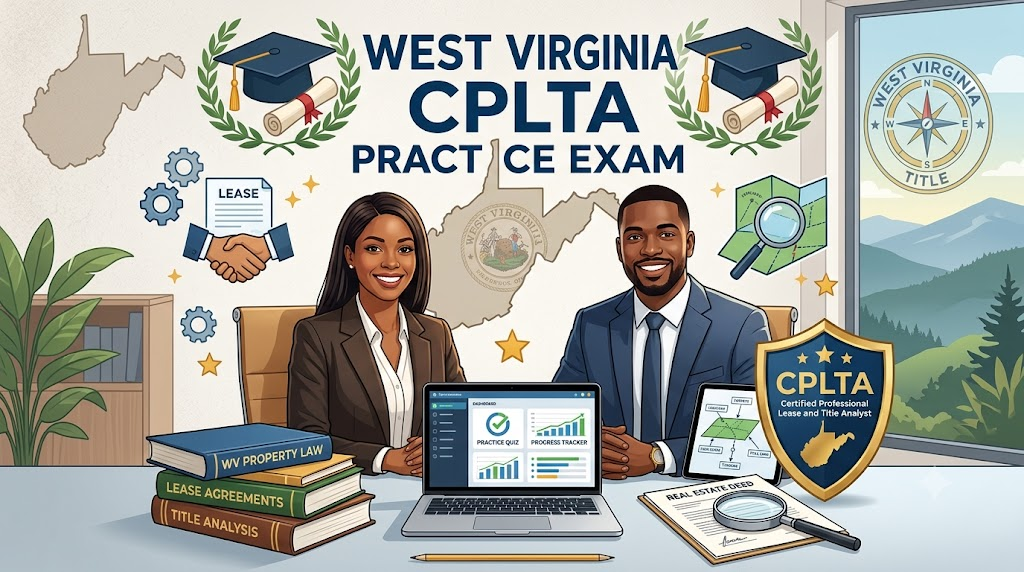
Additional Information
What the Course Entails and Exam Details
While the specific curriculum and course content can vary slightly between authorized providers, a comprehensive West Virginia CPLTA program typically covers a rigorous curriculum and includes specific exam characteristics, subject to general guidelines.
Core topics generally include:
West Virginia and Federal Property Law: A foundational understanding of relevant state statutes, common law principles, and potentially relevant federal regulations impacting property, leasing, and mineral rights.
Property Title Examination: Detailed methods for searching public records, analyzing the chain of title, identifying liens, encumbrances, and potential title defects specific to West Virginia requirements.
Lease Agreement Analysis: In-depth review of lease structures, terms, conditions, and clauses (including mineral leases, commercial leases, and potentially agricultural/other specific lease types) and their practical implications.
Legal Descriptions and Surveying: Understanding and interpreting various legal description methods, reading surveys, and ensuring accurate property identification.
Ethical Standards and Professional Conduct: Adherence to professional ethics and responsibilities in all aspects of property and lease analysis.
The CPLTA program often requires completion of a comprehensive course of study, which may include workshops, educational materials, and mentoring, followed by a demanding examination. Specific details regarding course duration, exact modules, and specific exam structures (such as a multi-part exam or single comprehensive assessment) should be confirmed directly with the certifying organization or an authorized provider. However, the overall goal remains the same: a thorough testing of critical skills in lease and title analysis.
What to Expect in the Final Exam
While exact exam parameters, scoring, and question counts can vary slightly between versions and administrations, the final CPLTA exam is typically a structured, comprehensive assessment designed to challenge the depth and practical application of your knowledge.
Format: The exam usually utilizes a multiple-choice format for a significant portion, assessing knowledge and application across the various core subject areas. However, some sections may include short answer, scenario-based questions, or requires the practical analysis of provided documents to test real-world application skills. Candidates should be prepared for a mix of question styles.
Passing Score: The passing score is determined by the certifying body and is structured to ensure that only candidates with a demonstrated level of competence are certified. Typically, this is set as a significant percentage (e.g., 70% or more, often requiring scaled scores that take question difficulty into account). This score indicates proficiency and reliability in the field of lease and title analysis.
Time Limit: The final exam is carefully timed, typically allocating a specified number of hours. It is crucial to manage your time effectively during the exam to ensure completion of all sections.
Rules: Strict examination protocols are enforced to maintain the integrity of the certification. Candidates are usually required to bring valid identification, adhere to specific rules about materials, devices, and behavior, and take the exam in a proctored environment, whether physically in person or securely online. Candidates should check the official rules provided by the certifying body and the exam provider for specific details.
How to Study and Exam Centers
Preparation is paramount to success in the West Virginia CPLTA Practice Exam. Here are actionable study strategies and information on test delivery methods:
Study Strategies
Utilize Practice Exams: Practice tests specifically designed for the CPLTA are invaluable. They familiarize you with the question style, exam structure, and time constraints. They also help identify areas of weakness, guiding your study efforts.
Review Core Materials: Dedicate focused study to all topics covered in your CPLTA program curriculum. Deepen your understanding of West Virginia property law, lease types, title examination techniques, and professional ethics.
Official Study Guides: Certifying organizations often provide or endorse specific study guides, handbooks, and reference materials. Use these as primary resources.
Create Flashcards: Make flashcards for key terms, definitions, legal principles, types of liens, specific lease clauses, and important WV state laws. This method is effective for active recall.
Study Groups: Collaborating with colleagues or fellow students can provide different perspectives, clarify difficult concepts, and offer mutual support and accountability.
Simulate Exam Conditions: Periodically take practice exams under timed conditions, without access to study materials, to truly gauge your readiness.
Exam Centers
The West Virginia CPLTA exam is typically administered in secure, proctored environments to ensure the validity of the results. Candidates should confirm the specific test delivery methods and locations with the certifying body (such as NALTA - National Association of Lease and Title Analysts or authorized local chapters/entities if applicable for this specific West Virginia iteration). Common methods include:
Authorized Testing Centers: These are specialized, secure facilities (which may include professional testing services like Pearson VUE, state-approved locations, or physical spaces provided by authorized educational institutions or organizations) equipped with computer-based testing stations and on-site proctors. Check with the certifying body for a list of approved centers near you within West Virginia and potentially neighboring areas.
Online Proctored Exams: Many certifications now offer secure, proctored online exams that candidates can take from home or a professional setting, utilizing specific security software and live or record-and-review proctors. This requires a reliable computer, stable internet connection, and strict adherence to technical and procedural requirements.
Authorized Local Organizations/Courses: Sometimes, the exam is offered directly at the conclusion of an in-person workshop or course organized by a local CPLTA chapter or an approved educational provider within West Virginia.
Always consult the official certifying organization or your chosen educational provider for the most accurate and up-to-date information regarding exam registration, scheduling, available testing methods, precise locations, current fees, and any necessary prerequisites. Good luck in your preparation for the West Virginia CPLTA Practice Exam! Your certification is a significant step towards professional recognition and career advancement in a vital field.
Job Opportunities from the Course
A West Virginia CPLTA certification unlocks numerous specific job opportunities and career paths across the real estate, property management, and energy industries within West Virginia and nationally.
Potential Job Titles and Paths Include:
Land Title Analyst
Lease and Title Analyst
Real Estate Title Examiner
Title Agent
Oil and Gas Landman (Real Estate & Lease Analyst)
Paralegal (Real Estate & Property Law, especially WV focus)
Lease Administrator
Mineral and Royalty Interest Analyst
Land Records Clerk
Asset Manager (Property Portfolios)
Compliance Officer (Property/Environmental within Resource Sector)
Governmental/County Land Records Official (with appropriate experience)
Real Estate Transaction Coordinator
We hope this study guide proves to be a valuable resource in your journey towards achieving CPLTA certification! Remember to always cross-reference specific details with the official certifying organization for the most current information and good luck on your journey!
Frequently Asked Questions
Reviews
5.0
Based on 0 reviews
Leave a Review
No reviews yet. Be the first to review!