
West Virginia MPJE (Pharmacy Jurisprudence) Practice Exam
$69.00
- Buy to unlock unlimited access to all Quiz questions and Answers in this Quiz.
- After purchase you can print a PDF of the whole quiz at any point. The PDF will contain the questions and the correct answers.
About this Exam
This study guide is designed to help prospective and existing pharmacy professionals navigate the unique landscape of West Virginia pharmacy law. Passing the Multistate Pharmacy Jurisprudence Examination (MPJE) is a critical step in achieving licensure and practicing in the Mountain State. Our comprehensive guide and tailored practice exam materials provide an encouraging path to success, empowering you to master both federal and state regulations. The core objective of the West Virginia MPJE is to evaluate your understanding and application of the legal frameworks governing pharmacy practice.
Ready to test your knowledge?
Buy Now to Access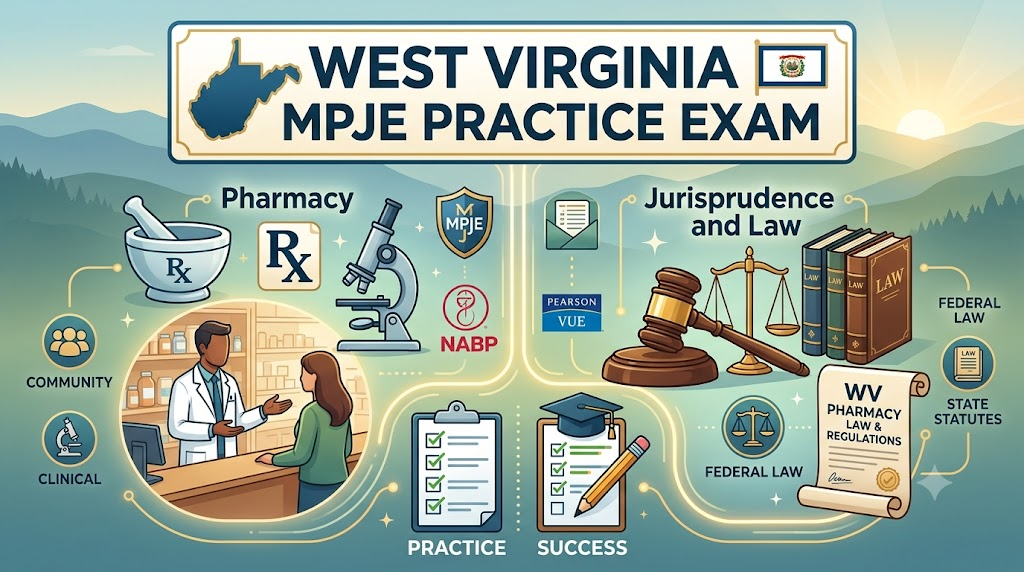
Additional Information
What the Course Entails and Exam Details
The course of study, reflected in the exam content, focuses on enabling candidates to apply federal and West Virginia specific laws and regulations. It is not just about memorization but about applying legal concepts to real-world pharmacy practice scenarios. While a comprehensive syllabus can be found on the NABP website, the core areas typically covered include:
Federal Pharmacy Law: Foundation of all US pharmacy jurisprudence, covering controlled substances, prescribing, labeling, and patient privacy.
West Virginia Specific Statutes and Rules: Critical understanding of state-level regulations from the West Virginia Board of Pharmacy. This includes topics like pharmacy operations, unique state-controlled substance laws, practitioner dispensing authority, and more.
Dispensing Requirements: Detailed procedures for processing prescriptions from start to finish within West Virginia.
Pharmacist Responsibilities: Ethical duties, patient care standards, and scope of practice definition in the state.
What to Expect in the Final Exam
The West Virginia MPJE is a computerized, adaptive examination administered over 2.5 hours. Expect to encounter approximately 120 multiple-choice questions. A significant number of these are scored, while some are pretest questions for future use. The adaptive nature means that subsequent questions are selected based on your previous answers, adjusting the difficulty level throughout the test.
Results are reported as either 'Pass' or 'Fail'. No numerical score is typically provided. The specific passing standard is determined by the National Association of Boards of Pharmacy (NABP) and the state board. To ensure accuracy, plan to attempt every question, as there can be a slight penalty for unanswered questions if you fall below a certain threshold. There are important rules regarding identification and the prohibition of any exam content review after you finish, which are critical to follow.
How to Study and Exam Centers
Effective preparation for the West Virginia MPJE requires a dedicated study plan that balances foundational knowledge with state-specific nuances.
Study Strategies:
Practice with Tailored Exams: Utilizing a tailored practice exam like the one linked to this guide is essential. It helps you get accustomed to the question format, common wording, and time constraints.
Master the West Virginia Board of Pharmacy Rules: The most important resource is the official West Virginia Board of Pharmacy website. Study the actual statutes, legislative rules, and guidelines directly.
Incorporate Reputable Study Tools: Complement your official resources with MPJE-specific study guides, flashcards, and online courses. Many offer tailored material specifically for West Virginia.
Focus on Differences: Pay close attention to how West Virginia law might differ from federal law or other states you may have studied, particularly with respect to controlled substance schedules and practitioner authority.
Exam Centers: The MPJE is not taken through a direct online portal from home. Candidates must register with the NABP, receive confirmation of eligibility from the West Virginia Board of Pharmacy, and obtain an Authorization to Test (ATT). The final exam is then scheduled and taken in-person at an authorized physical testing center. Pearson VUE is the typical provider of these testing facilities.
Job Opportunities from the Course
Successfully navigating the West Virginia MPJE unlocks diverse and rewarding career paths within the state’s healthcare landscape. Licensed pharmacists are essential for providing care, managing medication, and ensuring regulatory compliance. The jobs requiring a passing MPJE and full West Virginia license are diverse:
Community Pharmacist: Opportunities abound in retail settings, both large chains and independent pharmacies across West Virginia.
Hospital and Clinical Pharmacist: Working within acute care settings, advising medical teams, managing drug therapies, and contributing to patient safety.
Long-Term Care Pharmacist: Providing specialized care to residents of skilled nursing facilities and assisted living homes.
Managed Care and Industry Roles: Positions in drug utilization review, pharmaceutical manufacturing, and insurance companies.
Government and Regulatory Agency Pharmacist: Contribution to public health through roles in state health departments, federal agencies, or the Board of Pharmacy.
The successful completion of this test is not just about checking a box; it's a vital step towards ensuring you can practice competently and ethically in West Virginia, opening doors to various roles in improving patient care and public health. We wish you the best in your study and on your exam day!
Frequently Asked Questions
Reviews
5.0
Based on 0 reviews
Leave a Review
No reviews yet. Be the first to review!