
Wildland Firefighting Practice Exam
$69.00
- Buy to unlock unlimited access to all Quiz questions and Answers in this Quiz.
- After purchase you can print a PDF of the whole quiz at any point. The PDF will contain the questions and the correct answers.
About this Exam
The Wildland Firefighting Practice Exam is a crucial stepping stone for individuals aspiring to protect communities and natural resources from wildland fires. This practice test is designed to simulate the rigorous certification process required by primary fire agencies, such as the National Wildfire Coordinating Group (NWCG) in the United States, or equivalent provincial and state forestry departments.
It is specifically tailored for entry-level wildland firefighters (often referred to as Type 2 firefighters) and anyone seeking to refresh their knowledge before an official qualification exam.
Ready to test your knowledge?
Buy Now to Access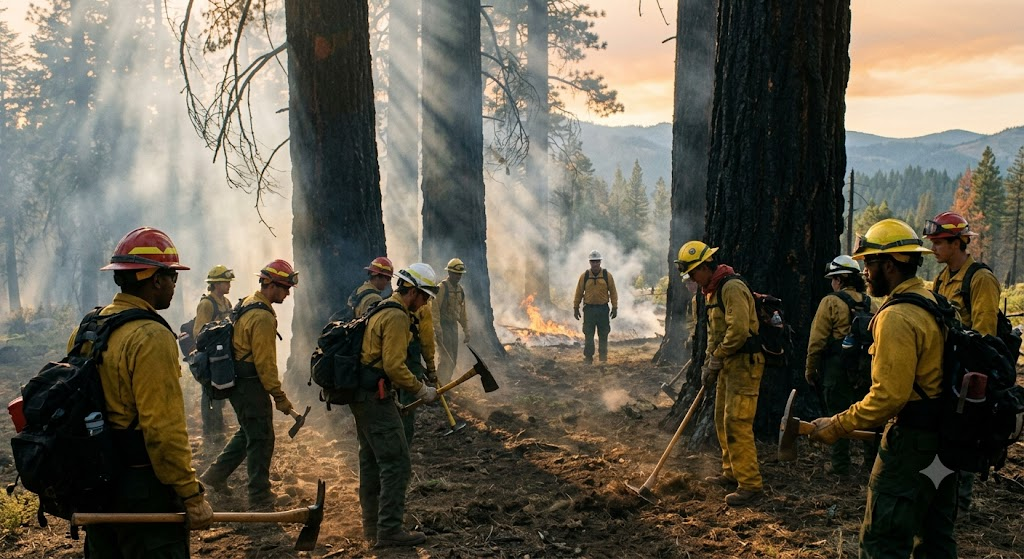
Additional Information
What the Course Entails and Exam Details
This practice exam covers the essential knowledge and safety protocols foundational to wildland fire suppression. The curriculum modeled in the practice test usually aligns with the NWCG S-130 (Firefighter Training) and S-190 (Introduction to Wildland Fire Behavior) courses.
Key competency areas include:
Wildland fire behavior (fuels, weather, and topography).
Human factors on the fireline and situational awareness.
The Incident Command System (ICS) and organizational structure.
Basic firefighting tools and their safe use (Pulaski, McLeod, shovel).
Water delivery systems and hose lay operations.
Fireline construction techniques and standards.
Standard Firefighting Orders and Watch Out Situations.
Lookout, Communication, Escape Routes, and Safety Zones (LCES).
Firing operations and ignition devices.
Mop-up operations and post-fire suppression.
What to Expect in the Final Exam
While the final official exam format can vary by the certifying agency (e.g., NWCG, CAL FIRE, or state forestry divisions), a typical wildland firefighting qualification exam often consists of two main components.
Multiple-Choice Component
The core knowledge is tested through a proctored, written examination. Candidates can generally expect 50 to 100 multiple-choice questions. A minimum passing score is usually 70% to 80%. These questions will test a candidate’s understanding of fire behavior, safety protocols, and operational commands.
Practical/Field Component
The theoretical test is often accompanied by a hands-on field exercise. To get certified, a candidate must demonstrate proficiency in:
Successfully deploying a fire shelter within the mandatory time limit.
Constructing a specified length of fireline that meets safety and depth standards.
Properly using, maintaining, and safely carrying hand tools.
Additionally, candidates for Type 2 firefighter roles must pass the 'Pack Test,' which is a physical fitness requirement involving a 3-mile walk carrying a 45-pound pack in 45 minutes or less.
How to Study and Exam Centers
How to Study
Success in the Wildland Firefighting Exam depends on both theoretical understanding and physical readiness. Use these strategic approaches to prepare effectively:
Master the Core Material: Thoroughly review the NWCG S-130 and S-190 course materials, which are often available online through the wildland fire learning portals. Focus heavily on the 10 Standard Orders and 18 Watch Out Situations.
Take Practice Exams: Utilize timed practice tests, such as this one, to simulate the pressure of the written exam and to identify knowledge gaps in fire behavior or safety.
Practice with Tools: If you have access to firefighting hand tools, practice using them efficiently. Practice fire shelter deployment, ensuring you can deploy it in under 25 seconds (the minimum field standard).
Physical Conditioning: Do not ignore the Pack Test. Train consistently by hiking with weighted packs on varied terrain to build the required stamina.
Exam Centers
Official certification exams are typically proctored and administered in specific locations after completing an authorized training course. You will generally find these authorized testing options:
Federal and State Fire Academies: Primary testing centers are located at authorized wildland fire academies.
Community Colleges: Many community colleges with fire science programs are authorized to deliver S-130/S-190 courses and proctor the corresponding exams.
Agency Offices: Specific hiring agencies, such as the US Forest Service (USFS) or Bureau of Land Management (BLM), may administer the exam at local or regional offices during the seasonal hiring process.
Online Portals: Some theoretical components may be available via authorized online learning platforms, though the physical/practical test must be conducted in person.
Job Opportunities from the Course
A wildland firefighting certification (such as the NWCG 'Red Card' qualification) is a mandatory requirement for hiring by nearly all federal, state, and private fire suppression organizations.
This certification unlocks numerous critical career paths, including:
Wildland Firefighter (Type 1 and Type 2)
Hotshot Crew Member
Smokejumper
Helitack Crew Member
Fire Engine Operator
Fire Prevention Technician
Burn Boss (with advanced certifications)
Wildland Fire Investigator
For those seeking to make a significant impact on public safety and environmental conservation, this qualification serves as the vital entry point into a rewarding career.
Frequently Asked Questions
Reviews
5.0
Based on 0 reviews
Leave a Review
No reviews yet. Be the first to review!