
Wildland Urban Interface (WUI) Structure Defense Practice Test
$69.00
- Buy to unlock unlimited access to all Quiz questions and Answers in this Quiz.
- After purchase you can print a PDF of the whole quiz at any point. The PDF will contain the questions and the correct answers.
About this Exam
The Wildland Urban Interface (WUI) Structure Defense certification is a critical credential for modern firefighters and emergency responders. As residential developments increasingly expand into fire-prone wildland areas, the ability to effectively protect structures while ensuring firefighter safety is paramount. This course is designed for both structural firefighters who may find themselves operating in a WUI environment and wildland firefighters needing specialized structural protection tactics. It provides the essential knowledge and decision-making skills required to manage the unique challenges present where housing meets nature during a wildfire event.
Ready to test your knowledge?
Buy Now to Access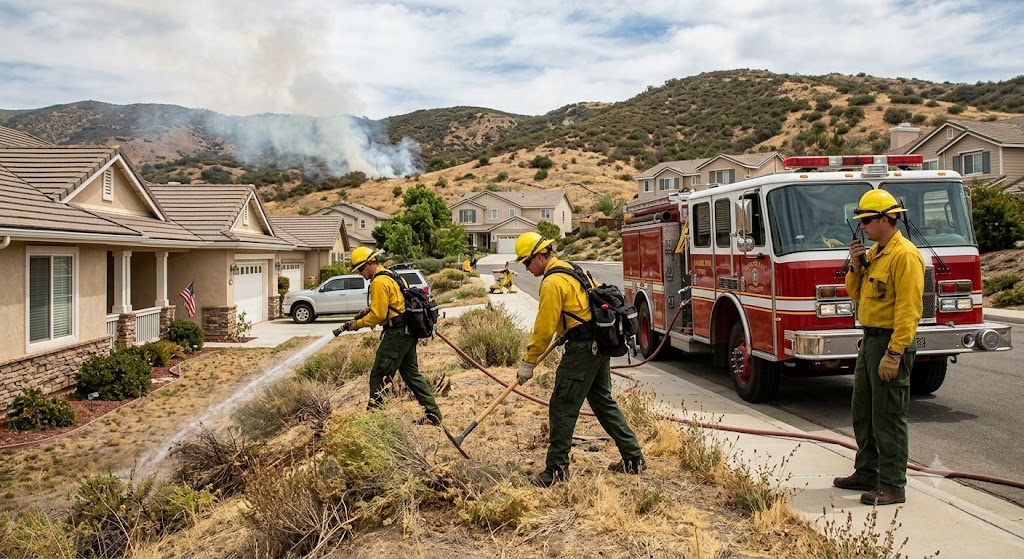
Additional Information
What the Course Entails and Exam Details
The WUI Structure Defense curriculum is comprehensive, focusing on the tactical application of firefighting principles in the interface. Core topics include:
Understanding the WUI Problem: Analyzing fire behavior in the interface, including spotting and urban conflagration risks.
Structure Triage: Learning standardized systems to rapidly assess which structures can be successfully defended, which are less threatened, and which must be abandoned due to excessive risk.
WUI Tactics: Mastering specific defensive strategies, such as apparatus placement, "plumbing" a structure (setting up protection systems), use of gel and foam, firing operations around structures, and handline construction.
Safety and Survival: Prioritizing LCES (Lookouts, Communications, Escape Routes, Safety Zones) in complex WUI scenarios.
The curriculum is typically delivered through a combination of classroom instruction, interactive simulations, and sand table exercises.
What to Expect in the Final Exam
The final exam for the WUI Structure Defense course validates a candidate's grasp of both the theory and the tactical application of interface firefighting. It is typically a written exam consisting of multiple-choice questions.
Expect scenarios where you must apply structure triage criteria rapidly based on provided visuals or descriptions. You will need to demonstrate knowledge of proper apparatus positioning, defensive firing tactics, and when to disengage from defense operations. The passing score required generally ranges between 70% and 80%, depending on the certifying agency (such as individual state fire training systems or the NWCG). There is usually a set time limit (often 2-3 hours).
How to Study and Exam Centers
Effective preparation for this exam combines theoretical study with practical application.
Review Official Materials: Your primary study resource should be the official NWCG or state-specific course materials. Thoroughly review the student workbook, tactical guides, and reference documents (such as the IRPG - Incident Response Pocket Guide).
Use Practice Tests: Leverage practice tests specifically designed for the WUI Structure Defense exam to familiarize yourself with the question format and identify areas needing more review.
Participate in Drills: If possible, participate in practical drills and sand table exercises. Discussing scenarios with experienced colleagues is invaluable for developing sound tactical judgment.
This exam is not typically administered at commercial centers like Pearson VUE. Instead, it is usually managed directly by the authorized training provider. This means you will take the exam at the end of the course, which may be hosted at a local fire department, a state fire training academy, or a designated regional training facility. Some components or prerequisites might be available via online portals maintained by state or federal fire agencies.
Job Opportunities from the Course
Successfully completing this course and earning the WUI Structure Defense certification significantly enhances a firefighter's skillset and employability. It unlocks various career paths and specialized roles within fire services, particularly in regions prone to wildland fires:
Municipal Firefighter (Career or Volunteer)
Wildland Firefighter (Federal, State, or Private)
Fire Engine Boss (ENGB)
Strike Team/Task Force Leader
Fire Prevention Specialist
This certification is often a required or highly desirable qualification for advancing into leadership roles or joining specialized units focused on WUI response.
Frequently Asked Questions
Reviews
5.0
Based on 0 reviews
Leave a Review
No reviews yet. Be the first to review!