
Wildlands Plants Identification Practice Exam
$69.00
- Buy to unlock unlimited access to all Quiz questions and Answers in this Quiz.
- After purchase you can print a PDF of the whole quiz at any point. The PDF will contain the questions and the correct answers.
About this Exam
The Wildlands Plants Identification Practice Exam is a comprehensive self-assessment tool designed to help students, naturalists, and professionals validate their field identification skills. This practice exam is the perfect preparation for formal certifications required for careers in conservation, forestry, range management, and ecological research. It is specifically built for individuals who need to accurately recognize and categorize native and invasive plant species within various wildland ecosystems, including forests, prairies, wetlands, and alpine zones.
Ready to test your knowledge?
Buy Now to Access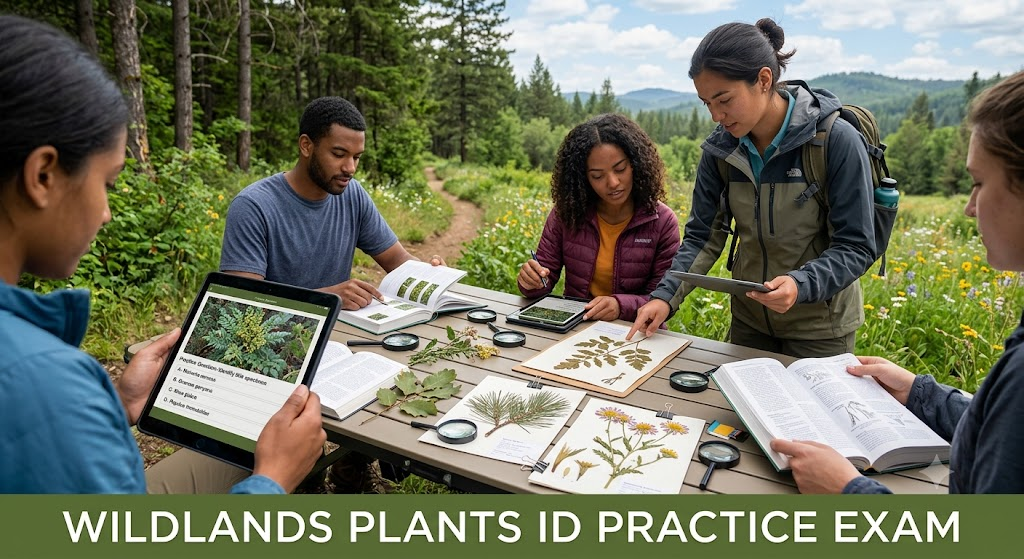
Additional Information
What the Course Entails and Exam Details
This practice exam serves as a simulation of a professional field test. While the practice exam itself does not include a course, the formal certifications it prepares you for typically cover extensive botanical knowledge. You are expected to demonstrate mastery in the following areas:
Plant Morphology: Comprehensive understanding of plant structures, including leaf arrangement (alternate, opposite, whorled), leaf shape (linear, ovate, lobed), flower structure (petals, sepals, symmetry), stem characteristics, and seed types.
Keying Proficiency: The ability to efficiently navigate and use a dichotomous key to identify an unknown specimen to the genus or species level.
Family Recognition: Immediate identification of major plant families based on diagnostic characteristics (e.g., Asteraceae, Poaceae, Rosaceae, Fabaceae).
Species Identification: Accurately identifying critical native species, indicators of specific habitats, and priority invasive species.
Ecological Context: Understanding common habitat associations, such as fire-adapted communities, riparian zones, or soil types.
The practice exam typically consists of a timed section with high-resolution images of specimens in both vegetative and flowering stages, along with descriptive field notes.
What to Expect in the Final Exam
While formats can vary by certifying body, the final, formal exam is usually a rigorous, high-stakes assessment, often divided into visual/digital and practical field components. Our Wildlands Plants Identification Practice Exam is designed to replicate the challenging structure you will encounter.
Format: A mix of multiple-choice and fill-in-the-blank questions. The core of the exam features "virtual plot" questions, where you are given several images of a single plant in its habitat and asked for a specific identification level (family, genus, or species) and its indicator status.
Time Limit: The practice exam is timed to match typical professional standards, requiring you to think quickly and make decisions within a specific window per specimen, simulating real field conditions.
Passing Score: Most professional certifications require a score of 70% to 80% or higher to demonstrate proficiency. The practice exam provides a score to gauge your current level.
Specific Rules: The formal final exam may prohibit the use of personal field guides or smartphone apps, testing your internal knowledge base.
How to Study and Exam Centers
Preparation for wildland plant identification demands a blend of rigorous self-study and immense field experience.
Actionable Study Strategies:
Field Practice is Essential: There is no substitute for time in the field. Visit diverse wildland areas with regional field guides and practice identification in all seasons.
Master a Dichotomous Key: Choose a primary flora guide for your region and practice keying known plants until the process is second nature.
Build Your own Herbarium: Collect, press, and label local specimens to reinforce your knowledge and create a personal reference.
Use Digital Tools: Leverage online resources such as Calflora, USDA Plants Database, or iNaturalist to confirm your findings and see variations in species.
Exam Centers and Formats: This specific Wildlands Plants Identification Practice Exam is taken completely online through our dedicated educational portal.
For the official, final certification, locations vary by the issuing organization.
Physical Testing: Many certifications, such as those from the U.S. Fish & Wildlife Service or specialized native plant societies, require attending authorized field stations or schools where you must complete a practical "walking" exam, identifying tagged plants in their natural state.
Online Portals: Some theoretical components may be offered through platforms like Pearson VUE or directly on the websites of professional biological associations.
Job Opportunities from the Course
A strong score on this practice exam and subsequently earning a formal Wildlands Plants Identification Certification is highly valued in the natural resources sector. It unlocks numerous career paths and job opportunities:
Forestry Technician
Conservation Biologist
Range Management Specialist
Restoration Ecologist
Environmental Consultant
Wetland Delineator
Botanist (specifically for state or federal agencies)
Park Ranger or Interpreter
Natural Resource Manager
Invasive Species Coordinator
Frequently Asked Questions
Reviews
5.0
Based on 0 reviews
Leave a Review
No reviews yet. Be the first to review!