
Wildlife Officer Practice Exam
$69.00
- Buy to unlock unlimited access to all Quiz questions and Answers in this Quiz.
- After purchase you can print a PDF of the whole quiz at any point. The PDF will contain the questions and the correct answers.
About this Exam
A Wildlife Officer Practice Exam is an essential tool for aspiring conservation professionals preparing for the challenging hiring assessments required to become a certified Wildlife Officer, Game Warden, or Conservation Officer.
Designed for individuals passionate about protecting natural resources, managing wildlife populations, and enforcing environmental laws, this comprehensive practice resource helps candidates understand the scope of knowledge required to join state or federal wildlife agencies. By simulating the structure and content of official entrance exams, the practice test allows students to assess their readiness, identify knowledge gaps, and build the confidence necessary to succeed in a competitive field.
Ready to test your knowledge?
Buy Now to Access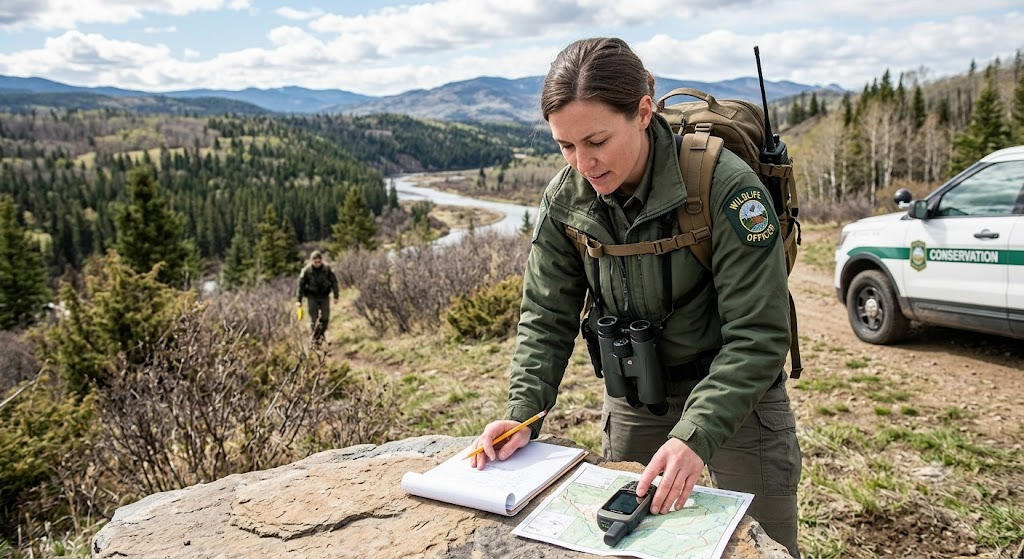
Additional Information
What the Course Entails and Exam Details
The core curriculum leading to wildlife law enforcement certification covers a broad range of topics essential for fieldwork and public service. While specific requirements vary by jurisdiction, this course of study generally entails mastering foundational principles in wildlife biology, ecology, and habitat management to understand the species they are tasked to protect.
Students dive deep into the legal framework, learning federal and state environmental regulations, hunting and fishing laws, and property rights, as well as essential law enforcement skills such as criminal procedure, search and seizure laws, investigation techniques, and evidence handling. Training also encompasses practical field skills including land navigation using GPS and topographical maps, defensive tactics, vehicle and vessel operation, and firearm safety and proficiency, ensuring candidates are fully prepared for the demanding and often solitary nature of the job.
What to Expect in the Final Exam
The official final exam for prospective Wildlife Officers is rarely a single test but rather a comprehensive evaluation process. The initial cognitive phase often involves a standardized multiple-choice exam assessing candidate knowledge of the syllabus topics, natural resource awareness, critical thinking skills, scenario-based decision-making, and sometimes mathematics. Following the written assessment, candidates must typically pass a demanding Physical Agility Test (PAT) to demonstrate their fitness for strenuous outdoor duties, including swimming, running, and navigating obstacles. Succeeding phases often include oral interview panels, psychological evaluations, background investigations, and medical examinations before final selection and entry into a specialized training academy.
While passing score requirements differ significantly by agency, candidates must aim for top scores to remain competitive. Time limits are strictly enforced for both written sections and physical challenges, mirroring the time-sensitive nature of emergency response and field operations.
How to Study and Exam Centers
To effectively study for the written component, prioritize official study guides and materials provided by the hiring wildlife agency. Creating detailed flashcards for biology terms and environmental laws is highly effective, as are forming study groups to practice scenario-based decision-making with peers. Taking multiple timed practice exams is critical to building stamina, improving pacing, and familiarizing yourself with the question formats, ensuring you manage time effectively during the actual assessment. For the physical test, candidates must implement a consistent, specialized training regimen long before the exam date.
Aspiring officers do not take this exam at generic testing centers. Instead, you must first apply directly to a specific state wildlife department (such as a Department of Fish and Wildlife, Department of Natural Resources, or Parks and Wildlife Commission) or a federal agency (like the U.S. Fish and Wildlife Service) when they have open recruitment cycles. Candidates who successfully advance through the initial screening will receive specific locations for their written and physical testing, which are typically held at state training academies, regional agency headquarters, or centralized government testing facilities.
Job Opportunities from the Course
Successfully completing this comprehensive training path, following the passing of all required examinations and academy graduation, unlocks several critical career opportunities in conservation law enforcement. This education and certification process makes graduates eligible for the following positions:
Wildlife Officer
Game Warden
Conservation Officer
Fish and Game Warden
Natural Resource Police Officer
Park Ranger (with Law Enforcement Certification)
These dedicated professionals work outdoors year-round to enforce wildlife regulations, conduct patrols, manage species populations, investigate environmental crimes, and educate the public on conservation efforts.
Frequently Asked Questions
Reviews
5.0
Based on 0 reviews
Leave a Review
No reviews yet. Be the first to review!