
Windows server 2012 Practice Test
$69.00
- Buy to unlock unlimited access to all Quiz questions and Answers in this Quiz.
- After purchase you can print a PDF of the whole quiz at any point. The PDF will contain the questions and the correct answers.
About this Exam
The Windows Server 2012 certification validates the essential skills required to build, manage, and maintain a Windows Server 2012 infrastructure. This certification is primarily designed for information technology (IT) professionals such as systems administrators, network administrators, and IT support specialists who work with Windows Server technologies. Achieving this certification demonstrates your proficiency in handling day-to-day server management tasks, ensuring system reliability, and implementing cost-efficient server solutions. For many, it serves as a critical stepping stone towards more advanced Microsoft certifications.
Ready to test your knowledge?
Buy Now to Access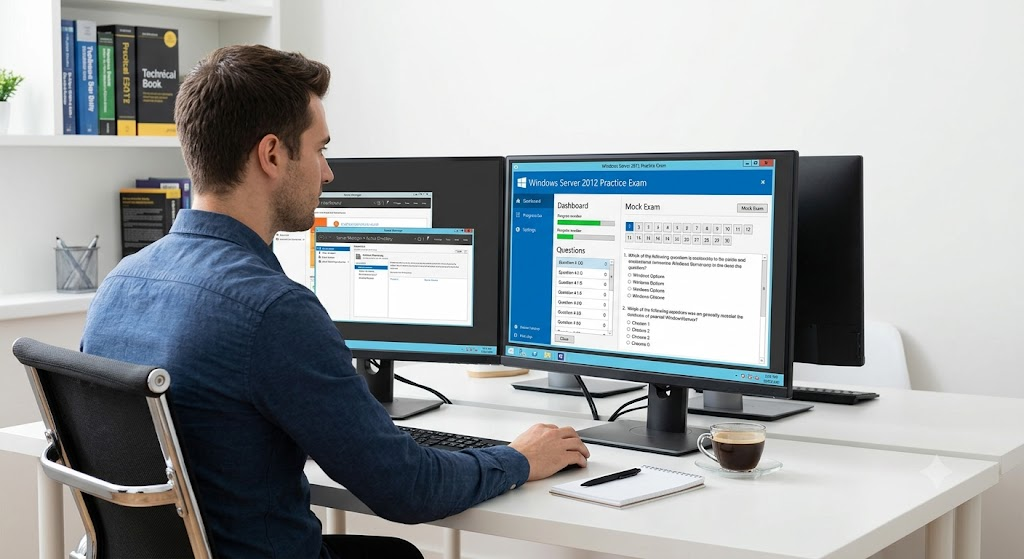
Additional Information
What the Course Entails and Exam Details
This practice exam covers a wide array of core topics designed to test your comprehensive understanding of Windows Server 2012. The syllabus typically focuses on the skills needed for initial implementation and ongoing management of the server environment. Key areas of focus often include:
Installing and Configuring Windows Server 2012: Mastering the installation process, configuring server roles and features, and setting up Hyper-V.
Administering Windows Server 2012: Managing Active Directory objects, maintaining user accounts and groups, and configuring Group Policy.
Configuring Advanced Windows Server 2012 Services: Implementing advanced network services such as DHCP, DNS, and IPAM; managing storage solutions; and configuring fault tolerance.
The practice test is structured to mirror the actual exam objectives, providing a realistic assessment of your knowledge across these critical domains.
What to Expect in the Final Exam
While specific practice test formats can vary depending on the provider, a comprehensive Windows Server 2012 practice exam is designed to simulate the official certification experience. You can generally expect a variety of question formats, with a heavy emphasis on multiple-choice questions. Other formats may include scenario-based questions (case studies) where you must apply your knowledge to complex, real-world situations, as well as interactive question types like active screen, drag-and-drop, and hot area.
Passing score requirements for official Microsoft exams are typically around 700 out of 1000, and this benchmark is often used for practice tests as well to provide an accurate gauge of your readiness. Time limits for these exams usually range from 90 to 120 minutes, demanding not only knowledge but also efficient time management. Strict rules against using outside resources are enforced during official proctored exams to ensure the integrity of the certification.
How to Study and Exam Centers
Effective preparation for the Windows Server 2012 exam requires a blend of theoretical knowledge and practical, hands-on experience. A robust study strategy should begin with a thorough review of official study guides and Microsoft Press books. To truly master the material, you must move beyond reading and actively engage with the technology. Creating a virtual lab environment using Hyper-V is highly recommended, allowing you to install, configure, and manage Windows Server 2012 instances without risking a production environment.
Repeating this practice test multiple times is a cornerstone of success. Use the detailed score reports to identify your weak areas and focus your subsequent study efforts. Online forums and study groups can also provide valuable insights and peer support.
Regarding exam delivery, practice tests are typically taken online through specialized learning portals. For the official certification exam, candidates must register through authorized providers like Pearson VUE. These exams can often be taken either in-person at a certified physical testing center or remotely via an online proctored environment, which offers the convenience of taking the test from your home or office while being monitored over a webcam.
Job Opportunities from the Course
Earning a certification in Windows Server 2012 opens doors to numerous rewarding career opportunities within the IT sector. This credential proves your value to employers looking for qualified professionals to manage their infrastructure. Here are some specific job titles and career paths this certification can unlock:
Systems Administrator: Responsible for the upkeep, configuration, and reliable operation of computer systems, including Windows Servers.
Junior Windows Administrator: An entry-level role focusing on supporting and maintaining Windows Server environments under the guidance of senior staff.
Server Administrator: Specializes in managing physical and virtual servers, ensuring high availability and performance.
IT Support Specialist: Provides technical assistance and support to organizations, with a strong emphasis on troubleshooting server-related issues.
Network Administrator (Windows-focused): Manages an organization's network infrastructure, with specific expertise in integrating and supporting Windows Server technologies.
Cloud Associate: Leverage foundational knowledge of server infrastructure as a stepping stone into cloud administration roles, using legacy server knowledge for cloud migration projects.
By focusing your studies and excelling on this practice test, you are taking a significant step towards a successful and dynamic career in IT administration. Good luck!
Frequently Asked Questions
Reviews
5.0
Based on 0 reviews
Leave a Review
No reviews yet. Be the first to review!