
Wisconsin Pesticide Applicator Training (PAT) Right-of-Way & Natural Areas Practice Exam
$69.00
- Buy to unlock unlimited access to all Quiz questions and Answers in this Quiz.
- After purchase you can print a PDF of the whole quiz at any point. The PDF will contain the questions and the correct answers.
About this Exam
The Wisconsin Pesticide Applicator Training (PAT) for Category 6.0: Right-of-Way & Natural Areas is a vital certification for professionals dedicated to managing vegetation in critical areas. It is designed for individuals who apply pesticides—particularly herbicides—along roadsides, utility right-of-ways (pipelines, power lines, railways), and in natural areas like parks, forests, and native grasslands, especially for controlling invasive species and preparing land for restoration. Obtaining this certification ensures you possess the knowledge required to use pesticides effectively, safely, and in a way that minimizes impact on public health and the environment.
Ready to test your knowledge?
Buy Now to Access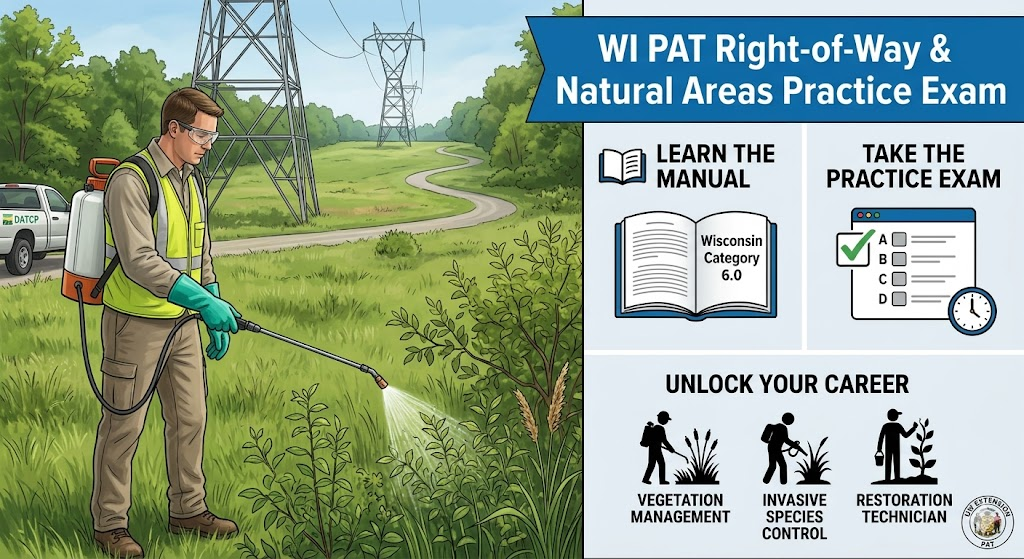
Additional Information
What the Course Entails and Exam Details
The training course is based on a category-specific manual from the University of Wisconsin Pesticide Applicator Training Program. The comprehensive syllabus covers several essential domains, ensuring applicators are thoroughly prepared for the field. Key topics include: Understanding and interpreting pesticide labels; Federal and Wisconsin state laws and regulations governing pesticide use; Principles of pest management, including Integrated Pest Management (IPM); Specific weed control methods for right-of-ways and natural areas; Safety procedures, proper use of Personal Protective Equipment (PPE), and first aid; Environmental protection, specifically managing risks to surface water, groundwater, and non-target organisms; Technical aspects like chemical toxicity, formulations, and managing pesticide resistance; And the calculation of application rates, equipment calibration, and proper handling of scenario-based challenges.
What to Expect in the Final Exam
The Wisconsin PAT Category 6.0 exam is designed to evaluate your mastery of the material found within the official training manual. It is typically a multiple-choice, closed-book examination. When taking the exam through the online Pearson VUE system, you will not be allowed to access any printed materials. The exam must be taken in a proctored environment, either at a designated physical testing location or via an approved remote online portal. A passing score must be achieved to earn your five-year certification; check the official UW PAT handbook for the most up-to-date score and time limit requirements, though these tests are strictly timed. You must provide a valid photo ID and your Social Security number to the proctor before you will be allowed to begin. If testing via computer, a calculator is usually provided within the exam software, but you are generally permitted to bring a simple, non-programmable calculator to physical sites. A unique six-digit PAT number, provided upon purchasing your manual, is mandatory for exam registration.
How to Study and Exam Centers
To ensure success, a multi-faceted study approach is highly recommended. The foundation of your preparation should be a thorough reading of the entire Category 6.0 training manual, paying close attention to the learning objectives outlined at the start of each chapter, as they are a primary source for exam questions. After your reading, validate your understanding by taking a full practice exam, which will familiarize you with the structure, technical language, and the application of complex label data and math conversions. Take advantage of supplementary tools, such as the self-paced online course, review sessions (often in Zoom format), and digital flashcards to reinforce knowledge in your weaker areas. Once you are confident, you can schedule your exam. Online, computer-based testing is managed through Pearson VUE and offers immediate results for a convenience fee. Alternatively, you can schedule a proctored session directly through the Wisconsin Department of Agriculture, Trade and Consumer Protection (DATCP) website, which lists numerous test-only locations and extension offices across the state where in-person testing is available.
Job Opportunities from the Course
Achieving this certification demonstrates professional competence and opens a variety of specific career paths in both the public and private sectors in Wisconsin. Holding the Category 6.0 credential unlocks job titles such as: Commercial Pesticide Applicator, Right-of-Way Technician, Invasive Species Manager, Vegetation Management Specialist, Environmental Restoration Technician, Roadside Maintenance Worker, Habitat Specialist, Landscape Chemical Applicator, Field Scout, and specific roles within utility companies, municipal public works, or state natural resource agencies focused on terrestrial invasive species control and habitat preservation. many employers prefer or require this certification for specialized vegetation management roles.
Frequently Asked Questions
Reviews
5.0
Based on 0 reviews
Leave a Review
No reviews yet. Be the first to review!