
Wood in Aviation Practice Test
$69.00
- Buy to unlock unlimited access to all Quiz questions and Answers in this Quiz.
- After purchase you can print a PDF of the whole quiz at any point. The PDF will contain the questions and the correct answers.
About this Exam
Embark on a specialized journey into the history and technique of aircraft construction and restoration with our comprehensive course and exam on Wood in Aviation. This certification is meticulously designed for aspiring aviation mechanics, technicians, vintage aircraft enthusiasts, and kit plane builders who seek a profound understanding of how to work with and maintain wood structures in flight. As modern materials became dominant, the crucial skills required to inspect, repair, and ensure the safety of wooden airframes and components became a niche yet essential expertise. Our program bridges the gap between historical craftsmanship and stringent modern aviation safety standards, empowering students with the knowledge and practical skills necessary to contribute to this specialized field. Whether you are aiming to certify classic warbirds, maintain custom homebuilts, or specialize in a fascinating area of aviation maintenance, this course provides the foundations for success.
Ready to test your knowledge?
Buy Now to Access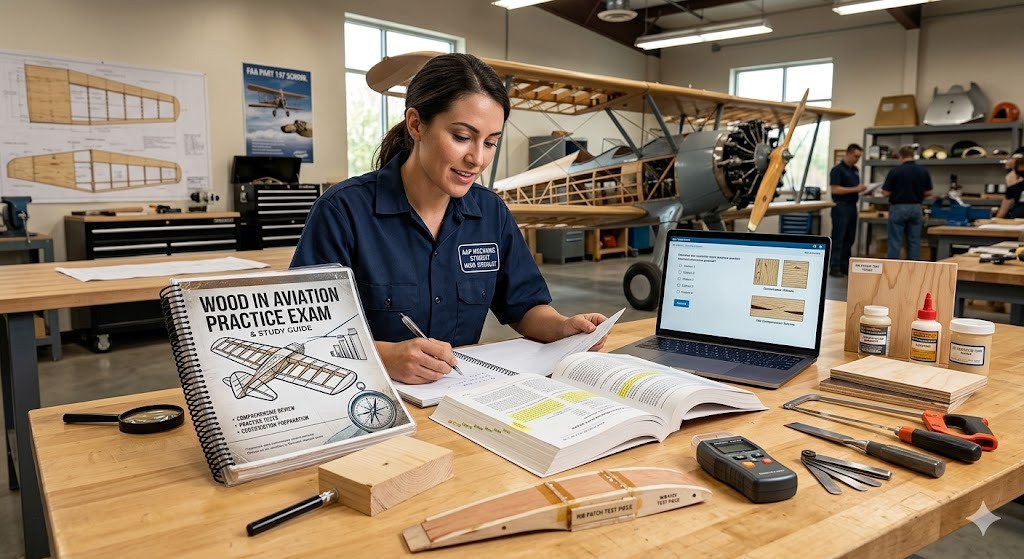
Additional Information
What the Course Entails and Exam Details
This in-depth program delves into the vital aspects of wood usage, inspection, and repair within the aviation industry, all of which are covered in the comprehensive exam.
Core Topics Include:
Aviation Wood Identification and Selection: Learn to distinguish between various aircraft-grade woods, including spruce, plywood, and other accepted alternatives, understanding their unique properties, strengths, and applications in structures. This includes identifying permissible defects and proper wood conditioning.
Wood Aircraft Inspection and Defects: Develop expert visual and non-destructive inspection techniques to identify issues like dry rot, moisture damage, compression failures, insect infestation, and old glue joint degradation. The ability to distinguish between superficial and critical structural defects is paramount.
Structural Repair Methods: Master established, FAA-approved methods for repairing various wooden aircraft components. This covers rib repairs, spar splicing, plywood skin patches, and complete component replacement while adhering to structural integrity requirements.
Adhesives and Finishes for Wood: Gain thorough knowledge of the types of glues (epoxy, casein, resorcinol, etc.) and finishes used in aviation woodwork, understanding their application processes, curing times, compatibility, and protective properties. Learn proper preparation for strong, durable bonds.
Fabric and Covering Systems for Wooden Airframes: The program covers the integration of modern and traditional fabric covering systems often used in conjunction with wooden structures, including standard application techniques and maintenance considerations.
Relevant Regulations and Standards: A crucial section is dedicated to understanding and applying relevant aviation safety guidelines and regulations (such as those outlined in the FAA's Advisory Circular 43.13-1B). Ensure all work meets or exceeds established safety standards.
The exam itself is designed to thoroughly assess both theoretical knowledge through written questions (often multiple-choice, covering technical details, regulations, and scenario-based problems) and practical application skills (which may involve identifying wood types, inspecting real-world components, or demonstrating a small repair on test pieces).
What to Expect in the Final Exam
Prepare yourself for a challenging and realistic assessment of your wood in aviation expertise.
Exam Format:
The final comprehensive exam often consists of two distinct parts, ensuring both theoretical and hands-on competence:
Written Theory Component: Typically a structured section with multiple-choice questions, which may be administered in person or sometimes through secure online portals. This part rigorously tests your memory, understanding of technical details, procedures, and familiarity with relevant regulations. Prepare for detailed inquiries regarding material specifications, defect types, repair calculations, and safety protocols. Time limits will be enforced, challenging your efficiency and focus.
Practical Skills Assessment: A mandatory and key element, typically held at authorized test locations or workshops. You will be required to demonstrate proficiency in a series of practical tasks. These could include:
Identifying specific wood types and grades from provided samples.
Performing a thorough inspection of a set wooden aircraft component and correctly documenting all observed defects.
Demonstrating the correct application of a specific wood adhesive or finish.
creating or executing a repair (e.g., a simple spar splice or rib patch) on provided training material under the watchful eye of an examiner.
Passing Score Requirements:
Candidates must achieve a minimum score, often around 70-80% for both the written theory and practical components individually, and a combined score meeting the course requirements. Requirements can vary by certifying body and specific course structure, so always confirm precise score thresholds.
Time Limits & Rules:
Time Limits: Both the written and practical components have strict time limits which require careful management. Be prepared to work diligently and demonstrate skill efficiently within the allotted time.
Rules: Standard testing rules apply. These include prohibited materials during the written exam, adherence to safety protocols during the practical assessment, and no cheating. Unauthorized use of materials or failure to follow safety guidelines will result in disqualification. Ensure you are familiar with the specific rules and requirements of your chosen certifying body.
How to Study and Exam Centers
Preparation is paramount for success. Develop a comprehensive study plan that combines theory and practical experience.
Actionable Study Strategies:
Utilize a Wood in Aviation Practice Test: Regularly use practice tests and quizzes that mirror the potential structure and depth of the actual exam. These are excellent for gauging your knowledge, identifying areas needing more focus, and practicing time management.
Deep Dive into Official Documentation: Study relevant advisory circulars (especially AC 43.13-1B), FAA manuals, and course textbooks thoroughly. Don't just read; take detailed notes, create flashcards, and explain concepts to yourself or others.
Get Hands-on Experience: Practical skills are essential and highly weighted. Seek out accredited aviation maintenance training schools, restoration workshops, or local experimental aircraft association chapters where you can practice handling tools, inspecting components, and performing basic wood repair techniques under supervision. Even practice on safe, non-aviation wood can help develop manual dexterity and procedural understanding.
Join Study Groups and Online Communities: Connect with fellow students, experienced technicians, and enthusiasts. Discussion forums and study groups can provide diverse perspectives, answer specific questions, and keep you motivated.
Create Your Own Study Materials: Design inspection checklists based on typical flight requirements, draw diagrams of various repair types, and make tables summarizing wood properties, defects, glues, and finishes. The process of creation reinforces learning.
Where and How to Take the Exam:
Authorized Aviation Maintenance Schools: Most comprehensive courses are offered through accredited aviation technician training institutions (Part 147 schools in the US or similar organizations in other countries). They typically serve as authorized test centers for both the written and practical exam components.
Specialized Workshops and Restoration Organizations: Dedicated vintage aircraft restoration schools or specialized workshop providers often offer both the course and associated exams at their facilities. These provide immersive, high-quality, and often more specialized training environments.
Secure Online Portals (Theory Only): For the written component, some training providers might offer proctored online testing. Ensure you have the necessary secure browser, webcam, and internet connection, and are clear on all online testing protocols.
Physical Testing Centers: In some rare cases for larger or more standardized certifications, physical testing centers like those operated by Pearson VUE might be used for the written component, but practical assessments would still require accredited physical locations and specific examiners. Always check with your specific course provider for exact test center and exam delivery details.
Job Opportunities from the Course
Successfully completing this course and passing the exam can unlock diverse and rewarding career paths in specialized aviation maintenance.
Potential Career Roles Include:
Aircraft Mechanic specializing in Vintage and Wooden Aircraft Maintenance: Be the go-to expert for inspecting, repairing, and ensuring the flightworthiness of classic and historically significant aircraft, gliders, and specific homebuilt models.
Vintage Aircraft Restorer: Join restoration projects at museums, historic flight organizations, or private collections, using your skills to painstakingly rebuild and preserve iconic aircraft to fly again or for static display.
Aviation Inspector (with Wood Specialization): Work with regulatory bodies or independent inspection services, focusing on assessing the condition and compliance of wooden aircraft structures with safety standards.
Homebuilt Aircraft Advisor/Inspector: Provide expertise and guidance to kit plane builders, ensuring they understand and correctly implement all wood construction techniques and adhere to safety guidelines for their custom builds.
Maintenance Lead or Instructor for Wood Aircraft: With experience, move into leadership or educational roles, training the next generation of technicians or managing maintenance operations in a dedicated workshop.
Technical Specialist for Aviation Wood Supply and Adhesives: Apply your knowledge on the supply side, ensuring materials and products like high-quality spruce, specialized plywood, glues, and finishes meet stringent aviation industry standards.
Frequently Asked Questions
Reviews
5.0
Based on 0 reviews
Leave a Review
No reviews yet. Be the first to review!