
Wright Brothers Leadership Award Practice Test
$69.00
- Buy to unlock unlimited access to all Quiz questions and Answers in this Quiz.
- After purchase you can print a PDF of the whole quiz at any point. The PDF will contain the questions and the correct answers.
About this Exam
The Wright Brothers Leadership Award is a significant milestone in the Civil Air Patrol (CAP) Cadet Program. It marks the completion of Phase II, the "Leadership Phase," and is a gateway to increased responsibility and rank. This prestigious award is designed for ambitious young people who have demonstrated commitment, discipline, and a strong foundation in leadership fundamentals. Earning this award is not just an academic achievement; it signifies a cadet's readiness to transition from being a follower to becoming a leader who can mentor others.
Ready to test your knowledge?
Buy Now to Access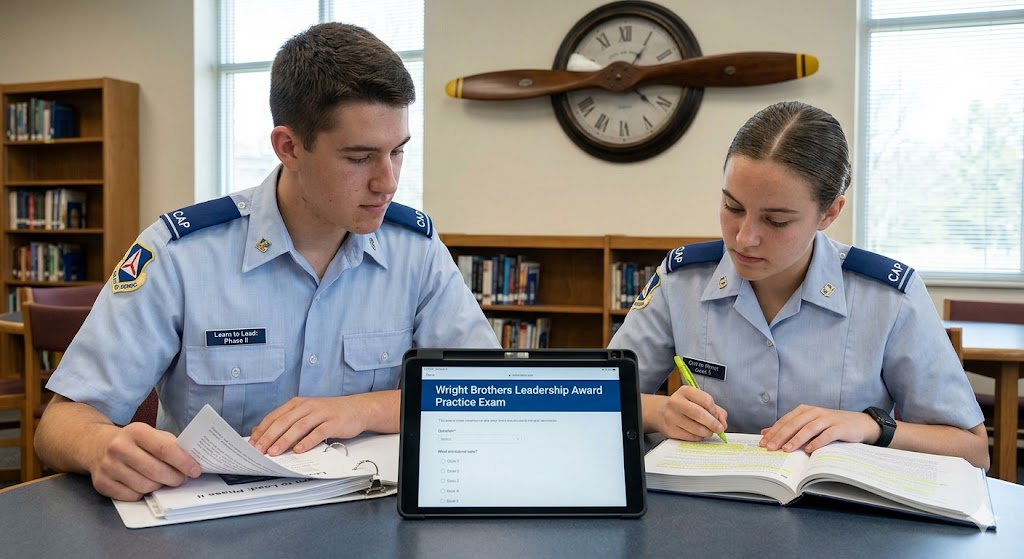
Additional Information
What the Course Entails and Exam Details
This comprehensive exam tests a cadet's cumulative knowledge from all achievements within Phase II. It is primarily based on the Civil Air Patrol’s leadership curriculum, specifically focusing on the principles detailed in the "Learn to Lead" texts. Candidates must demonstrate proficiency in several core competencies:
Advanced Leadership Theory: Moving beyond basic concepts to understand different leadership styles, dynamics of teamwork, and the ethical foundations of authority.
Communication Skills: Mastery of effective written and oral communication, essential for commanding teams and articulating complex ideas.
CAP History and Organization: A deeper understanding of the Civil Air Patrol’s mission, its role as the US Air Force Auxiliary, and its historical significance.
Core Values Application: The practical application of CAP’s four core values: Integrity, Volunteer Service, Excellence, and Respect in various scenarios.
The practice test is designed to mirror these key areas, ensuring you are prepared for the depth and breadth of the official examination.
What to Expect in the Final Exam
When you sit for the official Wright Brothers Leadership Award Exam, you should expect a challenging academic environment. The exam is typically a closed-book, monitored test.
Format: The exam usually consists of 50 to 60 multiple-choice questions. These questions are designed to test not only rote memorization but also the application of leadership principles to real-world scenarios.
Time Limit: Cadets are generally allocated 60 to 90 minutes to complete the exam. Time management is crucial, as you will have roughly one minute per question.
Passing Score: A passing grade of 80% or higher is typically required to earn the award. This high standard reflects the importance of the material and the leadership responsibilities that follow.
How to Study and Exam Centers
Success on the Wright Brothers Leadership Award Exam requires dedicated preparation. Practice tests are an invaluable tool, allowing you to identify knowledge gaps and familiarize yourself with the question format. Here is an effective study strategy:
Deep Dive into the Text: Your primary study resource is the CAP "Learn to Lead" curriculum. Do not just skim; read for comprehension, taking detailed notes on key theories, historical figures, and definitions.
Use Active Recall: After studying a section, close the book and try to explain the concepts aloud or write them down from memory.
Take Multiple Practice Tests: Use online practice portals frequently. Analyze not just which questions you got wrong, but why you got them wrong.
Form Study Groups: Collaborating with fellow cadets can provide different perspectives and help clarify difficult concepts.
Exam Centers and Registration:
Official CAP exams, including the Wright Brothers Leadership Award Exam, are administered through the CAP eServices online portal. Cadets typically take these exams at their local squadron headquarters under the supervision of a designated test control officer (TCO) or another authorized adult leader. Testing is not done through external centers like Pearson VUE; it is managed internally within the Civil Air Patrol structure.
Job Opportunities from the Course
While the Wright Brothers Leadership Award is a youth program achievement and not a professional license, it unlocks significant opportunities and career paths:
Promotion to Cadet Second Lieutenant: Earning the award is the primary requirement for promotion to the first cadet officer rank, opening leadership roles within the squadron.
Military Academy and ROTC Appointments: The award is highly regarded by service academies (like West Point and the Air Force Academy) and ROTC programs as a strong indicator of leadership potential and commitment to service.
Advanced Enlistment Grade: Cadets who earn the Wright Brothers Award and later enlist in the US Air Force can typically enter at a higher pay grade (E-3).
Aerospace and Aviation Careers: The discipline and leadership skills learned provide a significant advantage for careers in aviation, aerospace engineering, and defense.
Corporate Leadership Tracks: The award demonstrates early-stage project management, team building, and ethical decision-making skills desirable in any professional management career path.
Frequently Asked Questions
Reviews
5.0
Based on 0 reviews
Leave a Review
No reviews yet. Be the first to review!