
Wyoming Falconry Practice Test
$69.00
- Buy to unlock unlimited access to all Quiz questions and Answers in this Quiz.
- After purchase you can print a PDF of the whole quiz at any point. The PDF will contain the questions and the correct answers.
About this Exam
The Wyoming Falconry Exam is a mandatory and critical stepping stone for anyone wishing to become a legally licensed apprentice falconer in the state of Wyoming.
This certification assessment is specifically designed for wildlife enthusiasts, hunters, and dedicated conservationists who want to practice the ancient art of falconry.
It ensures that all prospective falconers possess the fundamental knowledge required to safely trap, handle, house, and hunt with birds of prey.
By taking and passing this exam, you demonstrate your commitment to the rigorous ethical, medical, and legal standards demanded by state and federal wildlife agencies.
Ready to test your knowledge?
Buy Now to Access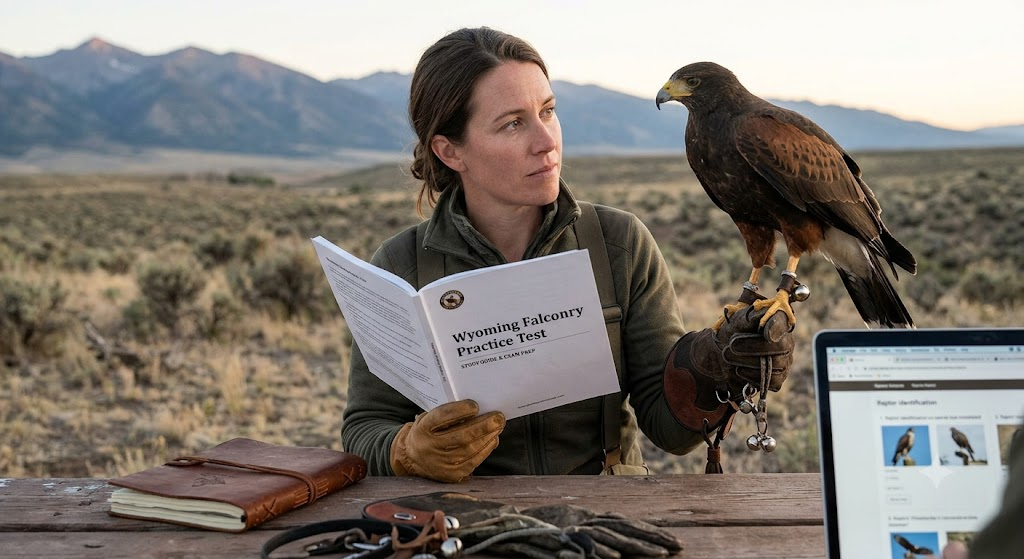
Additional Information
What the Course Entails and Exam Details
Preparing for the falconry exam requires a deep dive into the biology, ecology, and daily management of raptors.
The core syllabus covers detailed raptor identification, focusing heavily on the specific species indigenous to or commonly flown in North America.
You will learn extensively about raptor health, recognizing diseases, parasites, and the precise nutritional requirements necessary to keep a bird of prey in peak hunting condition.
Additionally, the study materials entail the specific legal housing requirements, known as mews, as well as the safe use of specialized equipment like jesses, leashes, and hoods.
A significant portion of your preparation will also focus on mastering the complex web of Wyoming state and federal falconry laws and regulations.
What to Expect in the Final Exam
The final assessment is a comprehensive written test administered directly by the Wyoming Game and Fish Department (WGFD).
You can expect exactly 100 multiple-choice questions that thoroughly evaluate your knowledge across all the aforementioned falconry disciplines.
To successfully pass the exam and move forward with your apprenticeship application, you must achieve a strict passing score of 80 percent or higher.
While time limits can vary slightly by regional office, candidates are generally given up to two hours to complete the examination, which provides ample time for well-prepared individuals.
The rules require the test to be taken under proctored, closed-book conditions, meaning absolutely no outside study guides, phones, or notes are permitted in the testing room.
How to Study and Exam Centers
Effective study strategies involve utilizing highly regarded study manuals, such as the widely recommended California Hawking Club Apprentice Study Guide, which is considered the gold standard for passing state exams.
You should consistently complement your reading with online practice tests to familiarize yourself with the multiple-choice format and to identify any lingering weak areas in your knowledge.
Connecting with the Wyoming Falconers Association or finding a prospective sponsor early in the process can also provide invaluable practical insights that reinforce your book studies.
When you feel fully prepared to take the exam, please note that you cannot simply log into an online portal to test from home.
Instead, you must contact and schedule an appointment with a local Wyoming Game and Fish Department regional office.
The test is exclusively administered in person at these official WGFD physical locations, so be sure to call ahead to verify their specific testing hours and availability.
Job Opportunities from the Course
While falconry is traditionally practiced as a deeply rewarding personal pursuit and hunting sport, acquiring this knowledge opens doors to several unique wildlife careers.
Bird Abatement Specialist is a highly sought-after and lucrative role where licensed individuals use trained raptors to naturally deter nuisance birds from vineyards, agricultural farms, resorts, and landfills.
Wildlife Rehabilitator is another incredibly fulfilling path, allowing you to use your extensive knowledge of raptor health, anatomy, and handling to rescue, treat, and release injured birds of prey.
Avian Educator or Environmental Presenter roles are frequently available at zoos, nature centers, and conservation groups, where you can safely handle resident birds to teach the public about raptor ecology.
Finally, specialized Zoo Animal Trainer or Zookeeper positions heavily favor applicants who already possess formal, licensed experience in raptor management, free-flight training, and animal husbandry.
Frequently Asked Questions
Reviews
5.0
Based on 0 reviews
Leave a Review
No reviews yet. Be the first to review!