
YMCA CPR Training Practice Test
$69.00
- Buy to unlock unlimited access to all Quiz questions and Answers in this Quiz.
- After purchase you can print a PDF of the whole quiz at any point. The PDF will contain the questions and the correct answers.
About this Exam
The YMCA CPR Training certification provides a dynamic and engaging learning experience, designed to build both essential skills and unwavering confidence in responding to life-threatening situations.
The course covers crucial techniques for Cardiopulmonary Resuscitation (CPR), the correct use of an Automated External Defibrillator (AED), and often includes training for relief from choking in adults, children, and infants.
Participants can expect to gain the knowledge and hands-on skills necessary to immediately make a difference in critical situations, potentially saving lives until professional medical help arrives.
This training is ideal for individuals seeking both initial certification and those looking to renew their existing qualifications.
Upon successful completion, you won’t just receive a certificate; you will possess the ability and the conviction to act decisively and compassionately as a qualified responder in your community or workplace.
Ready to test your knowledge?
Buy Now to Access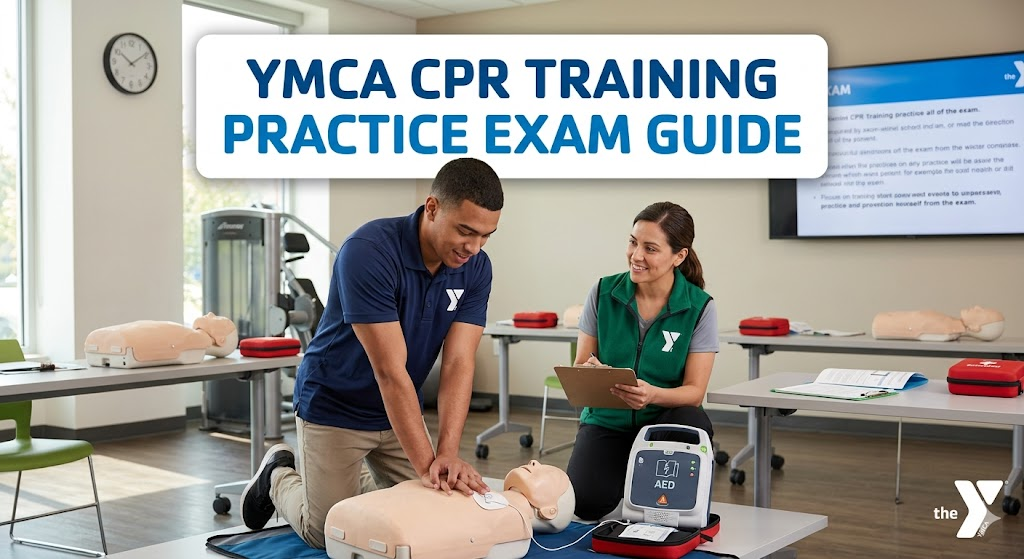
Additional Information
What the Course Entails and Exam Details
This training program delves into a range of essential life-saving topics.
While specific curriculums can vary slightly between different YMCA locations and partnership providers (such as the American Red Cross), common core topics include:
Recognizing the signs and symptoms of cardiac arrest.
The fundamental steps of CPR for adults, children, and infants, including the correct hand placement, compression depth, and rate.
Providing effective rescue breaths, ensuring a proper seal, and correct breath-to-compression ratios.
The proper and safe usage of an Automated External Defibrillator (AED), including pad placement and understanding voice prompts.
Techniques for the relief of conscious and unconscious choking victims of all ages.
Potential inclusion of basic first aid and oxygen administration skills in some comprehensive course structures.
The final certification process typically involves two separate, equally important assessments: a written theory exam (the "practice test" you are preparing for helps with this) and a mandatory, hands-on practical skills evaluation.
Both components must be successfully passed to earn your full YMCA CPR Training certification.
What to Expect in the Final Exam
You can expect the comprehensive final exam to include both a written theory portion and a hands-on practical skills assessment.
The written exam is often delivered in a multiple-choice format, designed to thoroughly test your understanding of CPR principles, protocols, and safety guidelines.
While questions vary, you might expect anywhere from 20 to 50 questions, with a required passing score often set at 80% or higher.
The practical skills assessment is a crucial component, where an instructor will meticulously evaluate your ability to correctly and confidently perform the physical skills on realistic manikins.
You will typically be tested on your performance in:
Adult, child, and infant CPR (including effective chest compressions and rescue breaths in appropriate sequences).
Correct usage of an AED trainer, including proper pad placement and following prompts precisely.
Demonstration of choking relief techniques.
Instructors look for your adherence to correct procedures, appropriate force and depth, timing, and your overall composure and effectiveness in managing the scenarios.
Remember, the goal is not perfection, but demonstrating proficient and safe life-saving ability.
Time limits can exist for both portions of the exam, typically allowing sufficient time for completion but encouraging efficient and confident action, reflecting real-world situations.
Be physically and mentally prepared for both distinct evaluations!
How to Study and Exam Centers
Preparation is absolutely key to success! Here are some actionable strategies to make the most of your study time:
Study Your Course Materials Diligently: Your official course manual is your most important resource. Review it thoroughly and repeatedly.
Take Notes: Actively engage with the content by summarizing key steps, rules, and sequences. Visual aids and diagrams are often helpful.
Practice Hands-on Skills Often: Utilize any opportunities in class or with training manikins to perfect your compression technique and AED usage. Consider practicing the motions even without equipment (with appropriate focus).
Use Practice Tests Wisely: Use practice tests as vital diagnostic tools. Identify your areas of weakness and go back to your notes and the manual for targeted review. Don’t just memorize answers; understand why they are correct.
Study in a Group: Discussing scenarios and quizzing each other can significantly reinforce your understanding.
Stay Physically and Mentally Prepared: On exam day, make sure you are well-rested, hydrated, and focused. Manage stress with deep breathing or other relaxation techniques.
Exam Centers: Where to Take the Real Test
Unlike standardized academic tests, CPR certification exams are typically tied directly to the authorized organization providing the training.
You will complete both your practical and written assessments in person at the same local YMCA branch or authorized partner training center where you took your course.
These location specific exams are usually administered as the concluding part of your CPR or First Aid training program.
Many YMCAs offer these essential certifications year-round, accommodating diverse schedules with evening, weekend, and sometimes daytime classes, including blended learning options with online theory components followed by in-person skill sessions.
Always confirm specific exam details, requirements, locations, and any fees with your chosen local YMCA branch.
Job Opportunities from the Course
A YMCA CPR Training certification is a powerful asset that can enhance your qualifications for a wide range of job opportunities.
This vital certification is often a direct requirement or a highly desirable asset in numerous fields, including:
Lifeguard
Childcare Worker / Teacher
Fitness Instructor
Camp Counselor
Healthcare Assistant
Security Personnel
Office First Aider / Safety Officer
Personal Trainer
Babysitter
Camp Staff
School Staff
Industrial Safety Personnel
Possessing this life-saving skill not only fulfills specific job requirements but also clearly demonstrates a level of responsibility, care, and readiness that is highly valued by many employers. It is a foundational qualification for anyone seeking to work in positions that involve public safety, care of others, or an active response to potential emergencies.
Good luck with your preparation! With dedication and the right tools, you will be well on your way to becoming a certified life-saver within your community.
Frequently Asked Questions
Reviews
5.0
Based on 0 reviews
Leave a Review
No reviews yet. Be the first to review!