
YMCA Lifeguard Practice Test
$69.00
- Buy to unlock unlimited access to all Quiz questions and Answers in this Quiz.
- After purchase you can print a PDF of the whole quiz at any point. The PDF will contain the questions and the correct answers.
About this Exam
The YMCA Lifeguard certification is a comprehensive training program designed to equip individuals with the vital skills needed to ensure the safety of patrons in aquatic environments. It is a rigorous course that blends water rescue techniques, surveillance strategies, and emergency medical response into a foundational certification for aspiring safety professionals.
This certification is specifically tailored for individuals aged 16 and older who possess strong swimming abilities and a desire to serve their community. It is the perfect starting point for teenagers looking for a responsible summer job, students pursuing careers in recreation or sports management, or anyone committed to water safety and emergency response.
Ready to test your knowledge?
Buy Now to Access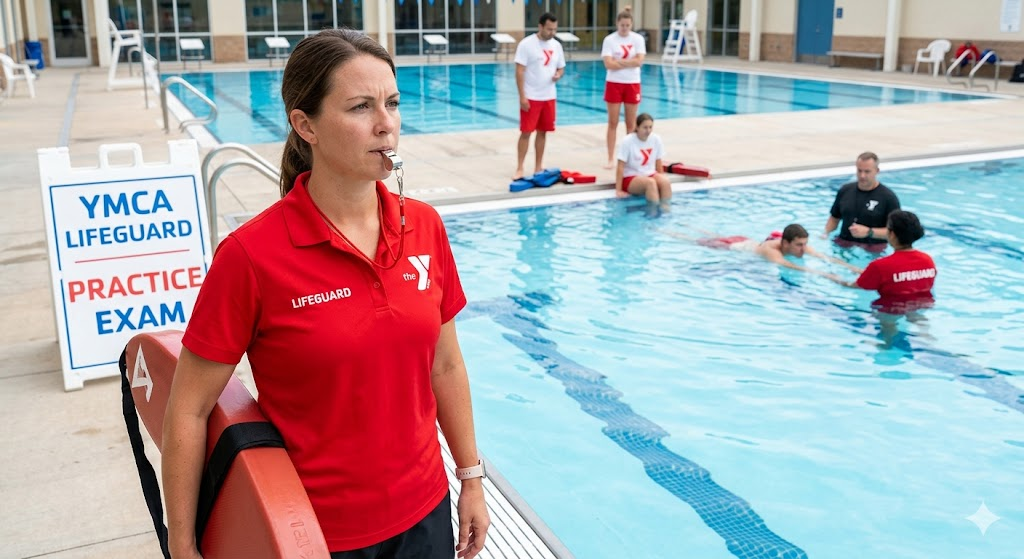
Additional Information
What the Course Entails and Exam Details
The YMCA Lifeguarding course involves a blend of classroom instruction, online learning, and, most critically, hands-on practice in the water and on land. To enroll, candidates must first pass a physical prerequisite swimming test, which often includes a 300-yard continuous swim, treading water without hands, and a timed deep-water brick retrieval.
The core curriculum covers a wide array of topics, including:
Water Surveillance and Scanning Zones
Drowning Prevention and Recognition
Water Rescue Techniques (for conscious and unconscious victims)
Spinal Injury Management (in and out of the water)
First Aid and Basic Life Support (BLS)
Cardiopulmonary Resuscitation (CPR) for Pro Rescuers
Automated External Defibrillator (AED) Essentials
The official final exam is generally split into two primary components: a comprehensive written examination and a rigorous practical skills assessment. Students must demonstrate proficiency in both areas to achieve certification.
What to Expect in the Final Exam
Written Exam: The written portion of the exam typically consists of multiple-choice questions (often ranging from 50 to 75 questions, depending on the specific curriculum version). This exam covers all knowledge areas, including water safety rules, rescue protocols, first aid procedures, and professional responsibilities. Candidates must achieve a minimum passing score, which is commonly 80%. There is usually a time limit for this section, often around 60 to 90 minutes.
Practical Skills Exam: This is the hands-on verification of your abilities. You will be asked to perform various critical skills under the observation of a YMCA instructor. These often include:
Performing a passive submerged victim rescue in deep water.
Demonstrating proper spinal motion restriction techniques.
Executing effective CPR and AED scenarios on manikins.
Removing a victim safely from the water.
This portion is typically graded as pass/fail. Failure to perform a critical rescue step correctly often results in a fail for that scenario, necessitating remediation and re-testing.
How to Study and Exam Centers
Effective Study Strategies:
Utilize the Official Manual: The YMCA Lifeguard Manual is your primary resource. Study it thoroughly. Pay close attention to bolded terms, protocols, and the order of operations for rescues.
Take Practice Tests: Utilizing practice exams is crucial for gauging your knowledge and identifying weak areas. They familiarize you with the wording and format of the questions you will encounter.
Practice Physical Skills: You cannot just study water safety; you must do it. Practice your swim strokes, treading water, and surface dives regularly.
Practice Scenarios: Team up with other candidates to practice CPR and rescue scenarios. Verbally going through the steps (e.g., "Check the scene! Call 911!") helps build muscle memory.
How to Take the Exam and Exam Centers:
The YMCA Lifeguarding course and final exams are not standardized through a national portal or third-party testing center like Pearson VUE. Instead, they are administered directly through local YMCA facilities and their authorized aquatic training centers.
To register, you must find a course offered by a YMCA local to you. Upon completion of the required training hours and passing the final assessments (both written and practical), the local YMCA instructor will issue your official YMCA Lifeguard certification.
Job Opportunities from the Course
A YMCA Lifeguard certification is highly respected and serves as a direct pipeline to numerous employment opportunities in the aquatics and recreation fields.
YMCA Lifeguard (at local YMCA branches)
Seasonal Pool Lifeguard (community pools, country clubs, water parks)
Waterfront Lifeguard (beaches, lakes, summer camps)
Head Lifeguard or Aquatics Supervisor
Water Safety Instructor (WSI) / Swim Instructor
Camp Counselor (with aquatics responsibilities)
Parks and Recreation Aquatics Staff
Frequently Asked Questions
Reviews
5.0
Based on 0 reviews
Leave a Review
No reviews yet. Be the first to review!